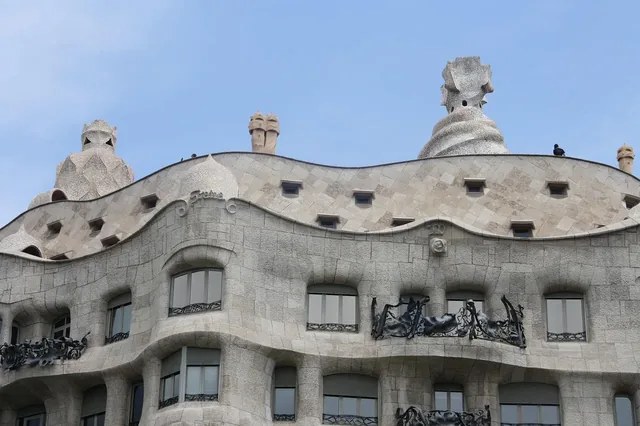
Barcelona holds more Art Nouveau architecture than any other city in the world. Most visitors know this in theory. They've seen Sagrada Família, walked past Casa Batlló, maybe taken the lift up La Pedrera. What fewer realise is that Gaudí was one of three architects who shaped the movement. The other two built equally well, and their buildings are equally worth your time.
Catalan Modernisme, Barcelona's local expression of Art Nouveau and modernism, ran from roughly the 1880s to the 1910s. It left a city that still lives inside it: concert halls still perform, hospitals have become museums, apartment blocks on Passeig de Gràcia stop pedestrians in their tracks. The full modernisme route in Barcelona covers 120 buildings. This guide focuses on the ones actually worth visiting, tells you where they are, and explains how to plan your time.
What Is Catalan Modernisme?
Modernisme was Barcelona's version of the Art Nouveau movement that swept Europe at the turn of the 20th century. It was not purely decorative. The architects who practiced it wanted to express something specifically Catalan: the medievalism of the Gothic Quarter, the natural forms of the coast and landscape, the ambitions of an industrial bourgeoisie that had money and a point to make.
Three architects defined the movement. Antoni Gaudí is the most famous, known for organic, nature-driven modernista buildings unlike anything else in the history of architecture. Lluís Domènech i Montaner worked on a grander civic scale, combining brick, iron, and mosaic to produce concert halls and hospitals of a quality that outlasted the era they were built for. Josep Puig i Cadafalch brought a Gothic influence to modernist architecture, with towers, pointed spires, and a taste for dramatic skylines. Understanding the differences between the three (Domènech i Montaner and Puig i Cadafalch on one hand, Gaudí on the other) makes the modernist route through Barcelona a great deal more interesting.
The Ruta del Modernisme
The Ruta del Modernisme is the official Barcelona modernisme route managed by the Barcelona City Council, covering 120 modernista buildings across the city.
The route has its own guidebook, a printed book (€12) that is the most comprehensive guide to Modernisme in Barcelona. It covers all 120 buildings and can be bought at major bookshops or at the Modernisme Centres. The discount vouchers are not inside the book itself. Take the book to a Modernisme Centre and they hand you a free voucher booklet. Those vouchers give you up to 50% off admission at the main modernista monuments and are valid for a year from the date you collect them.
If you want everything together, the Route Pack costs €18. In addition to the guidebook, it includes the discount voucher book, a map of all 120 works, and a separate guide to modernist bars and restaurants in the city.
If you plan to follow the modernisme route across several days, the Barcelona Pass Modernista is worth considering separately. It costs €90, is valid for 7 days, and covers free or discounted entry to 15 modernisme buildings. Depending on which sites you visit, you can save close to 50%.
You do not need to follow the full route. Pick a neighbourhood, see its modernist buildings, and move on. The Eixample has the highest concentration. El Born and Sant Pau make a strong afternoon. Gràcia has Park Güell and Casa Vicens. Every area rewards a few hours of walking.
Modernisme Buildings Open to the Public
The Ruta del Modernisme highlights 30 key modernisme buildings as the core of the Barcelona modernisme route. Here are the most important modernist buildings open to the public, with current entry prices.
| Building | Architect | Entry (from) |
|---|---|---|
| Sagrada Família | Gaudí | From €33 |
| Casa Batlló | Gaudí | From €31 |
| Casa Milà (La Pedrera) | Gaudí | From €29 |
| Park Güell | Gaudí | From €17 |
| Palau Güell | Gaudí | From €15 |
| Casa Vicens | Gaudí | From €24 |
| Palau de la Música Catalana | Domènech i Montaner | From €20 |
| Recinte Modernista de Sant Pau | Domènech i Montaner | From €17 |
| Casa Amatller | Puig i Cadafalch | From €20 |
| Casa de les Punxes | Puig i Cadafalch | From €15 |
Passeig de Gràcia and the Block of Discord
The best place to start the modernisme route in Barcelona is Passeig de Gràcia, the wide boulevard running north through the Eixample district. Three of the finest modernist buildings in the city sit within 100 metres of each other on one block, the Illa de la Discòrdia (known in Spanish as the Manzana de la Discordia, or Block of Discord). Each building represents a different architect's vision of what modernisme could be.
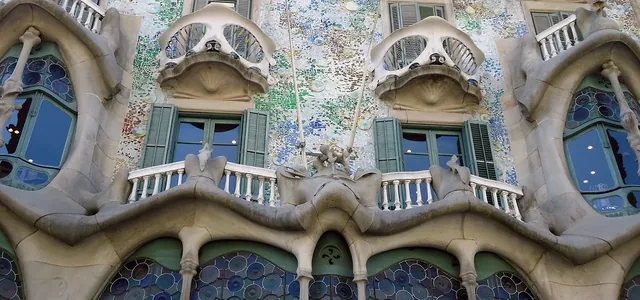
Casa Batlló (Gaudí, 1906) is the most theatrical: a blue-green ceramic façade, skull-shaped balconies, and a rooftop that curves like a dragon's back. The detail carries you through every room. Tickets from €31. Next door, Casa Amatller (Puig i Cadafalch, 1900) is quieter and more Gothic in spirit, with a stepped gable roofline and elaborate stonework. Self-guided visits from €20; the ground floor has a chocolate shop that has been there since the Amatller family. Casa Lleó Morera (Domènech i Montaner, 1906) occupies the third corner. The exterior is the highlight, though the interior is not open to the public.
La Pedrera (Casa Milà), Gaudí's last secular commission, is 10 minutes north on the same boulevard. The rooftop is the highlight: warrior-shaped chimneys and ventilation towers in broken ceramic tile, with views across the Eixample to the sea. From €29.
Palau de la Música Catalana
A 20-minute walk east from Passeig de Gràcia, the Palau de la Música Catalana is Domènech i Montaner's masterpiece. Built between 1905 and 1908 as the home of the Orfeó Català choral society, it is a UNESCO World Heritage Site and one of the most active concert venues in the city.
The concert hall is what you come for: a stained glass ceiling floods the room with natural light, terracotta sculptures of Catalan folk singers line the proscenium, and mosaic covers almost every surface. Self-guided audio tours from €20. Going to a live concert here is an experience a daytime visit cannot replicate.
Recinte Modernista de Sant Pau
The former Hospital de la Santa Creu i Sant Pau, now the Recinte Modernista de Sant Pau, is the building many architects consider Domènech i Montaner's greatest work. Built between 1902 and 1930, it sits at the end of Avinguda de Gaudí, with a direct sightline to Sagrada Família.
Nine modernista pavilions connected by underground tunnels, each covered in ceramic tile, stained glass, and sculptural detail. It operated as a working hospital until 2009 and opened to the public after a full restoration. Entry from €17. The Sant Pau modernist building is consistently less crowded than the Gaudí sites and one of the most genuinely startling buildings on the Barcelona modernisme route. Allow at least 90 minutes.
Sagrada Família
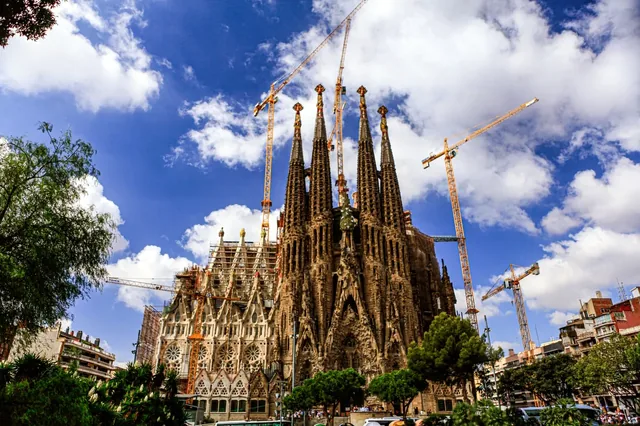
Gaudí spent the last 43 years of his life on this basilica, and the work is still not finished. In 2026, the centenary of his death, the Tower of Jesus Christ is expected to top out. The Nativity Façade, the only section completed in his lifetime, is dense with sculptural detail. Inside, branching stone columns hold up the ceiling like a forest, and stained glass sends amber and violet light across the nave. Tickets from €26. Book online well in advance. If you want to add a tower climb to your visit, our Nativity vs Passion tower guide covers which one to pick and what the climb is like.
Park Güell
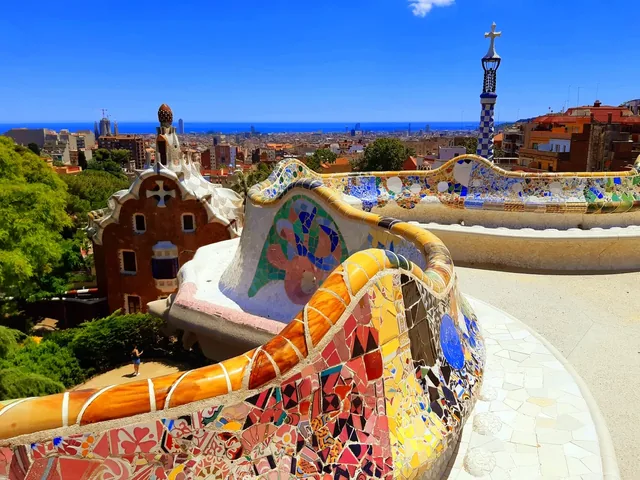
Commissioned by Eusebi Güell as a residential garden estate on the hill of El Carmel, Park Güell is one of Gaudí's most celebrated modernista works and a UNESCO World Heritage Site. The ticketed Monumental Zone has the main draws: the serpentine mosaic terrace, the Doric columns of the Hypostyle Hall, and the fairytale gatehouses at the entrance. The terrace gives you some of the best views in Barcelona, with the city stretching to the sea and Sagrada Família in the middle distance. Entry from €18. Book in advance.
Palau Güell
Before the famous buildings came Palau Güell, the palace Gaudí built for Eusebi Güell near La Rambla between 1886 and 1890. Most visitors walk straight past it on the way to La Rambla, which is their loss. The central hall rises under a parabolic dome with small holes letting in pinpricks of light like a starry sky. The rooftop has chimneys in ceramic tile, an early version of what Gaudí would perfect at La Pedrera 20 years later. Entry from €15. A UNESCO World Heritage Site, and one of the best-value visits on the route.
Casa de les Punxes
The Casa de les Punxes, "House of Spikes," is Puig i Cadafalch's most recognisable modernist building. Completed in 1905 on the corner of Avinguda Diagonal and Carrer del Rosselló, it occupies a full city block and rises into six cylindrical towers topped with pointed Gothic spires. Up close, the stone façade is covered in fine floral detail. Open to the public, with a rooftop terrace and views over the Eixample.
More Modernisme Worth Seeking Out
Beyond the headline sites, modernism in Barcelona goes deeper than most tourists realise. Casa Calvet on Carrer de Casp, built by Gaudí between 1898 and 1900, is the only modernist building he entered for the Barcelona City Council's annual architecture prize, which he won. The restaurant on the ground floor is one of the few places in the city where you can eat inside a room Gaudí designed.
Parc de la Ciutadella has the Castle of the Three Dragons, built by Domènech i Montaner for the 1888 Universal Exhibition. Now the Natural Sciences Museum, it is one of the earliest examples of Catalan Modernisme in Barcelona and a key stop on the full route for anyone interested in Domènech i Montaner and Puig i Cadafalch alongside the Gaudí sites. Torre Bellesguard, Gaudí's Gothic-inspired house in the hills of Sarrià, is also part of the Ruta del Modernisme and open to the public.
The Palau del Baró de Quadras on Avinguda Diagonal is another undervisited Puig i Cadafalch building. The Fundació Antoni Tàpies, in a Domènech i Montaner building on Carrer d'Aragó, combines a modernista façade with one of the best contemporary art collections in the city.
How to Follow the Modernisme Route in Barcelona
Start at Passeig de Gràcia and work outward. The Block of Discord and La Pedrera are walkable and can be covered in a single morning. The Palau de la Música Catalana and Recinte Modernista de Sant Pau work well as an afternoon. Follow the route north from Sant Pau to visit Casa de les Punxes before continuing to Sagrada Família. Park Güell is best early in the morning. Palau Güell, near La Rambla, is worth a separate half-morning.
Book all major sites in advance. Casa Batlló and La Pedrera sell out weeks ahead in peak season. The Ruta del Modernisme guidebook (€12, available at bookshops and Modernisme Centres) is a good starting point for the full route. Buy it, collect the free discount vouchers at a Modernisme Centre, and you have up to 50% off the sites you pick. If you plan to visit four or more modernisme buildings, also run the numbers on the Barcelona Pass Modernista before buying individual tickets.
FAQ: Barcelona Modernisme Route
What is modernism in Barcelona?
Modernism in Barcelona refers to Catalan Modernisme, the city's version of Art Nouveau. It was the dominant architectural movement from the 1880s to the 1910s, led by Antoni Gaudí, Lluís Domènech i Montaner, and Josep Puig i Cadafalch. The movement produced over 120 buildings that survive in Barcelona today, from grand private houses on Passeig de Gràcia to civic buildings like the Palau de la Música Catalana and Hospital de Sant Pau.
What is the modernisme route in Barcelona?
The Ruta del Modernisme is the official Barcelona modernisme route, managed by the Barcelona City Council. It covers 120 buildings across the city. The route has its own printed guidebook (€12), sold at bookshops and Modernisme Centres, with a free voucher booklet that gives you up to 50% off admissions at the main sites. The vouchers are valid for a year.
Where can you see Modernisme architecture in Barcelona?
The largest concentration of modernisme in Barcelona is in the Eixample district, along Passeig de Gràcia and Avinguda Diagonal. El Born has the Palau de la Música Catalana. Sant Pau has the Recinte Modernista de Sant Pau. Gràcia has Park Güell and Casa Vicens. El Raval has Palau Güell. Parc de la Ciutadella has the Castle of the Three Dragons. Most modernista buildings are open to the public and included in the Ruta del Modernisme.
Is the Barcelona Pass Modernista worth it?
If you plan to visit four or more modernisme buildings, it usually is. The pass costs €90, is valid for 7 days, and covers free or heavily discounted entry to 15 sites including Sagrada Família, Hospital de Sant Pau, Casa Vicens, Park Güell, and Palau Güell. Compare the included buildings against your planned itinerary before buying.
Can you see Modernisme buildings for free?
The exterior of every building on the Ruta del Modernisme is visible from the street. The Recinte Modernista de Sant Pau has free entry on the first Sunday of each month. The Block of Discord façades on Passeig de Gràcia can all be seen without paying anything.