Yes, 2 days in Barcelona is enough (if you do it right)
Two days is tight. Barcelona is not a city that apologises for its ambitions: it has Gaudí masterpieces on nearly every corner, a Gothic Quarter that took 2,000 years to accumulate, and a beach that nobody tells you is actually good. You cannot see everything. But you can see the things that will make you want to come back.
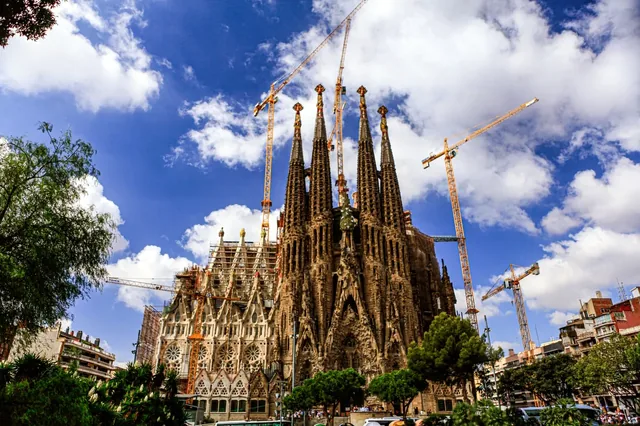
And right now, in 2026, is an extraordinary time to visit. In February of this year, after 144 years of construction, the Sagrada Família’s final tower was completed. It is now the tallest church in the world at 172.5 metres. Antoni Gaudí devoted the last 43 years of his life to this building. His works across the city carry UNESCO World Heritage status. For the first time, the Sagrada Família stands as he imagined it. If you have 48 hours to spend in a city, there are worse ones to land on.
Day 1: Gaudí’s Barcelona from morning to night
Start where every first-timer should start: the Sagrada Família, before the tour groups arrive. Buy tickets in advance online (they sell out days, sometimes weeks, ahead), pick the earliest available slot, and arrive at the door about ten minutes early. The advantage is not just the shorter queue. It is the light.
Local tip
The nave of the Sagrada Família transforms completely depending on the time of day. In the morning, the west-facing stained glass floods the interior with cool blues and greens. By afternoon, the east windows take over and the whole space turns warm amber and red. If you can only visit once, morning light is slightly more dramatic, but either is worth building your Day 1 around.
Plan for about 90 minutes inside. If you have added a tower visit to your ticket (recommended for the views over the Eixample grid below), allow a full two hours. Tower tickets must be reserved at the same time as your entry ticket: you cannot add them at the door. Once you are done, take the metro or walk to Park Güell.
Park Güell: timed entry, real views, and a bus most tourists miss
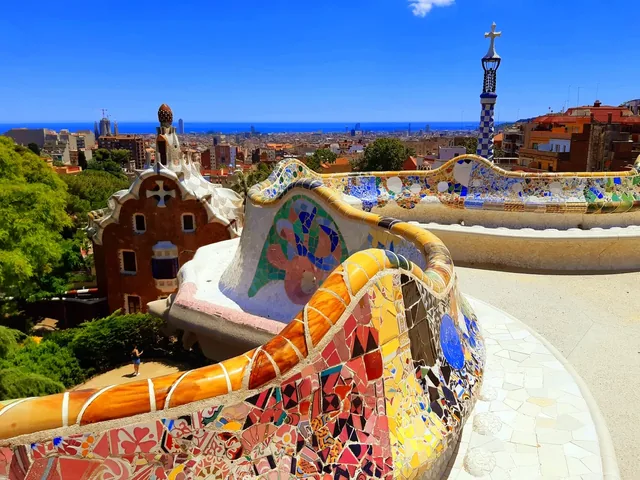
Park Güell requires a timed entry ticket for the Monumental Zone, the terraced section with the famous mosaic benches and dragon staircase. Book it in advance or risk arriving at a sold-out sign. The ticket admits you for a 30-minute entry window, after which you can stay as long as you like.
Local tip
Park Güell is uphill from the nearest metro stop. Unless you enjoy a steep 20-minute climb at midday, take Bus 116 from the Alfons X metro station (Line 4). It drops you close to the main entrance and most tourists do not bother to look it up.
Once inside, skip the crowded main terrace and walk up to the area above the Monumental Zone instead. The panorama over Barcelona from there is better, and you will have it almost to yourself.
After Park Güell, head down to the Gràcia neighbourhood for a late lunch. This is where Barcelona residents actually eat: the streets around Plaça del Sol and Plaça de la Vila de Gràcia are full of small restaurants and tapas bars that have not been optimised for tourists. Order a vermut (vermouth, served cold with an olive and a slice of orange), share a plate of patatas bravas or whatever the kitchen is proud of that day, and take your time. Catalan cuisine rewards slow meals. Barcelona runs on a late schedule: lunch at 2pm is normal, dinner before 9pm is not.
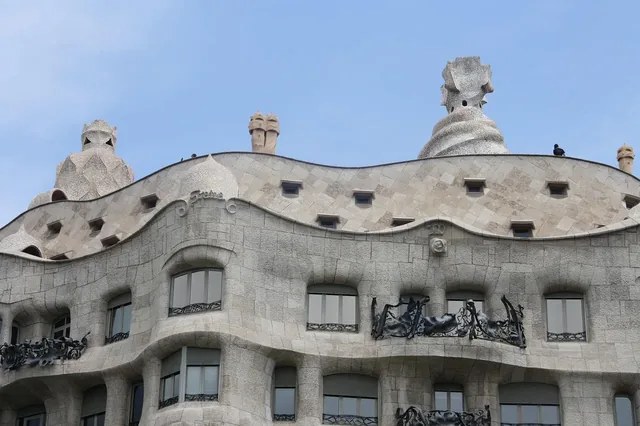
In the evening, the Passeig de Gràcia is a ten-minute walk from Gràcia and worth a slow stroll after dinner. The Gaudí buildings on this boulevard, Casa Batlló and Casa Milà (La Pedrera), are remarkable even from the outside at night when lit up.
Day 2: La Boqueria before 9am, then the old city
Get to La Boqueria before 9am. This is not a suggestion. The market on Las Ramblas is one of the most visited spots in Barcelona, and by 11am it is a shoulder-to-shoulder crush. Before 9am on a weekday you will find chefs shopping for the day, stalls at their freshest, and enough space to actually look at things. The mercat de la Boqueria opens at 8am.
Local tip
The stalls near the entrance of La Boqueria charge more because they pay higher rent. Walk straight through to the back half of the market and you will find the same produce, the same quality, and noticeably lower prices. The fruit cups at the back stalls are a good five minutes away from the Instagram queues at the front.
After the market, walk the full length of Las Ramblas down to the Columbus monument at the waterfront. About halfway along, look down at the pavement: there is a mosaic by Joan Miró set into the ground. Most people walk straight over it.
The Gothic Quarter: 2,000 years of backstreets
The Gothic Quarter is the oldest part of Barcelona, and wandering without a fixed plan works here. Two stops are worth seeking out specifically. The Barcelona Cathedral is a 13th-century building that is free to enter, and its cloister contains 13 white geese. Nobody is entirely sure why. They have been there for centuries and show no signs of leaving.
The second stop most visitors walk straight past: hidden in a medieval courtyard at Carrer del Paradís 10, a few steps from the cathedral, are the remains of a Roman temple built in the 1st century BC. Four of the original Corinthian columns still stand, perfectly preserved, inside what is now a quiet interior courtyard. This is the Temple d’August. Entry is free. Almost nobody goes.
Allow 90 minutes to explore the Gothic Quarter properly, including a coffee break in one of the smaller squares. Plaça de Sant Felip Neri, tucked behind the cathedral, is one of the calmest spots in the neighbourhood despite being close to the main tourist flow.
Afternoon: Casa Batlló or El Born (pick one)
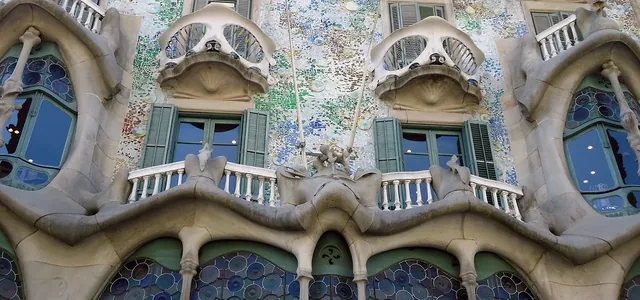
From the Gothic Quarter, it is a 20-minute walk up to Passeig de Gràcia and Casa Batlló. The building’s façade looks like something between a dragon’s spine and an underwater fever dream, which was precisely Gaudí’s intention. The Blue Ticket (standard entry with audio guide) covers the main floors; the Gold Ticket adds the roof terrace. Book in advance.
Alternatively, if you are Gaudí’d out by Day 2, the El Born neighbourhood just east of the Gothic Quarter is worth an afternoon. The Picasso Museum here holds over 3,500 works and traces his formative years in Barcelona. The collection is stronger than most visitors expect. It is closed on Mondays.
| Attraction | Book in Advance? | Time to Allow | Nearest Metro |
|---|---|---|---|
| Sagrada Família | Yes, essential | 90–120 min | Sagrada Família (L2/L5) |
| Park Güell | Yes, required | 60–90 min | Alfons X (L4) + Bus 116 |
| La Boqueria | No | 30–45 min | Liceu (L3) |
| Gothic Quarter | No | 90 min | Jaume I (L4) |
| Casa Batlló | Yes, recommended | 60–90 min | Passeig de Gràcia (L2/L3/L4) |
| Picasso Museum | Recommended | 60–90 min | Jaume I (L4) |
Frequently asked questions
Is 2 days enough to see Barcelona?
For a first visit, yes, if you focus rather than trying to do everything. Two days covers the essential Gaudí buildings, the Gothic Quarter, Las Ramblas, and a couple of neighbourhoods. You will not have time for Montjuïc, Barceloneta beach, or multiple museums. Think of the two days as your introduction, not your farewell. Only have one day? See our 1 day in Barcelona itinerary. Staying longer? The 3 days in Barcelona guide adds Montjuïc, the beach, and more breathing room.
What should I not miss in Barcelona in 2 days?
The Sagrada Família is unmissable, especially in 2026 now that the Tower of Jesus Christ has been completed and the building stands at its full height for the first time in 144 years. Park Güell and the Gothic Quarter round out the essential list. If you have time for one more, Casa Batlló on Passeig de Gràcia is the best single addition.
Do I need to book Barcelona attraction tickets in advance?
For the Sagrada Família and Park Güell: yes, absolutely. Both use timed entry and sell out days or weeks ahead in summer. For Casa Batlló and the Picasso Museum, advance booking is strongly recommended. La Boqueria, the Gothic Quarter, and the Barcelona Cathedral are all free to enter with no booking required.
What are the best day trips from Barcelona?
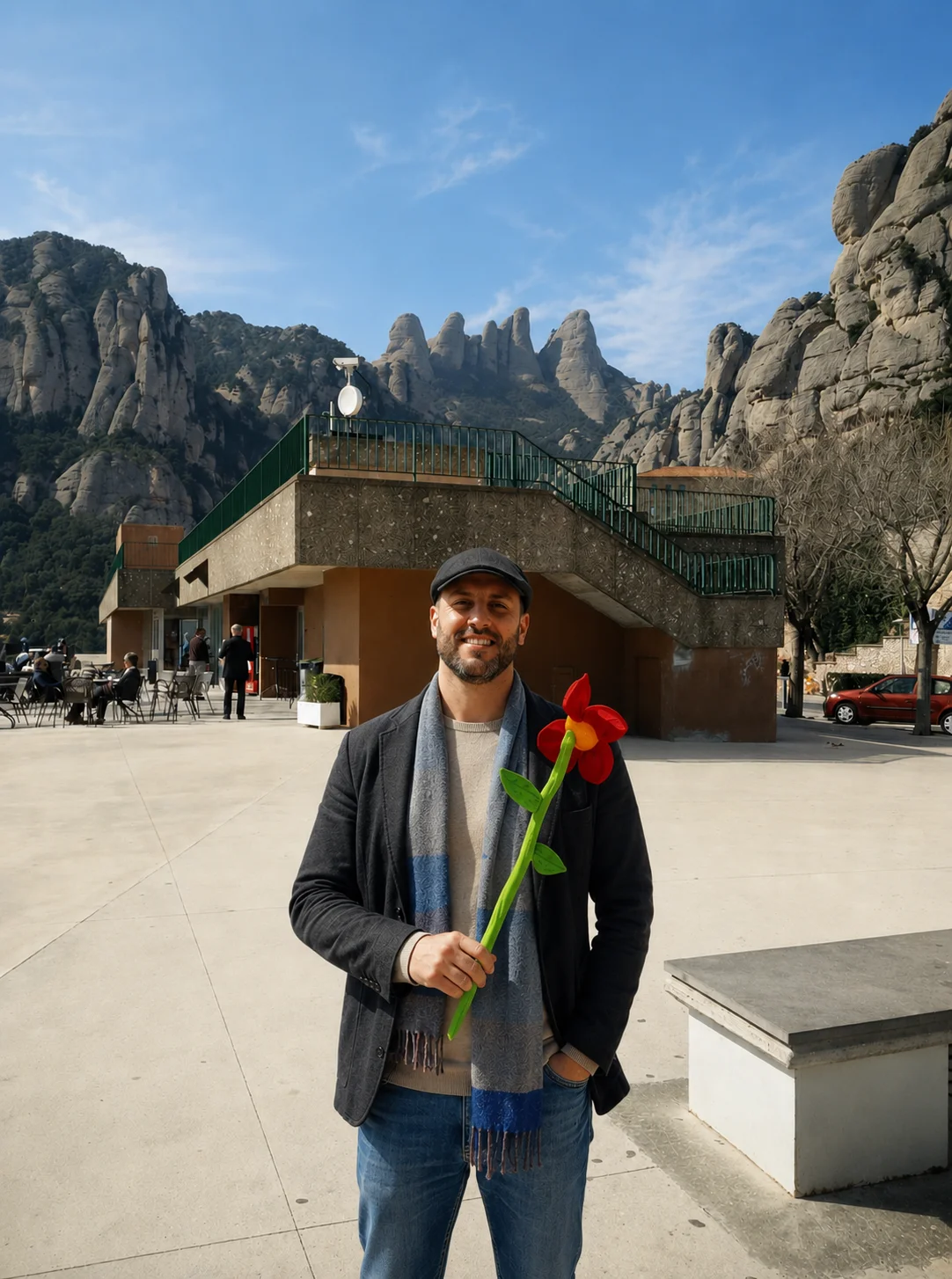
Montserrat, the dramatic mountain monastery about 60km northwest, is the most popular day trip and reachable by train in about an hour. Sitges, a coastal town 35km south, works well if you want a beach with more character than Barceloneta. Both fit as a half-day addition if you have an early start or a late departure on one of your two days.
Is Barcelona a good destination for a 2-day trip with children?
Yes, with some planning. Park Güell is great for families and children under 7 enter the Monumental Zone free. The Gothic Quarter’s medieval alleyways tend to go down well with older kids. Book timed entry tickets in advance to avoid long queues. Barceloneta beach is about 20 minutes on foot from the Gothic Quarter and makes a good end to the second day in warm weather.