So, Can You Get By With Just English in Barcelona?
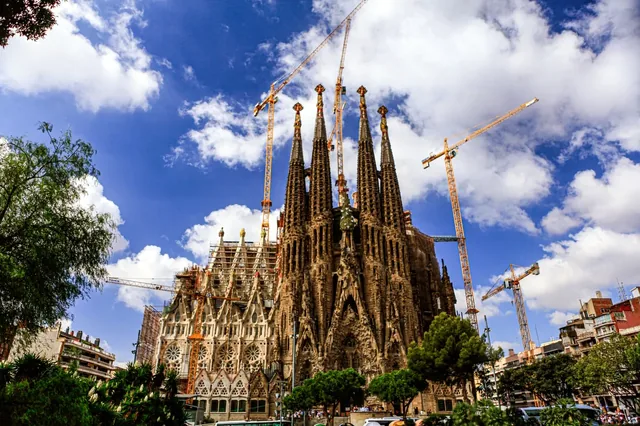
Short answer: yes, almost everywhere a tourist actually goes. Barcelona is one of the most visited cities in Europe, and its tourism industry runs on English as a matter of course. Hotel staff, museum desks, airport workers, and most restaurant servers in the centre handle English speaking guests every single day. You can land at El Prat, take a taxi to your hotel, check in, book a table for dinner, and visit the Sagrada Família and feel welcomed in English the entire way, without a word of Spanish or Catalan.
But "Barcelona" the postcard and "Barcelona" the place where people actually live their daily lives are two different things. Catalan and Spanish, both official languages here, are what locals use at home, in neighbourhood shops, and on the metro. English ability is rising fast but still uneven: a 2023 language survey found just over 43% of Catalans can speak English to a conversational level, a figure that jumps past 68% for people under 25. In practice, the younger the staff member, the more likely you are to get fluent English without missing a beat.
Where English Speaking Is the Default
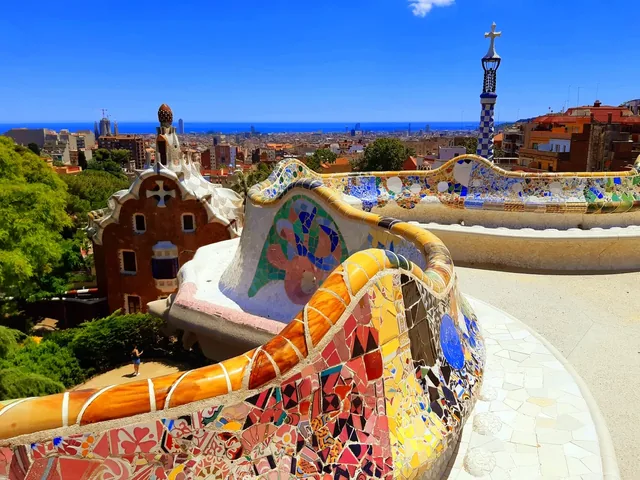
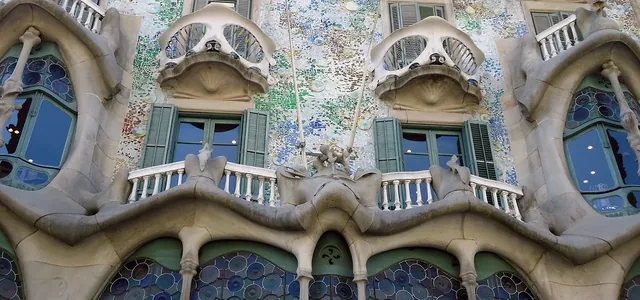
Anywhere built around tourism runs in English as standard. Hotels of every star rating, the big sights (Sagrada Família, Park Güell, Casa Batlló, the Picasso Museum), and restaurants along the Ramblas, in the Gothic Quarter, and through Eixample all have English menus and English speaking staff. Ticket desks, audio guides, and signage at major attractions are available in English by default, usually alongside Catalan, Spanish, and French. Ask a question in English in any of these places and you'll get an answer in English back, often with better vocabulary than you'd expect.
Where Your English Might Hit a Wall
Step away from the tourist circuit and the picture changes. Taxi drivers are the classic example: plenty handle basic English fine, but some, especially older drivers, won't have enough English for a detailed conversation. The fix is simple and works every time: have your destination typed into your phone or written on paper, or book through an app like FreeNow, which sends your pickup and drop-off automatically so nothing needs to be said out loud.
Neighbourhood bars away from the centre, local markets, pharmacies in residential streets, and many locals over about 60 are also less likely to speak English fluently. Public transportation announcements on the metro are in Catalan and Spanish only, though the TMB app and journey planners work in English, and station names are universal enough to navigate by even with limited Spanish.
Local tip
You don't have to, but opening with "Bon dia" (good morning) or "Bona tarda" (good afternoon) instead of "Hola" is a friendly small gesture. It signals you know you're in Catalonia, not generic Spain, and locals often warm up a little quicker, sometimes switching into English more readily than if you'd opened in Spanish. This is a nice bonus, not a rule. If you never say a word of Catalan the whole trip, nothing bad happens.
A Pocket Phrasebook for Barcelona
You don't need to learn Spanish or Catalan, but a handful of basic phrases go a long way, especially paired with a smile and a bit of patience. Here's the short list worth knowing before you land.
| English | Catalan | Spanish |
|---|---|---|
| Hello / Good morning | Bon dia | Buenos días |
| Good afternoon | Bona tarda | Buenas tardes |
| Please | Si us plau | Por favor |
| Thank you | Gràcies | Gracias |
| Do you speak English? | Parla anglès? | ¿Habla inglés? |
| The bill, please | El compte, si us plau | La cuenta, por favor |
| Goodbye | Adéu | Adiós |
Catalan or Spanish: What's Actually Spoken in Barcelona
Catalan and Spanish are both official languages in Catalonia, and almost everyone in Barcelona speaks both fluently. Idescat's most recent language survey puts usual daily conversation at roughly 51% Spanish and 36% Catalan, with the rest splitting between both depending on the situation, plus a growing number of residents from other parts of Spain and abroad who've settled in the city and use whichever language the moment calls for. Compared with Madrid, where Spanish dominates almost uniformly, Barcelona's culture and language are genuinely bilingual.
The practical takeaway: a basic Spanish phrasebook is genuinely enough for the whole trip. You will be understood everywhere in Barcelona with Spanish alone. Trying a bit of Catalan is a warm bonus, not a requirement, and a few words tend to land nicely because the language is tied to local identity. One small heads-up: some locals prefer to call the language "Castilian" rather than "Spanish" when it's spoken here, since Catalan is technically also a language of Spain. If you catch that shift in conversation, now you know why.
What Everyday Life Looks Like Without Fluent Spanish
Plenty of expats live full lives in Barcelona on English plus a small stock of Spanish or Catalan, and a short visit is far easier than living here as a foreigner long-term. Ordering at a tapas bar, buying a metro ticket, asking for directions to Park Güell, or checking opening hours at a museum desk are all realistically doable in English, especially in the neighbourhoods tourists actually spend time in. Even asking for a free glass of tap water works fine in English if Catalan or Spanish feels like too much. Translation apps with a camera mode, useful for menus or street signs, cover almost every remaining gap. The honest takeaway: you won't be lost, but everyday life on the trip feels smoother, and friendlier, the moment you stop assuming everyone defaults to English and start meeting people halfway.
Frequently Asked Questions
Is Barcelona an English-friendly city for tourists?
Yes. In hotels, major attractions, and restaurants in tourist areas, English is the norm rather than the exception, and most staff working directly with visitors speak it well.
Do taxi drivers in Barcelona speak English?
Many do, but not all, especially older drivers. Have your destination written down or typed into your phone, or book through an app like FreeNow so the address is sent automatically.
Is it rude to speak English in Barcelona?
No, locals are used to it and tourism is a major part of the economy. That said, opening with a Catalan greeting before switching to English tends to get a warmer response than starting in Spanish or English.
Should I learn some Spanish or Catalan before my trip?
You don't need to, but learning five or six basic phrases (hello, please, thank you, do you speak English, the bill) takes about ten minutes and makes every interaction smoother.
What if I don't know any Spanish or Catalan at all?
You'll be fine. Combine English with a translation app's camera mode for menus and signs, point-and-smile for the rest, and stick to the phrasebook above for the handful of moments where it helps most.