Barcelona in One Day: Yes, It Is Possible (If You Plan Like This)
Barcelona is one of those cities that makes you want to stay forever. The problem is that not everyone can. If you are spending one day in Barcelona, a long layover, a side trip from the coast, or a single window in a packed schedule, you deserve a 1-day itinerary that does not waste a single hour.
This guide covers the things you genuinely cannot skip: Sagrada Família, the Gothic Quarter, La Rambla and La Boqueria, Park Güell, and Passeig de Gràcia. It also includes a sunset viewpoint that most 1-day Barcelona itineraries never mention, and a piece of 2026 context that makes visiting this year genuinely historic. The trick is in the order, the timing, and knowing exactly which corners to cut.
Before You Arrive: Two Tickets to Book Right Now
Barcelona's two most visited attractions require timed entry tickets, and the best slots sell out days, sometimes weeks, in advance. If you take nothing else from this article, take this: book your Sagrada Família ticket before you book anything else. Before the hotel. Before the flight, if you can.
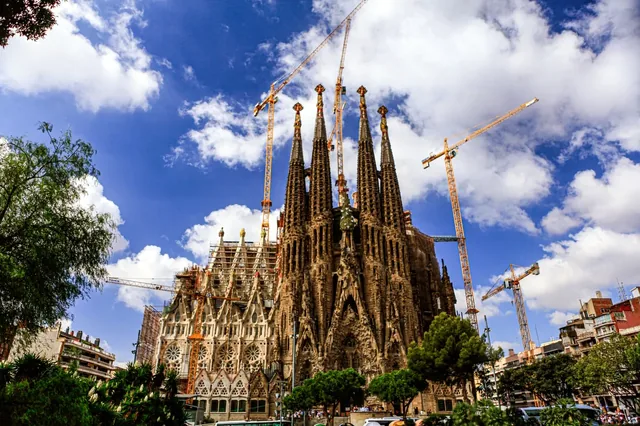
In 2026, demand is higher than it has ever been. This is the centenary of Antoni Gaudí's death on 10 June 1926, and in February 2026 Sagrada Família completed its central Tower of Jesus Christ, making it the world's tallest church at 172.5 metres. Tourists visiting this year are the first people on earth to see it fully crowned after 144 years of construction. Book your Sagrada Família slot two to three weeks ahead, and your Park Güell slot at least a week in advance. Everything else on this one-day itinerary is walk-in friendly.
2026 Tip
The Tower of Jesus Christ was completed structurally on 20 February 2026 and blessed by Pope Leo XIV on 10 June 2026, the exact centenary of Gaudí's death. If you visit in 2026, you are not just seeing a famous building. You are seeing it complete for the very first time in its history.
The 1-Day Barcelona Itinerary: Hour by Hour
This route is built around the city's rhythms. Mornings at Sagrada Família before the crowds arrive. A late-morning wander through the Gothic Quarter with a stop at La Boqueria before the tourist rush. Park Güell in the early afternoon when the light is ideal. Passeig de Gràcia in the late afternoon. And a sunset that will make you want to move here.
| Time | What to do | Neighbourhood |
|---|---|---|
| 9:00 am | Sagrada Família (timed entry) | Eixample |
| 11:00 am | Gothic Quarter, Barcelona Cathedral, La Rambla, La Boqueria | Barri Gòtic |
| 1:30 pm | Lunch in El Born | El Born |
| 3:00 pm | Park Güell (timed entry) | Gràcia |
| 5:00 pm | Passeig de Gràcia: Casa Batlló and Casa Milà | Eixample |
| 7:30 pm | Sunset at Bunkers del Carmel (free) | El Carmel |
| 9:00 pm | Dinner in El Born or Barceloneta | El Born / Barceloneta |
9:00 am: Start Your Day at Sagrada Família
Arrive at your timed entry slot and go straight through security. Morning is the best time inside the basilica: the Nativity facade faces east, and the stained glass throws warm gold and amber light across the nave in the first hours of the day. By 11:00 am the interior fills up and the atmosphere shifts from contemplative to busy. Early is better.
Construction began in 1882 under architect Francisco de Paula del Villar, and Gaudí took over in 1883, dedicating the last 43 years of his life entirely to the project. He was struck by a tram on 7 June 1926 and died three days later on 10 June. First responders initially left him untended because his threadbare clothes made them think he was a beggar. He is buried in the crypt beneath the basilica he never saw finished. The building he gave his life to was only structurally completed 100 years after his death, in 2026.
Allow 90 minutes inside the basilica. More if you add tower access. You choose between the Nativity Tower (east, more ornate, best in morning light) and the Passion Tower (west, more austere, better in the afternoon), a choice our guide to which Sagrada Família tower to visit breaks down in detail. If you have to pick one and you are visiting in the morning, the Nativity Tower is the right choice.
Fast-track entry starts from €37.80. Tower access is a separate add-on and sells out independently, so add it when you book if you want to go up.
Light tip
The stained glass on the Nativity side (east) pours warm gold and amber light into the nave during morning visits. The Passion side (west) throws deep blues and purples in the afternoon. Morning slots get the more dramatic effect. Even if your entry is later in the day, position yourself in the central nave facing west toward the Passion facade to make the most of the available light.
11:00 am: The Gothic Quarter, Barcelona Cathedral, and La Rambla
From Sagrada Família, take the metro (L2 or L5) toward the city centre. The Gothic Quarter, known in Catalan as the Barri Gòtic, is the oldest part of Barcelona: a medieval knot of narrow lanes and small squares built directly over the remains of the Roman colony of Barcino, which was founded around the 1st century BC. Some of these cobblestone streets have looked more or less the same since the 14th century.
Do not over-plan your route through the Gothic Quarter. The best things are the ones you find by accident. That said, there are a few specific things worth finding: the Barcelona Cathedral (tourist ticket €16, open from 9:30 am daily), with its 13 white geese in the cloister; the Pont del Bisbe, a Gothic-revival bridge arching theatrically over a narrow lane; and the Temple of Augustus, four Roman columns from the 1st century BC hidden inside a medieval courtyard at Carrer del Paradís 10. Most tourists walk past the entrance without realising it is there.
La Rambla, Barcelona's most famous tree-lined boulevard, runs along the western edge of the Gothic Quarter. Walk it at least once: the flower stalls, the street performers, and the sheer human density are all genuinely Barcelona. La Boqueria, the great covered market, opens off La Rambla at roughly the midpoint and is worth a visit before noon. It is closed on Sundays and Mondays have no fresh fish.
Local tip
La Boqueria is beautiful but overrun by mid-morning. Visit between 8:00 am and 10:00 am on a weekday to find it at its best, when chefs are buying and the tourist tide has not yet arrived. If you are visiting on a Sunday, La Boqueria is closed: head to Mercat de Santa Caterina in El Born instead. It has a spectacular mosaic-tile roof, a fraction of the crowds, and a far more local atmosphere. It is where Barcelona people actually shop.
1:30 pm: Eat in Barcelona the Right Way
Barcelona runs on a later schedule than most northern European cities. Lunch is from 2:00 pm to 3:30 pm. Dinner starts at 9:00 pm. Eating at noon gets you an empty restaurant and a slightly different menu. Embrace the rhythm and the meals are better in every way.
For lunch, make your way to El Born, the neighbourhood just east of the Gothic Quarter. It has the highest density of genuinely good restaurants in the city, at every price point. Look for a menú del día: the set lunch menu that most Catalan restaurants offer on weekdays, usually for €12 to €18. A starter, a main, dessert, bread, and a drink. It is the best-value meal in Barcelona and it is what the people at the next table are eating.
Avoid restaurants on La Rambla itself. They cater to tourists who are passing through and the prices reflect that. A five-minute walk east puts you in a completely different world.
3:00 pm: Park Güell
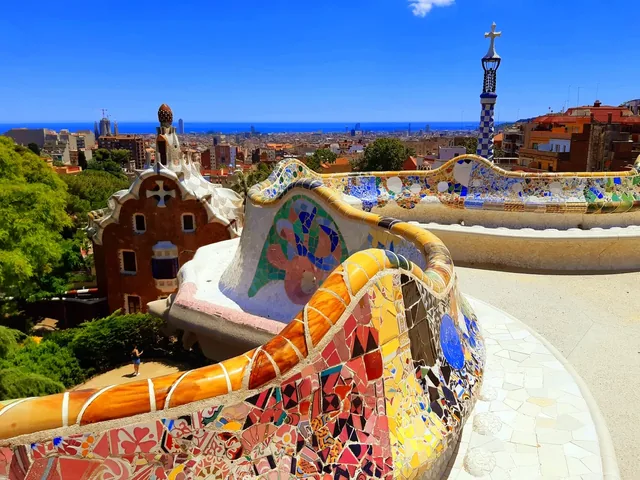
Park Güell is exactly what you picture when you picture Barcelona. The dragon staircase, the mosaic-covered terrace, the colonnaded Hypostyle Hall below: all of it is exactly as photogenic in person as in the photographs. Some people find that anticlimactic. Most are just relieved.
Construction started in October 1900, commissioned by Gaudí's wealthy patron Eusebi Güell. The original vision was a private residential development of 60 luxury plots for Barcelona's upper class, inspired by the English garden city movement. The name even uses the English spelling, "Park," as a nod to that influence. Only two houses were ever built. Transport links to the hilltop site were poor, the plots did not sell, and with the outbreak of the First World War in 1914, work stopped entirely. Güell died in 1918. The park was sold to the city council in 1922 and opened to the public in 1926. UNESCO recognised it as a World Heritage Site in 1984.
The ticketed Monumental Zone (the terrace, the dragon staircase, the hall) requires a timed entry booking and sells out regularly. The afternoon slot around 3:00 pm to 4:00 pm is slightly less crowded than the mid-morning peak. Entry with audio guide starts from €17.00. Allow 90 minutes: the terrace views of Barcelona across to the sea are worth taking slowly.
5:00 pm: Passeig de Gràcia
After Park Güell, take the metro back down to Passeig de Gràcia, Barcelona's grandest boulevard and the centrepiece of the Eixample grid. At the turn of the 20th century, wealthy Catalan families competed to commission the most spectacular townhouses on this street. Two of the results are unmissable even from the pavement.
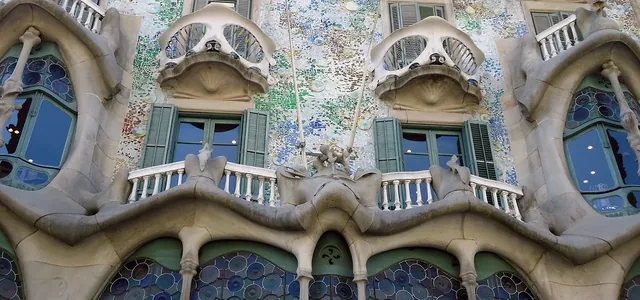
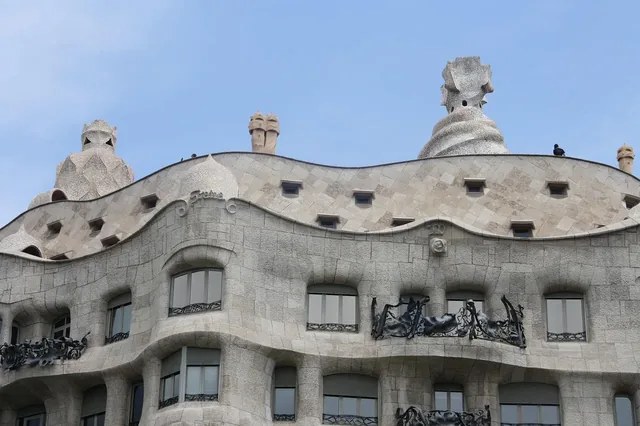
Casa Batlló at number 43 is Gaudí's vision of a dragon shimmering in broken blue and green ceramic tiles, the balconies shaped like skulls, the roof a scaled spine. Casa Milà at number 92 (known as La Pedrera) has a rooftop of surreal twisted stone chimneys that looks like something from another planet. Both facades are free to admire from the street. Buying tickets to go inside each one is worthwhile if you have time; if you are running short on hours, the exterior views are more than enough and the boulevard itself is a pleasure to walk.
Two blocks north sits Hospital de Sant Pau, a UNESCO-listed Catalan art nouveau complex designed by Gaudí's contemporary Lluís Domènech i Montaner. Most tourists on a 1-day itinerary skip it entirely, which means you will have the ornate pavilions and gardens almost to yourself. It is one of the most beautiful buildings in the city and costs a fraction of the Gaudí sites to enter.
7:30 pm: The Sunset Spot Most 1-Day Itineraries Miss
Every city has a viewpoint that locals know about and tourists don't. In Barcelona, it is Bunkers del Carmel, a ruined anti-aircraft battery on a hill in the El Carmel neighbourhood, and it gives the best free view in the city.
The bunkers were built in 1937, during the Spanish Civil War, to defend Barcelona against air raids by Italian and German forces allied with Franco. After the war ended, thousands of families displaced by poverty and conflict built makeshift homes in and around the abandoned military structures. The neighbourhood that formed there, known locally as the Barrio de los Cañones, the Cannons neighbourhood, became a self-contained community that survived until the 1990s, when Barcelona cleared it to prepare for the 1992 Olympic Games. The site was excavated and opened to the public in 2011 and now draws a steady stream of people who know about it for a 360-degree panorama of the entire city: Sagrada Família to the east, Tibidabo to the north, the port and the sea to the south.
To get there from Passeig de Gràcia, take bus 24 toward El Carmel and walk 15 minutes uphill, or take a taxi for around €8 to €10. Arrive by 7:30 pm in summer and you will have time to find your spot before the light turns golden. Entry is free, always.
According to local accounts, the Barrio de los Cañones that grew up around the bunkers after the Civil War had its own identity, its own rhythms, and its own community ties that lasted decades. Residents who were rehoused in the 1990s still describe it as a neighbourhood erased rather than relocated. What was once a place of anti-aircraft guns and desperate shelter is now a hilltop where people bring wine and watch the sun drop behind the sea. Barcelona has a way of writing new stories over old ones.
9:00 pm: Dinner in El Born or Barceloneta
Barcelona's evening is long and the best of it starts after 9:00 pm. For dinner, return to El Born for Catalan cooking: braised meats, fresh pasta, creative tapas, and a wine list that takes its Catalan and Spanish producers seriously. Or head down to Barceloneta, the old fishing neighbourhood at the foot of the port, for seafood: fideuà (a noodle-based paella), suquet de peix (a slow-cooked Catalan fish stew), or simply a plate of fresh clams and a cold beer by the water.
Eat at 8:30 pm at the earliest, ideally 9:00 pm. The best restaurants fill up after 9:00 pm, the atmosphere is entirely different from the early tourist seatings, and the staff are considerably happier to see you. One dinner eaten on Barcelona time is worth three eaten out of step with it.
How to Get Around Barcelona in One Day
The Barcelona metro is clean, fast, air-conditioned, and runs to every stop on this itinerary. A T-Casual 10-trip card costs €13.00 and covers the metro, bus, and suburban trains within the city zones. It is the most economical option for a single day of sightseeing.
Note: the T-Casual does not cover the airport metro. If you are arriving from or leaving to Barcelona El Prat airport, you need a separate airport supplement ticket or a Hola BCN tourist pass. The Hola BCN 2-day unlimited pass costs €18.70 and includes airport access, worth considering if you are arriving and departing by metro in the same trip.
| Destination | Metro stop | Line |
|---|---|---|
| Sagrada Família | Sagrada Família | L2, L5 |
| Gothic Quarter / Cathedral | Jaume I or Liceu | L4 / L3 |
| La Boqueria / La Rambla | Liceu | L3 |
| Park Güell | Lesseps or Vallcarca, then walk uphill | L3 |
| Passeig de Gràcia | Passeig de Gràcia | L2, L3, L4 |
| El Born | Barceloneta or Jaume I | L4 |
For Bunkers del Carmel, take bus 24 from Passeig de Gràcia toward El Carmel, or book a taxi. The drive takes about 15 minutes from the city centre and costs €8 to €10.
Is 1 Day in Barcelona Enough?
Enough to tick the main attractions: yes. Enough to understand the city: not quite. Barcelona rewards time spent wandering without an itinerary, finding a vermutería open from noon in the Poblenou neighbourhood, stumbling onto a neighbourhood festival in Gràcia, spending an afternoon at the Museu Picasso without rushing. None of that fits into 24 hours in Barcelona when the major sights are already accounted for.
But one well-planned day in Barcelona is still a genuinely excellent day. You will see two of the most extraordinary buildings in the world, walk streets that have not changed in 600 years, and watch the sun set over the Mediterranean from a hilltop that most tourists never reach. You will leave wanting more, which is probably the right result.
If you have any flexibility, 2 days changes everything. The second day is when you find your own Barcelona, rather than the one on the itinerary.
Frequently Asked Questions
Can you do Sagrada Família and Park Güell in one day?
Yes, comfortably, as long as both are booked in advance with timed entry slots. A morning slot at Sagrada Família and a 3:00 pm slot at Park Güell leaves a full two hours for the Gothic Quarter and La Boqueria in between. The two sites are linked by the metro (L2/L5 at Sagrada Família to L3 at Lesseps for Park Güell). Do not attempt either without a pre-booked ticket in 2026: the queues at the gate can run to several hours.
What is the best way to get around Barcelona in one day?
The metro is the fastest and most economical option. A T-Casual 10-trip card costs €13.00 and covers metro, bus, and trains within the city. It is not valid for the airport metro, so if you are arriving or departing from El Prat airport by public transport, buy a separate airport supplement or a Hola BCN tourist pass (from €18.70 for 2 days, airport included).
Where should I stay in Barcelona for one night?
El Born puts you in walking distance of the Gothic Quarter, La Rambla, and Barceloneta beach, making it the most convenient base for this itinerary. Eixample is central and well-connected by metro, ideal if you want to be closer to Sagrada Família and Passeig de Gràcia. Avoid hotels directly on La Rambla: the street is lively until very late and the hotel prices do not reflect the quality.
What to eat in Barcelona in one day?
Start with coffee and pa amb tomàquet (bread rubbed with tomato and olive oil) at a neighbourhood bar. Lunch is best as a menú del día in El Born: a full set meal for €12 to €18, eaten at 2:00 pm when Barcelona actually eats. For dinner in the evening, head to Barceloneta for seafood or stay in El Born for Catalan tapas. Avoid any restaurant with a menu displayed in six languages on the pavement outside.
Do I need a guided tour for Sagrada Família or Park Güell?
Not for either. Both sites are meaningful and navigable without a guide. Sagrada Família offers audio guides with certain ticket types, and the signage inside is detailed enough to give good context. A guided tour of Sagrada Família is worthwhile if you want a deeper understanding of the construction history and Gaudí's symbolism. For Park Güell, an audio guide (included with the entry ticket) covers the essentials without the group pace.