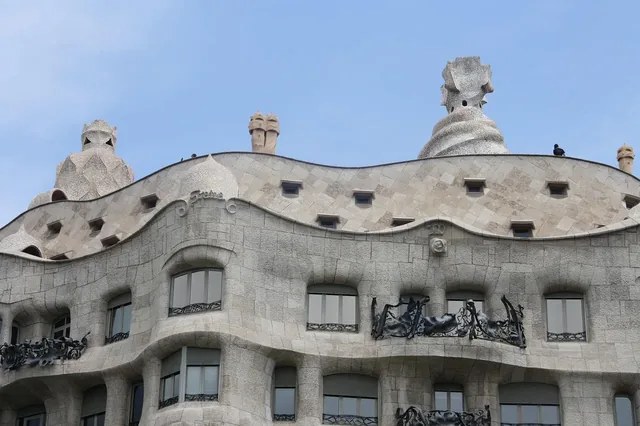
No architect has stamped a city quite the way Antoni Gaudí stamped Barcelona. Walk around the Eixample and you'll pass two of his buildings within minutes. Drive up to the hills and his park appears. Turn a corner near the old port and there's his palace. The city is saturated with his work, and the work is unlike anything else in the world.
Who Was Antoni Gaudí?
Antoni Gaudí i Cornet (1852–1926) was a Catalan architect and the defining figure of Catalan Modernisme, the local expression of Art Nouveau. His professors at the Barcelona School of Architecture couldn't quite place him. When he received his diploma in 1878, the school's director Elies Rogent reportedly said: "Who knows if we have given this diploma to a nut or to a genius?" The answer took about twenty years to become obvious.
Gaudí worked in Barcelona almost his whole career, largely under the patronage of industrialist Eusebi Güell. His Catholic faith and obsession with natural forms shaped everything he designed: walls that curve like cave rock, façades that ripple like water, rooftops packed with chimneys that look like armoured soldiers. No other architect, before or since, has produced anything quite like it.
If you're visiting in 2026, the timing is good. It's the centenary of Gaudí's death, the year the main tower of La Sagrada Família is expected to top out, and Barcelona has been named UNESCO World Capital of Architecture. If you've been putting off the trip, now is the time.
Gaudí's UNESCO World Heritage Sites at a Glance
Seven of Gaudí's works have been declared UNESCO World Heritage Sites, recognised as masterpieces of human creativity. Here's a quick overview of the main Gaudí sites open to tourists:
| Building | Year Built | UNESCO | Entry (from) | Must-See |
|---|---|---|---|---|
| La Sagrada Família | 1882–present | 2005 | From €33.80 | Nativity Façade, stained glass, towers |
| Casa Batlló | 1904–1906 | 2005 | From €31.00 | Dragon rooftop, Noble Floor, light well |
| Casa Milà (La Pedrera) | 1906–1912 | 1984 | From €29.00 | Rooftop chimneys, period apartment |
| Park Güell | 1900–1914 | 1984 | From €17.00 | Mosaic terrace, Hypostyle Hall, views |
| Palau Güell | 1886–1890 | 1984 | From €15.00 | Parabolic dome, rooftop chimneys |
| Casa Vicens | 1883–1885 | 2005 | From €24.00 | Colourful tiled façade, restored interiors |
La Sagrada Família
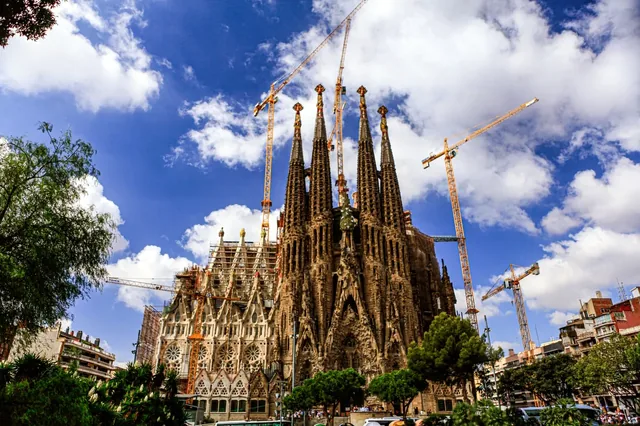
Every list of Gaudí buildings in Barcelona starts here. La Sagrada Família is the most visited monument in Spain, with over 4.5 million people coming each year. It was the project Gaudí gave the last 43 years of his life to. He took over in 1883 and worked on it until he was hit by a tram in 1926. It is, without question, his masterpiece.
The Nativity Façade, the only one finished during his lifetime, is dense with Biblical sculpture. You could study it for an hour and still miss things. Step inside and the effect is immediate: branching stone columns hold up the ceiling like a forest, and stained glass sends amber and violet light across the nave. Most people go quiet when they walk in. It doesn't feel like a building.
La Sagrada Família is still under construction. The Tower of Jesus Christ is expected to top out in 2026. Tickets sell out weeks ahead in summer and there's no ticket booth on site. Book online as early as possible, and get an audio guide. The symbolism packed into every surface takes some unpacking. If you're adding tower access to your ticket, see our guide to the Nativity and Passion towers to work out which one suits you.
Casa Batlló
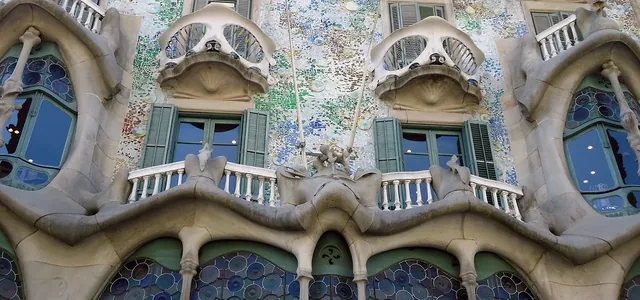
Casa Batlló sits on Passeig de Gràcia and stops people in their tracks. Gaudí remodelled this apartment building between 1904 and 1906 for the Batlló family. The result looks like a building from underwater: the façade covered in blue and green ceramic tiles, the balconies shaped like skulls and bones, the roof curving like a dragon's back.
Inside is just as strange. The central light well shifts from deep blue at the bottom to pale blue at the top, calibrated so natural light reaches every floor evenly. The Noble Floor, the main apartment, shows Gaudí's eye for detail: door handles shaped for the human hand, ceilings that spiral like water going down a drain, windows that frame the street like a painting.
The rooftop is the highlight. The dragon's spine ridge, the mosaic chimney stacks, the views across the city. Casa Batlló is a UNESCO World Heritage Site and sells out fast. Buy tickets well in advance.
Casa Milà (La Pedrera)
Ten minutes up Passeig de Gràcia from Casa Batlló is Casa Milà, known to everyone as La Pedrera ("the stone quarry"), a nickname that stuck after locals saw the undulating limestone façade go up. Built between 1906 and 1912, it was Gaudí's last secular building and his most architecturally radical.
There's not a straight line on the exterior. The limestone ripples, the wrought-iron balconies look like tangled seaweed, and when it was unveiled, people laughed at it. UNESCO inscribed it as a World Heritage Site in 1984. The balconies that made people laugh are now on every Barcelona postcard.
The rooftop of La Pedrera is not to be missed: warrior-like chimneys and ventilation towers clad in broken ceramic tile, spread across a terrace with views in every direction. Inside, the Noble Floor apartment has been restored to show how a wealthy Catalan family lived here in the early 20th century. Visiting at dusk is worth it. The stone façade goes warm in the evening light.
Casa Batlló vs La Pedrera: Which Should You Visit?
Both if possible. They're a 10-minute walk apart and work well in a single afternoon. If you have to pick one: Casa Batlló is more theatrical and immersive inside; La Pedrera has the more iconic rooftop and more architectural depth. Most first-time visitors prefer Casa Batlló. People who care about how buildings actually work tend to prefer La Pedrera. Our Casa Batlló vs Casa Milà comparison weighs the two side by side.
| Casa Batlló | La Pedrera | |
|---|---|---|
| Style | Dramatic, colourful, theatrical | Architectural, sculptural, refined |
| Interior | Immersive: every room is a spectacle | Restored period apartment and exhibition |
| Rooftop | Dragon's back, striking and photogenic | Warrior chimneys, wider views |
| Ticket price | From €31.00 | From €29.00 |
| Best for | First-time visitors, design lovers | Architecture enthusiasts, photographers |
Park Güell
Commissioned by Eusebi Güell as a residential garden estate on the hill of El Carmel, Park Güell was built between 1900 and 1914. The housing development never worked, only two houses were ever sold, but the park Gaudí created became one of the great public spaces of the 20th century and a UNESCO World Heritage Site.
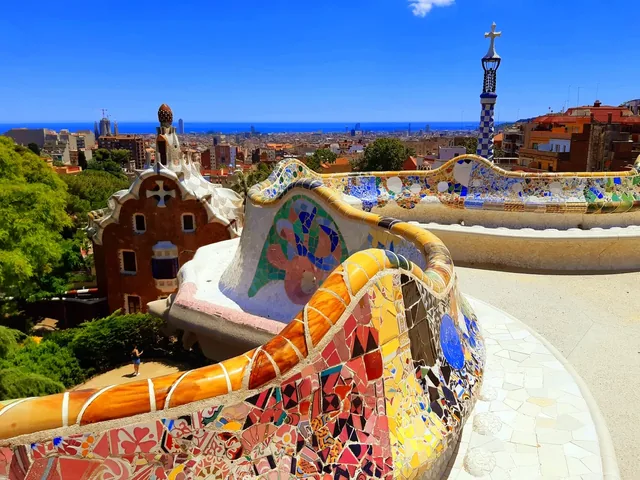
The ticketed Monumental Zone is where the main attractions are: the serpentine terrace covered in colourful mosaic trencadís tilework, the Doric columns of the Hypostyle Hall (originally designed as a covered market), and the fairytale gatehouses at the entrance. The terrace also has some of the best views in Barcelona, with the city stretching all the way to the sea and La Sagrada Família rising in the middle distance.
The Gaudí House Museum is also in the park. It's a modest pink house where Gaudí lived for 20 years, with original furniture he designed and personal belongings. Quieter and more intimate than the main sites. Book your timed entry to the Monumental Zone in advance. It sells out regularly.
Palau Güell
Palau Güell came before the famous buildings, and it's one of the better-kept secrets on the Barcelona tourist trail. Gaudí built it as a private palace for Eusebi Güell between 1886 and 1890, just off La Rambla in the El Raval neighbourhood. Compared to the queues at Casa Batlló and La Pedrera, it's almost peaceful here, which makes for a calmer, more focused visit.
The interior is dark and theatrical: a central hall rises through multiple storeys under a parabolic dome with small holes punched through it, letting in pinpricks of light like a starry sky. The rooftop has a cluster of chimneys in varying heights, each clad in ceramic tiles, an early version of the rooftop language Gaudí would perfect at La Pedrera 20 years later.
Palau Güell is a UNESCO World Heritage Site. If you want to understand where Gaudí's architectural style first developed, and see something extraordinary without the crowds, this is worth a few hours of your time.
Casa Vicens
Most tourists walk straight past Casa Vicens without knowing what it is. Built between 1883 and 1885 as a summer house for the Vicens family in the Gràcia neighbourhood, it was Gaudí's first major commission. It only opened to the public in 2017, so it still flies under the radar for most visitors, which is part of its appeal.
The façade is a riot of colour: orange and green geometric tiles, decorative ironwork palm leaves, and Oriental-influenced details that feel almost out of character compared to the later work. Inside, the restored rooms show the craftsmanship and early organic forms Gaudí would develop over the following four decades. Casa Vicens was declared a UNESCO World Heritage Site in 2005.
Casa Calvet
Less visited and all the better for it, Casa Calvet is the only Gaudí building to win an official prize: the Barcelona City Council's annual architecture award in 1900. Built between 1898 and 1900 in the Eixample district, it is more restrained than his later work but full of characteristic touches: baroque curves, wrought-iron hardware, sculptural stone façades. The ground floor has a restaurant where you can eat in a room Gaudí designed, a genuinely unusual experience that most people in Barcelona don't know about.
Beyond Barcelona: Crypt of Colònia Güell
In Santa Coloma de Cervelló, around 20km from Barcelona, the Crypt of Colònia Güell is a UNESCO World Heritage Site that almost no tourist visits. Gaudí worked on it from 1908, using it to test the structural principles he would later apply to La Sagrada Família. The organic brick vaults and inclined columns are a direct preview of his greatest work. Allow half a day. You'll leave with a much deeper understanding of where La Sagrada Família actually came from.
How to Plan Your Gaudí Visit
Always book tickets in advance
Every major Gaudí attraction in Barcelona requires advance booking, especially in summer. La Sagrada Família, Casa Batlló, and La Pedrera sell out weeks ahead during peak season. Park Güell's Monumental Zone sells out days in advance. Book on the official website of each attraction. Reseller sites charge significantly more for the same tickets.
Which Gaudí building should you visit first?
If time is short, La Sagrada Família is non-negotiable. Add Casa Batlló or La Pedrera for the rooftop experience, and Park Güell for the outdoor setting and city views. Palau Güell and Casa Vicens are for visitors who want to understand the full arc of Gaudí's career, from his first commission to his final masterpiece.
Gaudi tours in Barcelona
Guided Gaudi tours in Barcelona range from walking tours covering Passeig de Gràcia to full-day private tours including Park Güell and the lesser-known Gaudí sites. Every building also has its own audio guide. Each one is excellent and worth the small extra cost if you prefer to go at your own pace.
FAQ: Best Gaudí Buildings in Barcelona
Which Gaudí building is the best to visit in Barcelona?
La Sagrada Família is the one you can't skip. It's Gaudí's life's work and unlike anything else in the world. If you're adding a second, Casa Batlló has the most immersive interior of any Gaudí building in Barcelona.
How many Gaudí buildings are there in Barcelona?
Gaudí designed over a dozen buildings in Barcelona. Seven works are declared UNESCO World Heritage Sites: Sagrada Família, Casa Batlló, Casa Milà, Park Güell, Palau Güell, Casa Vicens, plus the Crypt of Colònia Güell just outside the city.
Do I need to book Gaudí tickets in advance?
Yes, always. La Sagrada Família, Casa Batlló, and Park Güell regularly sell out days or weeks ahead in summer. Book on the official websites as soon as your dates are confirmed. Sagrada Família has no on-site ticket booth.
Are any Gaudí buildings free to visit from the outside?
You can see the exterior façades of all Gaudí buildings from the street for free, and the façades alone are worth seeing. To visit the interiors, where the real experience is, you need a paid ticket for all the major sites.
Is Sagrada Família finished?
Not yet. The Tower of Jesus Christ is expected to be completed in 2026, the centenary of Gaudí's death. The basilica is fully open to visitors and has been a working church since 2010.