Three days in Barcelona is enough time to hit the city's greatest highlights without feeling rushed. You'll wander medieval streets, stand inside two of Gaudí's masterpieces, catch a sunset over the Mediterranean, and eat very well in between. This 3 days in Barcelona itinerary is designed to help you plan your stay in Barcelona and make the most of every hour. Here's exactly how to spend 3 days in Barcelona.
3-Day Barcelona Itinerary: Quick Overview
If you only have three days in Barcelona, here's how the time breaks down:
- Day 1: Gothic Quarter, La Rambla, El Born, Picasso Museum
- Day 2: Eixample, Casa Milà, Casa Batlló, Sagrada Família, Park Güell, Flamenco show
- Day 3: Montjuïc, MNAC, Fundació Joan Miró, Cable Car, Barceloneta Beach
Day 1 in Barcelona: Gothic Quarter and Old Town
Welcome to Day 1 of your three days in Barcelona. Today you're diving into the heart of the city: the captivating Old Town. Expect narrow medieval streets, charming plazas, and centuries of history packed into a walkable area.
Morning: Barri Gòtic (Gothic Quarter)
Start your first day in Barcelona by stepping back in time in the Barri Gòtic, the Gothic Quarter. It sits between La Rambla in the west and Via Laietana in the east, and the layers of history here go all the way back to Roman times. Allow yourself to get slightly lost here: the best things are found without a map.
Begin with El Call, the old Jewish Quarter. These narrow streets hold tales from medieval times, and the neighbourhood's history as one of the most important Jewish communities in medieval Catalonia is still tangible in the architecture. Look for the remnants of the medieval synagogue on Carrer de Marlet, one of the oldest in Europe.
From El Call, it is a short walk to the Barcelona Cathedral, the Gothic Quarter's most imposing landmark. The cathedral was built between the 13th and 15th centuries, though the neo-Gothic facade was only completed in 1913. Do not miss the cloister, home to 13 white geese that have been kept here for centuries (one for each year of Sant Eulàlia's life, the city's co-patron saint). If you climb to the rooftop, you get sweeping views over the terracotta rooftops of the old city. Entry to the cloister and nave is free in the morning; the full visit with rooftop access costs a few euros.
Then make your way to Plaça Reial, a grand colonnaded square worth spending time in. Look up at the six-armed street lamps: they were designed by a 26-year-old Antoni Gaudí in 1878, one of his very first commissions for the city, completed just as he finished his architecture studies. The square fills up with café terraces by midday and comes alive with street life all afternoon.
Midday: La Rambla and La Boqueria Market
After the Gothic Quarter, step onto La Rambla, the boulevard that stretches from Plaça de Catalunya down to the Christopher Columbus Monument at Port Vell. Street performers, flower stalls, and bustling cafés line the way. It is touristy, yes, but no 3-day Barcelona itinerary would be complete without at least one stroll down this famous street.
Just off La Rambla lies La Boqueria Market, a covered market packed with fresh produce, cured meats, olives, spices, and more cheese than you will know what to do with. It is one of the best spots in Barcelona to grab a quick bite or pick up something to take home. A few tips for visiting La Boqueria: the stalls near the entrance cater squarely to tourists at inflated prices. Walk deeper into the market to find the stalls where local chefs and residents actually shop. The freshly squeezed fruit juices are worth every cent regardless of where you buy them.
Afternoon: El Born
As the sun arcs through the Catalan sky, head to El Born, a bohemian district known for its historic charm and excellent food scene. It sits just east of the Gothic Quarter and has a noticeably different character: less medieval grandeur, more neighbourhood warmth. The streets here are lined with independent boutiques, art galleries, and cafés that feel genuinely local rather than tourist-facing.
This is the ideal spot for a leisurely lunch. From tapas to traditional Catalan food, El Born delivers on every front. Bar del Pla is a reliable sit-down option with excellent Catalan cooking. For something lighter, any of the small sandwich bars on Carrer del Rec will do the job.
While you are in the neighbourhood, do not miss the Palau de la Música Catalana. Crafted by architect Lluís Domènech i Montaner in the early 20th century, this UNESCO World Heritage Site is one of the most spectacular concert halls in Europe. The main auditorium, flooded with coloured light from a huge Art Nouveau stained-glass skylight, is the kind of room that makes people stop mid-sentence. Guided tours run throughout the day; if you can, book the morning tour when the light through the skylight is at its most dramatic.
Evening: Picasso Museum and El Born Tapas Bars
As the sun dips below the horizon, head to the Picasso Museum in the heart of El Born. Housed in a series of medieval palaces on Carrer de Montcada, the museum holds more than 4,000 works by Pablo Picasso: sketches, paintings, and sculptures. The collection focuses on his formative years, showcasing his artistic evolution from the Blue and Rose periods through to his groundbreaking Cubist work. Admission is €14 for adults and free for visitors under 18. Note that entry is also free on the first Sunday of each month and on Thursdays from 6pm to 9:30pm.
After the museum, El Born's tapas bars are your natural next stop. Euskal Etxea is a highlight: a celebration of Basque cuisine where the tapas come as pinchos, small bites on skewers showcasing olives, cured meats, and cheeses. Nearby, Sagardi Argenteria puts its own spin on pintxos with creative grilled meats and seafood combinations.
Local tip: Head to El Xampanyet around 6pm, order the house cava and anchovies, and stand at the bar. It is one of those El Born spots that locals actually use, and the cava is exceptional value.
Day 2 in Barcelona: Modernist Marvels
Day 2 of your 3-day Barcelona itinerary is dedicated to architecture. If you are visiting Barcelona for the first time, today is the day that tends to leave the biggest impression. From Gaudí's whimsical curves to the grand elegance of the Eixample grid, the sights in Barcelona you will see today genuinely do not exist anywhere else.
Morning: Eixample and Passeig de Gràcia
Start in the Eixample district, a canvas of Modernisme architecture where every corner tells a story of artistic innovation. Two buildings deserve your full attention this morning.
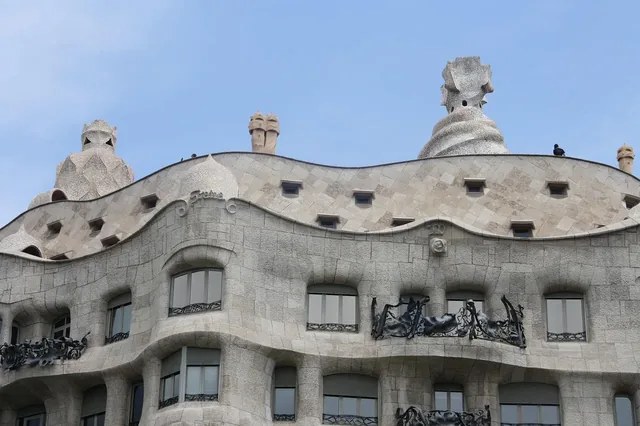
Casa Milà (La Pedrera) is a Gaudí masterpiece in the heart of Eixample. Its facade undulates like a gentle wave, defying everything you expect from a city building. Inside, the organic shapes and intricate details showcase a seamless blend of nature and design. The rooftop terrace is not to be skipped: a surreal landscape of sculptural chimneys offering panoramic views of the Barcelona skyline.
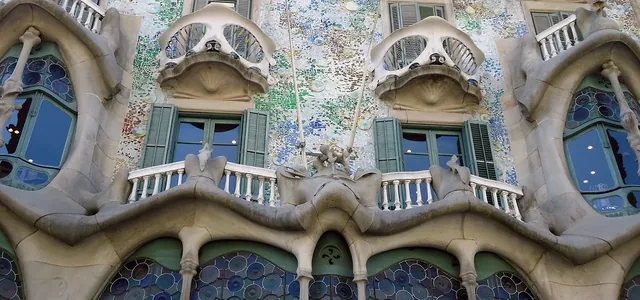
Casa Batlló, further along Passeig de Gràcia, is another jewel in Gaudí's crown. The facade, reminiscent of a dragon's scales, invites you into a world where architecture meets storytelling. The Noble Floor reflects the grandeur of the Batlló family, while the rooftop, designed like a dragon's back, elevates the experience well beyond what you would expect from a building. Standard tickets start at €35; book in advance.
Between visits, stroll Passeig de Gràcia itself, the elegant boulevard lined with Modernisme facades and luxury boutiques. Rambla de Catalunya, running one block west of Passeig de Gràcia, is a more relaxed local favourite lined with café terraces and excellent restaurants. For lunch, Cervecería Catalana, Vinitus, and Enrique Granados are all solid choices in the area.
Afternoon: Sagrada Família
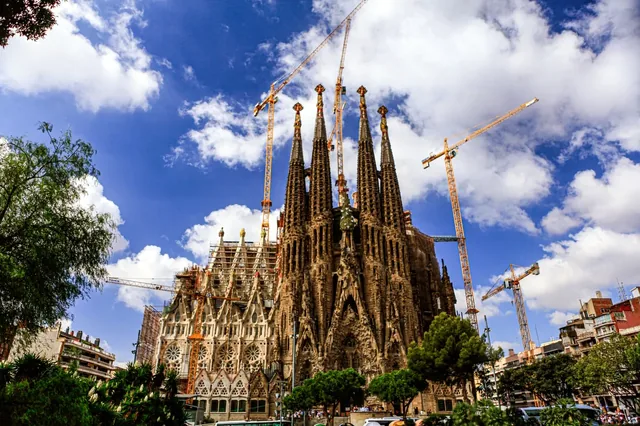
No 3-day Barcelona itinerary is complete without the Sagrada Família. Designed by Antoni Gaudí and still under construction more than a century after work began in 1882, this basilica is a building like no other. In 2026, the centenary of Gaudí's death, the Tower of Jesus Christ was completed and blessed by Pope Leo XIV in June, making the Sagrada Família now the tallest church building in the world at 172.5 metres. This year is the most significant in the building's 144-year history to visit.
As you approach, the intricate facades unfold like the pages of a surreal storybook. The Nativity facade, facing east, was completed under Gaudí himself and is covered in naturalistic sculptures depicting the birth of Christ. The Passion facade, facing west, was completed later in a more angular, agonised style by sculptor Josep Maria Subirachs. The contrast between the two is one of the most fascinating things about the building.
Step inside, and the light hits you first. The stained glass windows shift colour as the sun moves, and the stone columns rise like a forest canopy, which was exactly Gaudí's intention. Even people who do not care about churches tend to go quiet in here. If your ticket includes tower access, the views from the towers over Barcelona are exceptional. Adult tickets are €37.80. Book well in advance: this sells out weeks ahead.
Late Afternoon: Park Güell
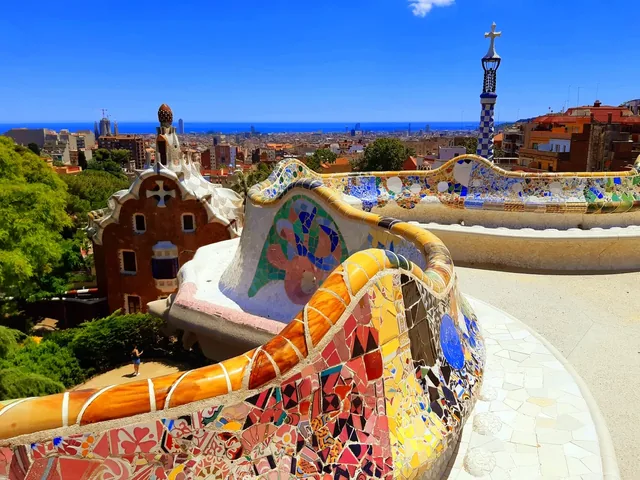
From the Sagrada Família, head up to Park Güell, a UNESCO World Heritage Site perched atop Carmel Hill. The mosaic lizard El Drac greets you at the entrance, and the park gets stranger and more delightful the further in you go.
Wander the pathways adorned with colourful ceramic tiles, where every bench, wall, and sculpture seems to tell a story. The main terrace, supported by a serpent-shaped bench, offers some of the best panoramic views in Barcelona. The Monumental Zone requires a timed ticket (€17.00 for adults). Book morning slots between 9:30 and 11am or late afternoon after 4pm for the best light and thinner crowds.
Evening: Flamenco Show
Your second night in Barcelona calls for a Flamenco show. Originating from the Andalusian region of Spain, Flamenco is a cultural expression that encapsulates centuries of history and raw emotion: song, dance, and guitar playing woven together with handclaps and finger snaps. It is not a native Catalan art form, but Barcelona has embraced it wholeheartedly, and the city has some excellent venues.
Tablao Flamenco Cordobés on La Rambla is one of the best-known venues, offering dinner and show packages as well as show-only tickets. Tablao de Carmen in the Poble Espanyol on Montjuïc is another strong option, set within a recreated traditional village. Both offer professional performances at a range of price points.
The footwork, the music, the sheer intensity in every movement make this one of the most memorable evenings you can spend in the city. Book ahead: popular shows sell out several days in advance, particularly in summer.
Day 3 in Barcelona: Montjuïc and the Beach
Day 3 in Barcelona blends panoramic views, world-class modern art, and the soothing rhythm of the Mediterranean. A perfect send-off.
Morning: MNAC and Fundació Joan Miró
Start your last day in Barcelona at the Catalan Art Museum (MNAC), perched atop Montjuïc inside the magnificent Palau Nacional. Prepare to traverse a millennium of Catalan art: Romanesque, Gothic, Renaissance, and Baroque masterpieces offering a comprehensive overview of Catalonia's artistic evolution. The Romanesque fresco collection is the standout: works rescued from churches deep in the Pyrenees, moved here in the early 20th century before they could be sold to foreign collectors. They are extraordinary up close.
Just down the hill, the Fundació Joan Miró is dedicated to the avant-garde genius of Catalan artist Joan Miró. Designed by architect Josep Lluís Sert, the building itself reflects Miró's unconventional spirit. Inside you will find paintings, sculptures, drawings, and textiles spanning Miró's full career. The bold colours and odd shapes that look simple at first tend to reveal themselves slowly. Give it time.
Afternoon: Montjuïc Cable Car and Views
After the museums, take the Montjuïc Cable Car for a spectacular ride to the heights of Montjuïc Hill. As you rise above the city, the whole of Barcelona lays itself out below: the old neighbourhoods, the grid of Eixample, the sea to one side and Tibidabo to the other. On a clear day the Sagrada Família is visible in the distance. Round-trip tickets start at around €17.10. Take the photos.
Worth checking: The Magic Fountain of Montjuïc is running its light-and-music shows again in 2026 after several years of closure due to drought. If the show schedule aligns with your visit, it is a spectacular free evening on Montjuïc before you head down to the beach.
Evening: Barceloneta Beach and Dinner
Wrap up your trip to Barcelona at Barceloneta Beach, where the sun setting over the Mediterranean puts on a show of oranges, pinks, and purples. Find a spot on the sand and let the warm colours close out your three days in the city. If you are visiting with kids, the beach is a wonderful way to round off the trip.
After the sunset, head to one of the restaurants near Barceloneta for dinner. Cal Pinxo, Barceloneta, and Salamanca are all solid options for fresh seafood and local specialities. If you want to keep the night going, Opium Barcelona and Pacha Barcelona offer a chic, energetic end to your visit.
Practical Tips for Your 3 Days in Barcelona
How to Get Around Barcelona
Most of the sights on this 3-day itinerary are reachable on foot or by metro. The metro is fast, clean, and covers all the major areas. To get around Barcelona without buying individual tickets each time, consider the Barcelona Card or the Barcelona City Pass: both give unlimited metro travel and discounts at many attractions around Barcelona. Compare them against your planned visits before purchasing.
Where to Stay in Barcelona
The best place to stay in Barcelona for this itinerary is the Gothic Quarter, El Born, or Eixample. All three put you within walking distance of the Day 1 sights, and Eixample is especially convenient for Day 2. If you prefer a quieter stay in Barcelona, the Gràcia neighbourhood offers a charming village feel away from the tourist crowds.
Best Time to Visit Barcelona
The best time to visit Barcelona is April to June or September to October. The weather is warm, the crowds are thinner than in peak summer, and hotel prices are more reasonable. If you are planning a trip to Barcelona in July or August, expect heat and larger crowds but also a livelier beach scene.
A few more things to know
- Pre-book everything: Sagrada Família, Park Güell, Casa Batlló, and Casa Milà all require timed tickets and sell out weeks in advance. Book before you travel.
- FC Barcelona: If you are a football fan and Camp Nou fits into your itinerary, the stadium tour is impressive even when there is no match on.
- Parc de la Ciutadella: If you have spare time in Barcelona between sightseeing, this large green park near El Born is perfect for a rest, a picnic, or a row on the lake. It is free to enter, home to a beautiful 19th-century fountain designed partly by a young Gaudí, and one of the most pleasant places to spend an hour in the city.
Frequently Asked Questions
Is 3 days enough time in Barcelona?
Yes, three days in Barcelona is enough time to cover the main highlights comfortably: the Gothic Quarter, Barcelona Cathedral, Sagrada Família, Park Güell, Montjuïc, and Barceloneta Beach. You will not see everything, but you will leave with a genuine feel for the city and its neighbourhoods. Four or five days gives you more breathing room, but three days in Barcelona is far from too little for a first visit. If your trip is shorter, see our 1 day in Barcelona or 2 days in Barcelona guides instead.
What is the best way to get around Barcelona?
Most of Barcelona's historic centre is walkable. For longer distances, the metro is fast and affordable. The Barcelona Card gives you unlimited metro travel plus discounts at many major attractions and is worth it if you are moving between sights across all three days.
Is it worth going to Barcelona for 3 days?
Absolutely. The perfect 3 days in Barcelona gives you world-class architecture, excellent food, and a beautiful Mediterranean coastline without feeling rushed. The city is compact enough to cover a lot of ground on foot, and this 3-day itinerary is designed specifically as a Barcelona itinerary for first-timers who want to see the best of the city in limited time.
What is the best time to visit Barcelona?
Spring (April to June) and early autumn (September to October) are the sweet spots for a trip to Barcelona. The weather is warm but not brutal, crowds are thinner than in July and August, and hotel prices are more reasonable. Summer is still enjoyable but expect heat, large crowds, and higher costs.
How many days do you really need in Barcelona?
Three days covers the highlights well for a first-time visitor. Five to seven days lets you go deeper: a day trip from Barcelona to Montserrat or the Costa Brava, more time in neighbourhoods like Gràcia and Poblenou, and a slower pace overall. But three days in Barcelona is a perfectly balanced first visit: not too rushed, and enough to fall in love with the city.