Barcelona has a reputation for being an expensive city, and a sit-down lunch on La Rambla can wreck a daily budget in one sitting. But the things that actually make Barcelona special, the museums, the Gaudí buildings, the Gothic quarter alleys, the fountain shows on Montjuïc, cost nothing to see if you know when to show up.
Here are 15 of the best free things to do in Barcelona, organised so you can build a full day (or three) around them without paying a single entry fee. A few need a bit of timing, so we've included the exact days and hours that matter.
Free Museums on the First Sunday, and a Few Better Days to Know About
The single best-known free activity in Barcelona is also the simplest: on the first Sunday of every month, a long list of the city's major museums offer free entry. No coupon, no hoops, just turn up (though for the more popular ones, turning up early helps).
MNAC, the huge art museum at the top of Montjuïc, is free on the first Sunday of the month with no time limit, and it's also free every Saturday afternoon from 3pm. The Museu Blau (natural history), the Frederic Marès Museum, the CCCB (contemporary culture centre) and the Disseny Hub (design museum) all join the first-Sunday free list too. So do several MUHBA city history sites, including the Roman ruins beneath El Born.
| Museum | Free when | Worth knowing |
|---|---|---|
| MNAC | First Sunday (all day) + every Saturday from 3pm | Online reservation recommended on free days |
| Museu Picasso | First Sunday + Thursdays 4-7pm (winter season) | Free tickets release exactly 4 days ahead, see tip below |
| Museu Blau (natural history) | First Sunday of the month | Good rainy-day option, less crowded than the art museums. See our full guide to things to do in Barcelona when it rains |
| CCCB | First Sunday of the month | Some temporary exhibitions may be excluded |
| Disseny Hub (design museum) | First Sunday of the month | Striking building on Plaça de les Glòries |
| Frederic Marès Museum | First Sunday of the month | Quiet courtyard right behind the Cathedral |
| MUHBA city history sites | First Sunday + most Sundays from 3pm | Includes the Roman remains under El Born and Plaça del Rei |
The Picasso Museum is the trickiest one to get into for free, and also the one most people want to see, so it deserves its own explanation.
Local tip
Outside of the first Sunday, the Picasso Museum is free on Thursday evenings from 4pm to 7pm during the winter season (late September to late March), but you need a reservation, and those free slots only open online exactly 4 days before the date, starting at 10am.
Set a phone alarm for 10am four days out, book straight away, and you'll usually get in. Wait until the morning of, and the free Thursday slot will already be gone, with 800-plus people often queued for the same window.
Gaudí's Barcelona: Free to Admire From the Pavement
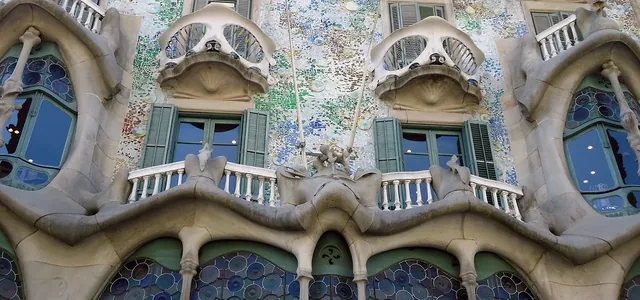
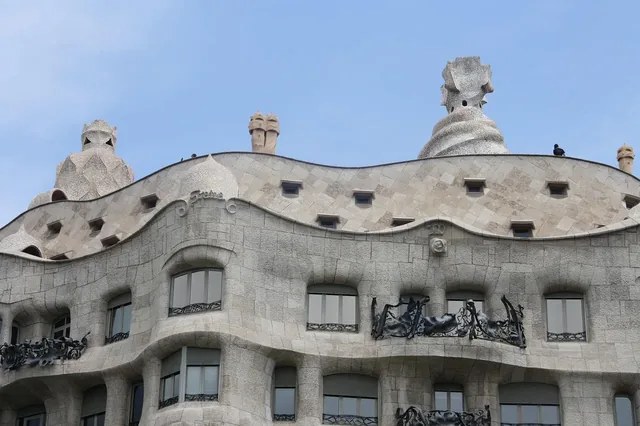
You don't need a ticket to see what makes Gaudí's buildings famous. Walk along Passeig de Gràcia and you'll pass Casa Batlló and Casa Milà (La Pedrera), both covered in the wavy, dragon-scale, bone-like details that made Gaudí's reputation, all visible from the street for nothing. Cross over to Carrer d'Enric Granados for a quieter, leafier stretch of Modernista architecture without the crowds.
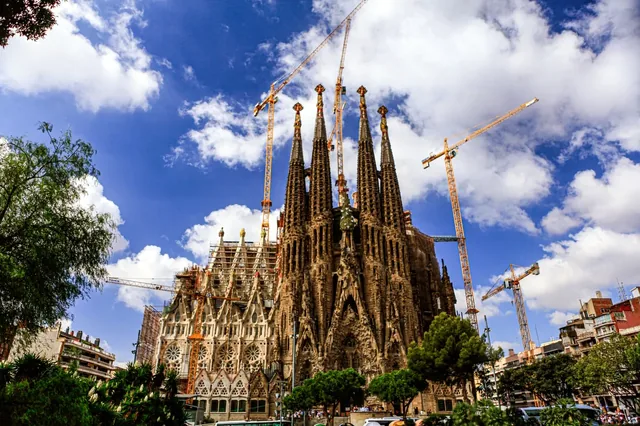
The exterior of the Sagrada Família is also free to view and photograph from Plaça de Gaudí or the surrounding streets, and it's arguably more dramatic from outside than the interior queue makes it feel. If you want to go inside, that's the one major Gaudí site where there's no way around the ticket, so book ahead regardless.
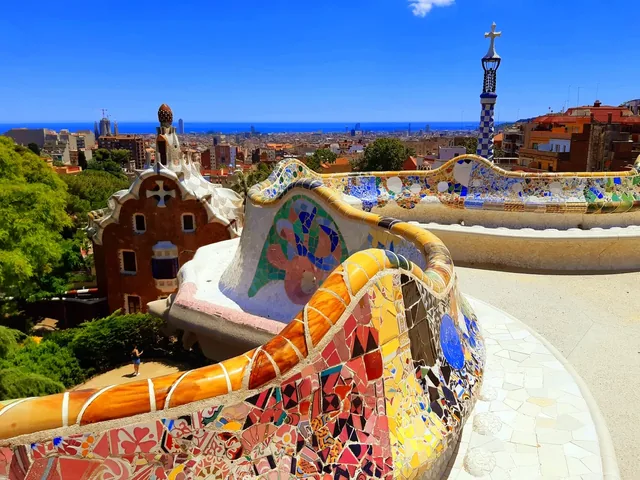
Park Güell is a slightly different story. The surrounding hillside, with its paths, pines and views over the city, is free and open to wander. The famous mosaic terrace, the dragon staircase and the gingerbread-house gatehouses sit inside the Monumental Zone, which is ticketed and has been since 2013. Don't plan your visit around finding a free way into that part, there isn't really one worth the effort, but the walk up through the surrounding park is pleasant on its own.
The Gothic Quarter's Free Time Capsules
The Gothic Quarter rewards aimless wandering more than almost anywhere else in the city, and most of its best stops don't charge admission. Start at Plaça Sant Jaume, the political heart of Catalonia, flanked by the Catalan government palace and the city hall facing each other across the square.
A short walk away, the Temple of Augustus tucks four 2,000-year-old Roman columns into the corner of a medieval courtyard, free to step into any day. Nearby, El Call, the old Jewish Quarter, is a tangle of narrow lanes that have barely widened since the Middle Ages, dotted with small plaques explaining what used to stand where.
Barcelona Cathedral is free to enter for worship on weekdays from 8:30am to 12:30pm and again from 5:45pm to 7:30pm. That's genuine free access to the main body of the Cathedral, though it doesn't include the roof terraces, cloister or museum, which are part of the separate paid tourist visit. If seeing the Gothic interior matters more to you than the rooftop views, the free worship hours are enough.
Montjuïc After Dark: The Magic Fountain Show
The Magic Fountain (Font Màgica) at the base of Montjuïc, right below the MNAC steps, puts on a free choreographed water, light and music show on Thursday, Friday and Saturday evenings, typically from 8pm to 9pm (the summer season runs longer and later, with shows from Wednesday to Sunday). No tickets, no reservations, just find a spot on the steps or the plaza below and wait for it to start.
While you're up there, the view from the MNAC steps over Plaça d'Espanya and the Venetian Towers is free at any hour, and if you time it right, you can combine the fountain show with a free Saturday-afternoon visit to MNAC itself (free from 3pm, as above). Montjuïc also has three free garden spaces worth a slower visit: the Jardins de Laribal, with their tiled staircases and fountains; the Jardins del Teatre Grec, around the open-air Greek theatre; and the Jardins de Joan Maragall, a formal, terraced garden around a small palace building that's often nearly empty.
The Best Views in Barcelona Don't Charge Admission
Skip the paid viewpoints and head to the Bunkers del Carmel, on top of Turó de la Rovira at 262 metres, for the best free panorama in the city, the whole of Barcelona laid out below, with the sea on one side and Tibidabo on the other. The concrete platforms up here were built as an anti-aircraft battery during the Spanish Civil War in 1937, and after the war, families with nowhere else to live moved into the abandoned bunkers and built an informal neighbourhood known as the Barri dels Canons, which stood until the 1990s. There's no entry fee and no set hours since it's an open hillside, but there are also no facilities, so bring your own water and expect a short uphill walk from the nearest bus stop.
Tibidabo, the hill on the city's northwestern edge, has a paid amusement park at the summit, but the hike up through the Collserola park is free, and the views start well before you reach the top. For something closer to the centre, the Mirador de l'Alcalde, a smaller viewpoint on Montjuïc near the castle, gets a fraction of the visitors of the Bunkers but still delivers a wide view over the port and the city.
Markets, Murals and a Free Walking Tour
La Boqueria, just off La Rambla, is free to walk through and one of the most photographed markets in Europe, which also means it's busy most of the day. For a calmer version of the same experience, Santa Caterina Market in El Born has the same colourful stalls and a similarly striking wavy, tiled roof, with far fewer tour groups. In the southern corner of the market, look for the MUHBA Santa Caterina exhibit, a small free display of exposed medieval monastery ruins built right into the market floor, with information panels explaining what archaeologists found when they dug beneath the stalls. Most visitors to Santa Caterina walk straight past it.
On Sundays, the Sant Antoni Market hosts a long-running book, comic and collectibles market in front of the main building, free to browse even if you're not buying. For street art, head to the northern part of Poble Nou, where entire building facades are covered in large-scale murals, a world away from the postcard version of the city.
Free walking tours run daily from Plaça Reial and Plaça de Catalunya, covering the Gothic Quarter, El Born or Gaudí's Modernisme route depending on the company. They're technically free, run on a tip-what-you-think-it-was-worth basis, and a good guide will tell you more about the history behind these neighbourhoods in two hours than a guidebook will in a week.
Free Festivals Worth Timing Your Trip Around
If your visit lines up with one of Barcelona's big festivals, you'll get a free show no museum can match. La Mercè, the city's main festival in late September, fills the streets with giant puppets (gigants), fire-runs (correfocs) and human towers (castells), most of it free and centred around Plaça Sant Jaume and the surrounding Gothic Quarter. Sant Jordi, on 23 April, is Barcelona's version of Valentine's Day and World Book Day combined, when La Rambla and Passeig de Gràcia fill with book and rose stalls and the whole city turns into an open-air market. In August, the Festa Major de Gràcia turns the narrow streets of the Gràcia neighbourhood into elaborately decorated tunnels, each street competing for the best theme, all free to wander through at any hour.
Frequently Asked Questions
How much should I budget for a day built around free activities?
Even on a free-activities day you'll cover plenty of ground, so factor in transport and food. A T-Casual card (10 metro or bus trips) is the most cost-effective option for visitors, a coffee and pastry at a bar runs a few euros, and a weekday menu del día, a fixed three-course lunch many restaurants offer, is usually the best-value sit-down meal in the city. For more on stretching your budget further, see our guide to how to save money in Barcelona.
Are free walking tours in Barcelona actually free?
There's no upfront charge, but they run on tips: you pay what you think the tour was worth at the end. A reasonable tip is generally in the range of what you'd pay for a paid tour of similar length, but it's entirely up to you.
Is it safe to visit the Bunkers del Carmel or Montjuïc's gardens after dark?
These are open hillside spaces with no gates, staff or lighting, so while they're generally fine in the early evening while the city is still lively, the walk back down can feel isolated once it's fully dark. Aim to head up before sunset and start back while there's still some daylight, or join an evening walking tour that covers Montjuïc as a group.
What's the best time of year for free sightseeing in Barcelona?
Spring (April-May) and autumn (September-October) give you mild weather for the Montjuïc gardens and the Bunkers hike, long enough evenings for the Magic Fountain show, and shorter queues at the free museum slots than during peak summer.
Is Barcelona expensive for tourists overall?
Food, accommodation and paid attractions add up quickly, especially in peak summer months. But because so many of the city's best sights, its architecture, its squares, its viewpoints and a long list of museums on the first Sunday, cost nothing, it's entirely possible to fill several days with worthwhile activities while spending very little on entry fees.