Barcelona's Gothic Quarter: Where 2,000 Years of History Come Alive
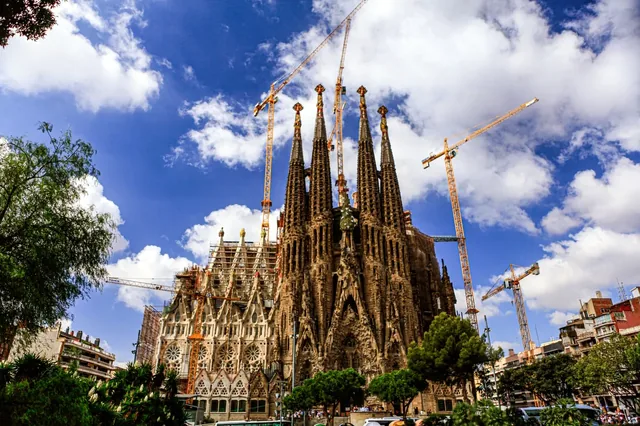
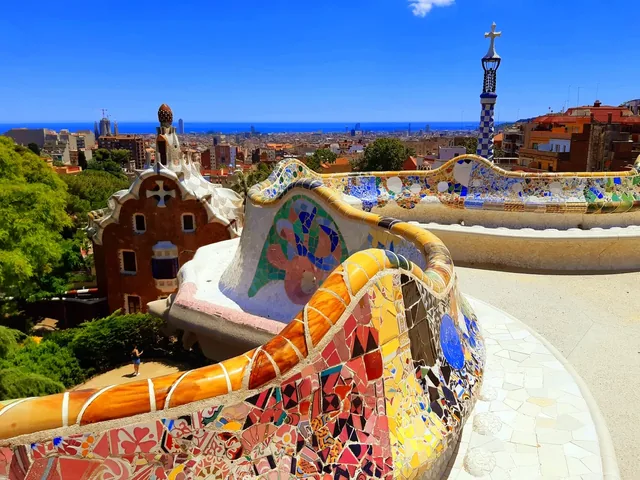
There are few places in the world where you can turn a corner and stumble upon a Roman wall tucked between a café and a souvenir shop. In Barcelona's Gothic Quarter, that kind of discovery is ordinary. The Barri Gòtic is one of the oldest neighbourhoods in Europe, and for any tourist visiting Barcelona, it belongs on the list alongside the Sagrada Família and Park Güell.
The Gothic Quarter sits in the heart of Ciutat Vella, Barcelona's old city. Bounded by La Rambla to the west and Via Laietana to the east, it is a dense maze of narrow streets and medieval plazas, with Roman layers underneath it all. It is free to explore and hard to rush through once you start paying attention.
What to see and do in the Gothic Quarter
Barcelona Cathedral (La Seu)
The Cathedral of Santa Eulalia, better known as Barcelona Cathedral or La Seu, is the natural starting point for any visit. Built between the 13th and 15th centuries, it is one of the finest Gothic church buildings in Catalonia. The interior is vast and hushed, with 28 side chapels and a crypt dedicated to Saint Eulalia, the city's co-patron. Step into the courtyard behind the cathedral, where a fountain surrounded by geese adds an unexpectedly charming detail. You can attend worship for free; the cultural visit, which includes the rooftop terrace with views across the old city, costs €11.
Pont del Bisbe (Bishop's Bridge)
Walk down Carrer del Bisbe and you cannot miss the elaborate Neo-Gothic bridge overhead. Pont del Bisbe was built in 1928 by architect Joan Rubió i Bellver, yet it blends so seamlessly into the medieval surroundings that most visitors assume it is centuries older. Look up at the carved skull and dagger beneath the arch: local legend says that if the dagger were ever removed, Barcelona itself would fall. Make a wish while you are standing there.
Plaça Reial
Just off La Rambla, Plaça Reial is one of Barcelona's liveliest squares. The colonnaded 19th-century plaza is busy from late morning until well past midnight, with tourists and locals over tapas and glasses of vermouth. The ornate lampposts were designed by a young Antoni Gaudí, one of his earliest commissions in the city. By night it becomes a nightclub hub, so the atmosphere on a Friday is very different from a quiet Sunday morning.
A short walk away, the 14th-century Basilica of Santa Maria del Pi opens onto its own square, far calmer than Plaça Reial.
Temple d'August (Temple of Augustus)
One of the real surprises of the Gothic Quarter is hidden inside a medieval courtyard at Carrer del Paradís. Four towering Corinthian columns, nearly 2,000 years old, rise up inside what looks from the street like a completely ordinary building. The Temple of Augustus is one of the best-preserved Roman temples in Spain, and admission is free. It is part of the MUHBA (Barcelona History Museum) network, open Tuesday to Saturday 10am to 7pm, Sundays until 8pm, and Mondays 10am to 2pm.
Plaça Sant Jaume
This square at the core of the Gothic Quarter has been Barcelona's civic heart since Roman times. On one side stands the Palau de la Generalitat, seat of the Catalan government; on the other, the Barcelona City Hall. The square regularly hosts political demonstrations, Catalan festivals, and human tower performances. It is where people come to celebrate things that matter to them.
Plaça del Rei and the Barcelona History Museum
Plaça del Rei is arguably the most dramatically beautiful square in the old city. Enclosed on three sides by Gothic palaces, this is said to be where Columbus reported to Ferdinand and Isabella after his first voyage to the Americas. Beneath it lies 4,000 square metres of excavated Roman streets, shops, and baths, all part of the history museum. The €7 ticket covers all MUHBA sites. The Museu Picasso is a short walk away across Via Laietana in El Born, a natural next stop.
Getting there and getting around
The Gothic Quarter is easy to reach by metro. Jaume I station (Line 4) drops you at the eastern edge; Liceu (Line 3) puts you on the La Rambla side. Plaça de Catalunya is five minutes on foot from the northern end of the neighbourhood. El Born, Barceloneta beach, and La Boqueria market are all within easy walking distance.
The streets are deliberately confusing, and that is half the pleasure. Getting mildly lost around the Gothic Quarter is an experience in itself. A guided walking tour is worthwhile for first-time visitors, since a good guide unlocks history you would otherwise walk straight past. One practical note: pickpockets are active in crowded areas, especially along La Rambla and near the cathedral. Keep your bag in front of you and your phone in a secure pocket. Take those precautions and most visits pass without incident.
FAQ
Is the Gothic Quarter worth visiting?
Yes. The Gothic Quarter is one of the most historically rich neighbourhoods in Europe. Entry is free, it is compact enough to cover on foot in two to three hours, and it holds some of the most compelling sights in Barcelona. Two hours or a full day, you will find things worth stopping for. It's also one of the best entries on our list of free things to do in Barcelona, alongside museum Sundays and the Magic Fountain show on Montjuïc.
What is the famous square in the Gothic Quarter Barcelona?
The most famous is Plaça Reial, a grand 19th-century colonnaded plaza with palm trees, restaurant terraces, and Gaudí-designed lampposts. Plaça Sant Jaume, the political heart of the barri, and the quieter Plaça del Rei are equally worth your time.
Is the Gothic Quarter safe for tourists?
Yes. Like any busy tourist area in a large European city, petty theft does occur, particularly in crowded spots and on the metro. Staying aware of your belongings is the main precaution. Violent crime against tourists is rare and the neighbourhood is well-lit and active throughout the day and evening.
Is the Gothic Quarter a good place to stay in Barcelona?
It is an excellent base for first-time visitors. You are within walking distance of La Boqueria, La Rambla, Barcelona Cathedral, El Born, Santa Maria del Mar, and Barceloneta beach. The barri gotic is lively at night and some streets can be noisy, so check reviews for your specific accommodation. The location is hard to beat.