Madrid Doesn't Ask for Much in Return
Madrid has a habit of surprising visitors who arrive expecting to spend a fortune. The city's two greatest art museums open their doors for free every evening. Its most beloved park, a UNESCO World Heritage Site, charges nothing at all. And standing in a hillside garden ten minutes from the Royal Palace is a genuine ancient Egyptian temple, transported stone by stone from the banks of the Nile, which costs precisely zero euros to visit.
That's before you count the grand plazas, the six-kilometre riverside park, the free walking tours, and a secret weekend garden that most tourists never find. This is the honest list of free things to do in Madrid, with the practical details you'll need to actually do them.
El Retiro Park: A UNESCO World Heritage Site You Can Walk Into for Free
The Parque del Buen Retiro is the obvious first stop, and there is a good reason every guide to Madrid includes it. Over 118 hectares of historic gardens, a grand boating lake, formal rose gardens, and tree-lined paths sit right in the heart of the city, all completely free. In 2021 the park received UNESCO World Heritage status as part of Madrid's "Landscape of Light," recognised alongside the Paseo del Prado as one of Europe's great urban cultural landscapes.
The park is open daily from 6am to midnight (April through September) and 6am to 10pm (October through March). Come on a weekday morning and you'll share it mainly with joggers and dog walkers. Weekends fill up fast around the boating lake, where rowing boats are available to hire. The Palacio de Velázquez inside the park is a free Reina Sofía exhibition space. The Palacio de Cristal, the park's iconic glass-and-iron greenhouse from 1887, is currently closed for renovation until 2027.
Temple of Debod: An Ancient Egyptian Temple, Free at Sunset
This is the attraction that stops people mid-sentence when you mention it. Standing in Parque del Oeste, about ten minutes' walk from the Royal Palace, is a genuine Egyptian temple built in the 2nd century BC. It was dismantled when the Aswan Dam threatened to flood its original site, and Egypt gifted it to Spain in 1968 in gratitude for Spanish assistance in saving the Abu Simbel temples. It was reassembled and opened to the public in Madrid in 1972, making it the only ancient Egyptian temple in Spain.
Entry to the interior museum is free, though a maximum of 30 visitors are allowed inside at a time, with a 30-minute limit per visit. Winter hours (October to June 14) are Tuesday to Sunday, 10am to 8pm, with last entry at 7:30pm. In summer (June 15 to September 15), hours are 10am to 7pm with last entry at 6:30pm. The Templo de Debod is closed on Mondays.
Local tip
The Temple of Debod faces west. Arrive in the hour before closing and you'll watch the sun drop directly through the temple's ancient stone doorways, turning the sky orange over the Manzanares valley. Many visitors call it the best free sunset view in Madrid. The hilltop viewpoint outside is open 24 hours and free at all times, so even if the interior is at capacity, the view is yours.
Prado and Reina Sofía: World-Class Art, Free Every Evening
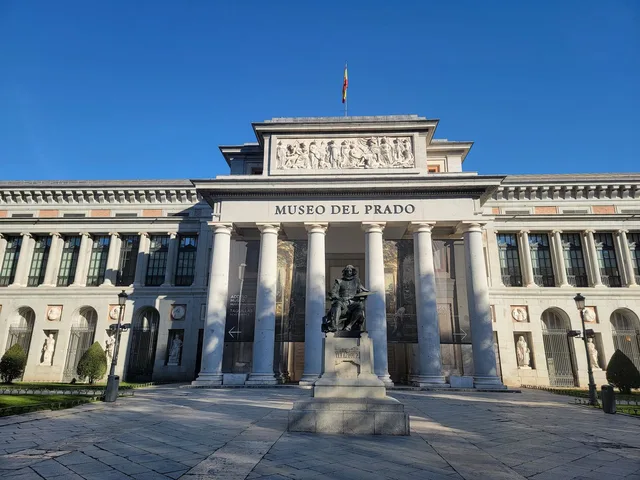
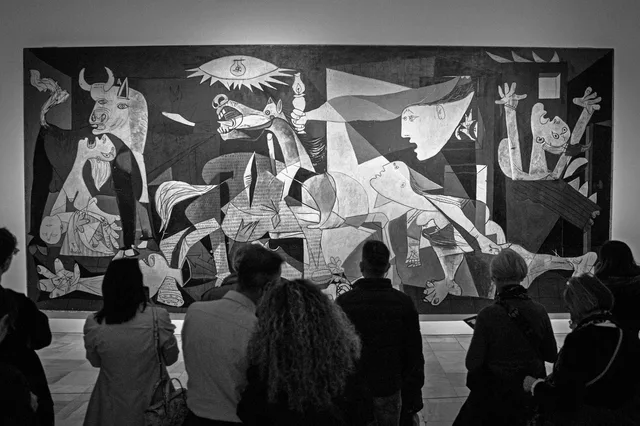
Madrid's two most important art museums both open for free in their final hours, which means you can stand in front of Velázquez's Las Meninas at the Prado and Picasso's Guernica at the Reina Sofía without spending a cent, if you get the timing right.
The Museo del Prado offers free entry to its permanent collection Monday to Saturday from 6pm to 8pm, and on Sundays and public holidays from 5pm to 7pm. Temporary exhibitions are discounted to 50% during free hours. Regular opening hours are Monday to Saturday 10am to 8pm, and Sundays 10am to 7pm. The museum is closed on January 1, May 1, and December 25.
The Museo Reina Sofía is free on Monday and Wednesday to Saturday from 7pm to 9pm, and on Sundays from 12:30pm to 2:30pm. The museum is closed on Tuesdays. Even during free hours, you need to reserve a ticket online before arriving.
Local tip
Monday evenings at the Prado (6pm to 8pm) see the smallest queues of any free slot. Sunday evenings are the busiest. At the Reina Sofía, the Sunday lunchtime window (12:30pm to 2:30pm) is noticeably quieter than the evening slots. Arrive 30 to 40 minutes before the free access window opens to join the queue before the rush.
| Museum | Free hours | Closed |
|---|---|---|
| Museo del Prado | Mon–Sat 6pm–8pm | Sun & holidays 5pm–7pm | Jan 1, May 1, Dec 25 |
| Museo Reina Sofía | Mon & Wed–Sat 7pm–9pm | Sun 12:30pm–2:30pm | Tuesdays |
Plaza Mayor, Puerta del Sol and La Latina
Madrid's most iconic public spaces cost nothing to visit and reward a slow, unhurried walk. Plaza Mayor, the great colonnaded square at the heart of old Madrid, was completed in the early 17th century and remains one of the best places to watch the city go about its business. Come early in the morning, before the tourist cafes raise their shutters, and you'll have the square almost to yourself. The Casa de la Panadería on the north side, with its ornate painted facade, is worth a long look.
Puerta del Sol, a few minutes away, is the literal centre of Spain: the km 0 marker for the national road network is set into the pavement outside the regional government building. The square never really quiets down and is worth visiting at different times of day to see how the crowd and atmosphere shift. La Latina, the neighbourhood immediately to the south, has some of Madrid's best street life and a covered market that costs nothing to walk through.
Plaza de Cibeles and Gran Vía
Plaza de Cibeles is one of the great intersections in Europe. The Fuente de Cibeles in the centre, the Palacio de Cibeles (Madrid's city hall) on one corner, and the sweep of the Paseo del Prado make it one of the most photographed spots in Spain. Entry to the Palacio de Cibeles itself is free, and walking around the square costs nothing. The Puerta de Alcalá, an 18th-century neoclassical triumphal arch, stands a few hundred metres east and frames a particularly good view at dusk.
Gran Vía, Madrid's early 20th-century grand boulevard, is worth a full end-to-end stroll, ideally on a weekend morning before the shoppers arrive. The buildings are extraordinary, running from Beaux-Arts to early Modernist. At that hour you can actually stop in the middle of the pavement and look up at the buildings without being swept along by the crowd.
Madrid Río: Six Kilometres of Free Riverside Park
Madrid Río opened in 2011 after the city buried the M-30 motorway underground, recovering six kilometres of riverside land along the Manzanares for parks, cycle paths, playgrounds, and sports areas. It is entirely free and open to everyone.
In summer (June through September), a fountain area near the Arganzuela bridge operates as a free outdoor cooling zone, with water jets running from 10am to 11pm. The park also has a skate area, fitness stations, and a free botanical greenhouse at Arganzuela, open Tuesday to Sunday mornings. The Matadero Madrid cultural centre sits right alongside, so it is easy to combine both in one afternoon.
Matadero Madrid: Free Contemporary Art in a Former Slaughterhouse
Madrid's old municipal slaughterhouse was converted into a contemporary arts centre in 2007 and has been one of the city's best free cultural destinations ever since. Matadero Madrid stages free exhibitions, film screenings, performance, and outdoor events across a large complex of early-20th-century industrial buildings on the Manzanares. General entry is free, and the programme is consistently adventurous.
It is less visited than the Prado or Reina Sofía precisely because it lacks the famous names. That is part of why it is worth an afternoon. Check the current programme at mataderomadrid.org before you go.
El Capricho: Madrid's Secret Weekend Park
El Capricho is the least-known attraction on this list. The Duchess of Osuna began developing this land in 1784 and created one of the most beautiful romantic gardens in Spain, with an artificial lake, winding paths, a small labyrinth, ornamental temples, and statues spread across 14 hectares. The Duchess was also one of Francisco Goya's most important patrons, and several of his celebrated works were painted for this estate. During the Spanish Civil War the park served as a military headquarters, and a bunker from that period is still visible beneath the grounds.
El Capricho is free to enter and open on weekends and public holidays only: 9am to 9pm (April to September) and 9am to 6:30pm (October to March). Take metro Line 5 to the El Capricho stop, which drops you at the entrance. A major restoration of the fort and dance hall completed in April 2026, and both are now fully open for the first time in years.
Local tip
El Capricho draws madrileños rather than tourists, and weekend afternoons can get busy. Go when it opens at 9am on a Sunday for the quietest experience, and allow at least 90 minutes to properly explore the grounds.
Casa de Campo: Madrid's Largest Free Park
Casa de Campo is Madrid's largest public park, covering almost seven square miles of woodland, paths, and open land on the western edge of the city. It was the royal hunting ground for centuries before being opened to the public in 1931, and it still feels wild in places, particularly in the interior woodland areas away from the lake. Entry is free, and you can walk in from multiple points around the perimeter. The lake has rental boats and a few cafes. The park rewards a long, unhurried walk rather than a quick stop.
Free Walking Tours of Central Madrid
Several companies run tip-based walking tours of central Madrid, departing daily from Puerta del Sol. A two-hour tour typically covers Plaza Mayor, the Royal Palace exterior, the Almudena Cathedral, and the La Latina neighbourhood, and will often surface stories and corners that no guidebook mentions. There is no upfront charge. The guides work for tips, so bring a few euros if you found it worthwhile, but there is no obligation and no minimum.
Frequently Asked Questions About Free Things to Do in Madrid
What can I do in Madrid for free?
More than most European capitals. The Prado and Reina Sofía are free every evening. Retiro Park, Plaza Mayor, Puerta del Sol, Madrid Río, and Casa de Campo are always free. The Temple of Debod is free. El Capricho is free on weekends. Matadero Madrid is free at all times. You could fill three days of sightseeing without spending anything on entry fees.
What important museums have free entrance in Madrid?
The Prado and Reina Sofía are the two main ones (see the hours table above). Both require you to reserve a free ticket online before arriving. Matadero Madrid is free at all times with no booking needed. The Museo Sorolla is also free on Saturdays from 2pm.
What is the best free outdoor space in Madrid?
Retiro Park for convenience and variety: central, over 118 hectares, with gardens, a lake, and free art exhibitions in the Palacio de Velázquez. For something quieter and less touristy, El Capricho in Alameda de Osuna is Madrid's most beautiful free park and barely known to visitors. Madrid Río is the best pick for families, with playgrounds, a skate area, and summer water features.
What is the best place to see a free sunset in Madrid?
The hilltop around the Temple of Debod in Parque del Oeste. The temple faces west, and at sunset the light passes through its ancient stone doorways. The viewpoint is open 24 hours and free at all times, and the views stretch over the Manzanares valley. It is widely considered the finest free sunset spot in the city.
Are there free outdoor cultural activities in Madrid?
Yes. Matadero Madrid regularly stages free outdoor events, exhibitions, and film screenings. Free walking tours depart daily from Puerta del Sol with no upfront cost. Gran Vía is an open-air tour of early 20th-century architecture. Retiro Park hosts free art exhibitions at the Palacio de Velázquez and often has outdoor cultural events in summer.
What is the most unusual free attraction in Madrid?
The Temple of Debod. A 2nd-century BC Egyptian temple gifted to Spain by Egypt in 1968, dismantled, shipped across the Mediterranean, and reassembled stone by stone in Parque del Oeste, where it has stood since 1972. Nothing else in Spain compares to it, and it is entirely free to visit.