Madrid's Museums: Where to Start, What to See, and When to Go Free
Madrid has more world-class art per square kilometre than almost anywhere else in Europe, and most of it is clustered along a single boulevard. The Prado, the Reina Sofía, and the Thyssen-Bornemisza all sit within a 15-minute walk of each other on the Paseo del Prado, meaning you can see Velázquez, Picasso, and a five-century sweep of European painting in the same afternoon. Or, if you are methodical about it, across three very satisfying days.
The museums in Madrid cater to every kind of visitor: the history obsessive, the modern art devotee, the person who just wants to stand in front of a Goya and feel something. There are also options well beyond the golden triangle, from a free baroque palace museum near Plaza de España to a small chapel where Goya painted the ceiling frescoes and is now buried beneath the floor. Read on for the prices, the free-entry hours for each museum, and a Goya site almost nobody goes to.
The Big Three: Prado, Reina Sofía, and Thyssen-Bornemisza National Museum
These three museums form what visitors call the Paseo del Arte: Madrid's golden triangle of art. Each is a full day in its own right, though you can cover the highlights in two to three hours if you go in with a plan.
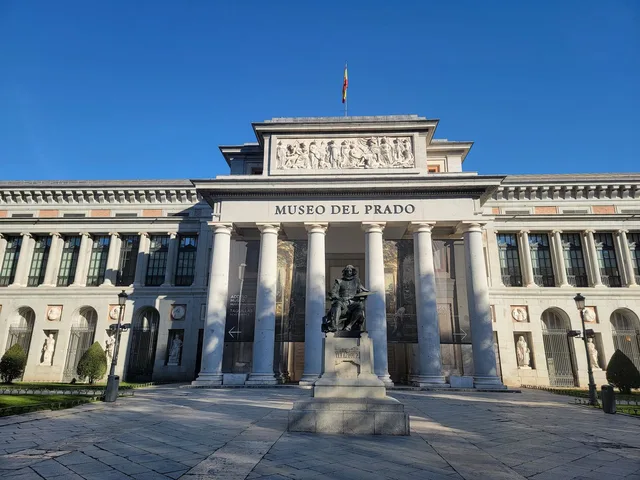
The Prado Museum (Museo Nacional del Prado) is Spain's national art museum and one of the greatest painting collections in the world. Its permanent collection spans the 12th to early 20th century, with extraordinary depth in Spanish, Flemish, and Italian masters. Velázquez's Las Meninas is in Room 12 on the first floor. Go there first, before the crowds arrive. Goya fills several rooms; so do Bosch, Titian, and Rubens. General admission is €15 for adults, €7.50 reduced. Free entry runs Monday to Saturday from 18:00 to 20:00, and on Sundays from 17:00 to 19:00.
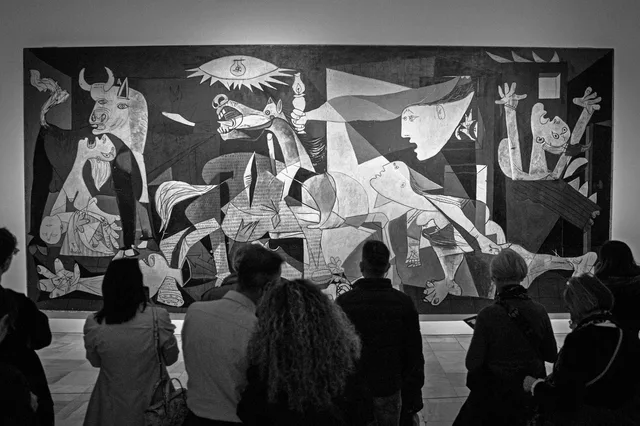
The Reina Sofía (Museo Nacional Centro de Arte Reina Sofía) is Madrid's national museum for modern art. The building served as a hospital until it became a museum in 1990. Picasso's Guernica is on the second floor of the Sabatini building, in Room 206. The two rooms around it, filled with preparatory sketches and Civil War-era posters, deserve as much time as the painting itself. Admission is €12. Free entry is available Monday and Wednesday to Saturday from 19:00 to 21:00, and on Sundays from 12:30 to 14:30. The museum is closed on Tuesdays.
The Thyssen-Bornemisza National Museum rounds out the trio with a collection that covers everything from early Italian primitives to 20th-century American art in a single building. The Impressionist and Post-Impressionist galleries are the highlight for most visitors. General admission is €14, reduced €10 for seniors and students. Every Monday from 12:00 to 16:00, admission to the permanent collection is free (no advance booking needed). On Saturday evenings from 21:00 to 23:00, the temporary exhibition spaces are free as part of Thyssen Nights.
Local tip
The Thyssen's Monday free entry (12:00 to 16:00) is one of Madrid's genuinely uncrowded free hours. Unlike the Prado, where queues can form 90 minutes before the free window opens, the Thyssen on Monday afternoons is quiet. Most tourists don't know about it. Go on a Monday, skip the ticket desk entirely, and walk straight in.
The Paseo del Arte Pass: Worth It?
If you plan to visit all three museums, the Paseo del Arte card makes sense. It covers one visit to each museum and costs €32.80 per adult, compared with €41 if you buy individual tickets (€15 Prado + €12 Reina Sofía + €14 Thyssen). It is valid for a full year, so there is no pressure to rush. The card is digital: a QR code sent by email, used to enter each museum. It gives skip-the-line entry at the Thyssen and priority access at the Prado and Reina Sofía.
| Museum | Individual adult price | Free entry times |
|---|---|---|
| Prado Museum | €15 | Mon–Sat 18:00–20:00; Sun/holidays 17:00–19:00 |
| Reina Sofía | €12 | Mon/Wed–Sat 19:00–21:00; Sun 12:30–14:30 |
| Thyssen-Bornemisza | €14 | Mon 12:00–16:00 (permanent collection); Sat 21:00–23:00 (temporary only) |
| Paseo del Arte pass | €32.80 | All three museums, 1-year validity |
Beyond the Big Three: Hidden Museum Gems in Madrid
Madrid's art museums don't stop at the golden triangle. The Cerralbo Museum, near Plaza de España, is free every day and almost always quiet. It occupies the former palace of the Marquis of Cerralbo, with rooms left exactly as he arranged them: tapestries, armour, paintings, and an extraordinary ballroom. If you want to see how a 19th-century Spanish aristocrat actually lived, this is the place.
The Lázaro Galdiano Museum, in the Salamanca district on Calle Serrano, houses over 12,600 objects collected by financier José Lázaro Galdiano and displayed in his former mansion. The range is startling: medieval enamels, Goya portraits, Bosch panels, and one of the finest decorative arts collections in Spain. Few tourists visit. It is worth every minute.
For something smaller still, the Museum of Romanticism in the Malasaña neighbourhood recreates an early 19th-century aristocratic interior with period furniture and paintings. Entry is €3 (free on Sundays and Saturday afternoons), and there is a garden café. The National Archaeological Museum covers the full sweep of Iberian history from prehistoric times to the early modern era, also for €3. The Sorolla Museum, the former home and studio of painter Joaquín Sorolla, is currently closed for a major renovation and expected to reopen in 2026; if it is open when you visit, it is not to be missed.
A little-known shortcut: the "Another Madrid" pass covers all five of these smaller museums (Decorative Arts, Cerralbo, Romanticism, Lázaro Galdiano, and Sorolla) for just €12, valid for 10 consecutive days. You can buy it at any of the five ticket desks, and it saves on both entry fees and queuing.
Local tip
Most tourists visit the Prado to see Goya's paintings. Almost none visit the small chapel in Madrid Río where Goya painted the ceiling frescoes himself, in 1798, and where his remains have lain since 1919. The Hermitage of San Antonio de la Florida is free to enter, rarely visited, and extraordinary: look up at the dome and you are looking at one of the last great fresco cycles of the 18th century, painted by the man buried beneath your feet. No photography is allowed inside, which means it is one of the few places in Madrid where people actually stop and look.
Frequently Asked Questions
What are the three most famous museums in Madrid?
The Prado, the Reina Sofía, and the Thyssen-Bornemisza National Museum are Madrid's three flagship museums, all located along the Paseo del Prado. The Prado focuses on classical European painting; the Reina Sofía on modern and contemporary art (including Picasso's Guernica); and the Thyssen on a breadth of periods from medieval to 20th century.
Are there free museums in Madrid?
Yes, several. The Prado offers free entry on weekday evenings (18:00–20:00) and Sunday afternoons (17:00–19:00). The Reina Sofía is free Monday and Wednesday to Saturday evenings (19:00–21:00), and Sunday lunchtime (12:30–14:30). The Thyssen is free every Monday from 12:00 to 16:00. The Cerralbo Museum is free every day, as is the San Antonio de la Florida chapel, where Goya's original frescoes and tomb are.
What is the best time to visit the Prado?
Weekday mornings between 10:00 and 12:00, or weekday afternoons between 14:00 and 16:00, are the quietest times. Avoid the 11:00 to 13:30 window, which is consistently the busiest. If you want free entry, arrive at least 45 to 60 minutes before the free window opens on weekdays, and up to 90 minutes on busy weekends.
Which museum in Madrid is best for modern art?
The Reina Sofía is Madrid's home for modern and contemporary art. Its permanent collection covers Spanish and international art from the early 20th century onwards, with particular strength in Surrealism, Cubism, and the Spanish avant-garde. Picasso's Guernica is the centrepiece, but the floors above it have a strong permanent collection that most visitors rush straight past.
Can I visit all three major museums in one day?
Technically yes, but you will not do any of them justice. Each museum deserves a minimum of two to three hours. A more rewarding approach is to pick one per day, or spend a morning at one and an afternoon at another. If you only have one day, combine the Prado (morning) with the Reina Sofía (afternoon): they are five minutes apart on foot and together cover a five-century sweep of Spanish art.