Why Madrid in February deserves more credit than it gets
February is not the month most tourists choose for Madrid. Hotels in Barcelona fill up for Carnival; the big European capitals are quiet and grey. Madrid in February sits apart: short museum queues, hotel rates at their lowest, and a rhythm that belongs entirely to the people who live here. If you can handle 11°C days and 3°C nights, it is one of the most rewarding months to visit Madrid.
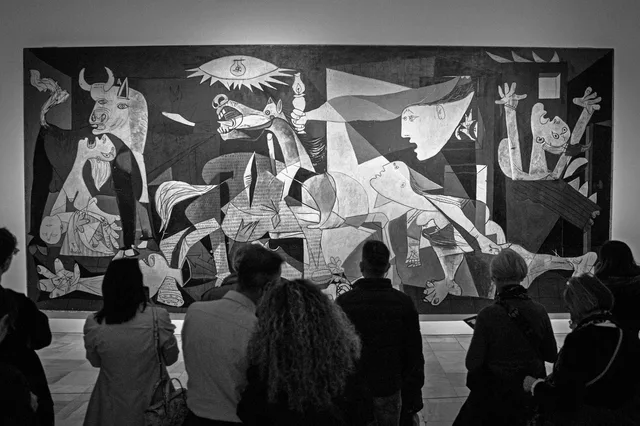
The city runs a five-day street carnival, a European design festival, La Liga football, Picasso's Guernica without a crowd in front of it, and a free park full of pink almond trees that almost nobody outside Madrid has heard of. February, in short, rewards the tourists who show up.
Madrid Carnival: five days of free street celebrations
The Madrid Carnival (Carnaval de Madrid) runs from 14 to 18 February 2026. Five days of free outdoor events centred on Matadero Madrid and Madrid Río. This is not a quiet cultural programme: it is loud, costumed, satirical, and completely free to attend. It has been going on for centuries and has not softened.
The Grand Parade
On Saturday 14 February, the main carnival parade sets off along Madrid Río at 1pm. Giant costume floats, drumming groups, and thousands of madrileños (Madrid residents) in elaborate fancy dress fill the riverbank. If you want the full Carnival spectacle, this is the day to be there.
The Straw Dummy Toss (Manteo del Pelele)
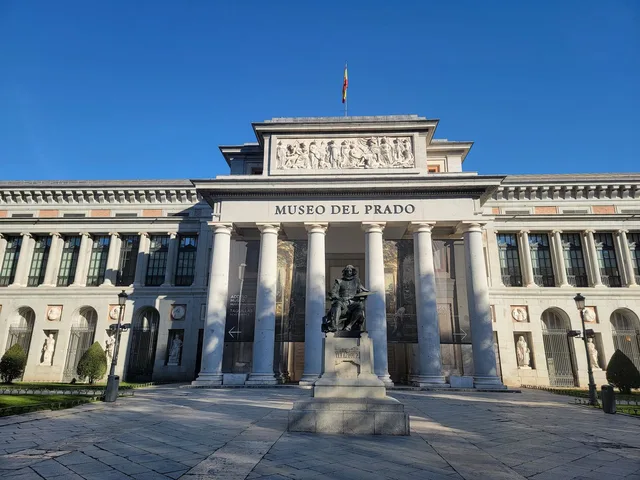
On Sunday 15 February, one of Madrid's oldest and most peculiar traditions takes place at the Explanada Negra of Madrid Río. Groups of women launch a straw figure dressed as a man high into the air on a blanket, to cheers and laughter. Francisco Goya painted this exact scene in 1791, and the painting now hangs in the Prado Museum. Watching it is, quite literally, watching a Goya painting come to life.
Local tip
Goya painted this scene as a comment on gender roles: four women tossing a male figure during the one week of the year when social norms were inverted. Nobody explains this at the event, but knowing it changes what you are watching.
The Sardine Burial (Entierro de la Sardina)
On Wednesday 18 February (Ash Wednesday), Carnival ends with the Sardine Burial (Entierro de la Sardina): a mock funeral procession in which a symbolic sardine is ceremonially buried to mark the end of Carnival and the start of Lent. The procession begins at the church of San Antonio de la Florida and winds through the city to the Casa de Campo park, ending at the Fuente del Pajarito in the Plaza de las Moreras. Goya painted this tradition too, around 1812. That painting hangs in the Royal Academy of Fine Arts (Real Academia de Bellas Artes de San Fernando) on Calle de Alcalá, worth a separate visit. All Carnival events are free.
The almond trees most tourists never find
Quinta de los Molinos in bloom
Here is what most February visitors to Madrid completely miss. At the Quinta de los Molinos park (Calle Alcalá 512, San Blas district), more than 1,000 almond trees bloom in late February, turning the entire park white and pink. Entry is free. The park opens at 6:30am. Almost no tourists visit. There is no backstory, no audio guide, no ticket. Just a park full of blossom that almost no tourist ever finds.
The exact timing of the bloom depends on the weather: in mild years, trees start opening in mid-February; in cold ones, the peak shifts into early March. Check local Madrid news in the days before your visit for updates. Metro El Carmen or García Noblejas (Line 5).
Local tip
Go in the morning when the light is best and the park is quiet. Locals bring their dogs and their coffee. There are no audio guides, no queues, and no entry fee. Just over 1,000 almond trees doing their thing. About 25 minutes from the city centre by metro, and worth every minute.
World-class art with no queue
Reina Sofía Museum: stand in front of Guernica
February is the best month in the year to visit the Reina Sofía Museum. Picasso's Guernica hangs in Room 205.10 on the second floor of the Sabatini Building. The painting is about 3.5 metres tall and nearly 8 metres wide. In July, the room in front of it is packed solid. In February, you can stand there and actually look at it for as long as you want.
General admission costs €12; free for visitors under 18 and over 65. Free entry is available from 7pm every evening, but you still need to book a free ticket at museoreinasofia.es before arriving. The museum opens Monday, Wednesday to Saturday from 10am to 9pm; Sunday 10am to 12:30pm, then again from 2:30pm to 9pm. Closed Tuesdays. Metro Atocha (Line 1).
Naval Museum: the free gallery most tourists walk past
The Museo Naval (Naval Museum) is at Paseo del Prado 3, on the same street as the Prado. Entry is free, with a suggested donation of €3. The collection covers Spain's seafaring history from the age of exploration onward: original maps, navigational instruments, model ships, and artefacts from centuries of Spanish maritime history. Open Tuesday to Sunday, 10am to 7pm; closed Mondays and in August. Metro Banco de España (Line 2). Most tourists walk past it on their way to the Prado. Go in anyway.
Madrid Design Festival
From 5 February to 8 March 2026, the Madrid Design Festival fills the city with more than 50 exhibitions across museums, galleries, and public spaces. It covers architecture, graphic design, fashion, and product design. Most events are free. Check the full programme at madrid.es.
Neighbourhoods, markets, and food
Malasaña: Madrid's most interesting neighbourhood
Malasaña is where the movida madrileña, Madrid's underground arts explosion of the late 1970s and 1980s, was born, and it still carries that energy. Vintage clothing shops, street art, independent cafés, and bars that have not seen a renovation since 1975. The streets around the Plaza del Dos de Mayo are the heart of it. In February, with the tourist crowds gone, Malasaña is as close to the real Madrid as you will get. Metro Tribunal (Lines 1 or 10) or Noviciado (Line 2).
Bodega de la Ardosa: vermouth since 1892
In Malasaña, at Calle de Colón 13, the Bodega de la Ardosa has been pouring vermouth and serving tapas since 1892. Order the tortilla de patatas, a thick potato omelette, and a glass of house vermouth. The bar is small, covered in old photographs, and rarely crowded in February. Stand at the bar. This is what a Madrid bar is supposed to feel like.
San Miguel Market
Near the Plaza Mayor, the San Miguel Market (Mercado de San Miguel) is one of Madrid's most atmospheric food markets, housed in a cast-iron building from 1916. Vendors sell jamón ibérico, fresh oysters, pintxos, croquetas, and wine by the glass. Good for a mid-morning snack or a stand-up lunch. Open daily 10am to midnight; Thursday to Saturday until 1am.
Cocido Madrileño: Madrid's great winter dish
February is cocido madrileño season. This Madrid chickpea stew is served as a full meal in three courses from one pot: the broth arrives first as soup, then the chickpeas and vegetables, then the meats (chorizo, morcilla, pork belly, chicken). It is slow-cooked and filling, which is exactly what you want after a cold morning in the city. Find it at traditional restaurants in La Latina and Lavapiés.
Flamenco show
A live flamenco show is worth doing whenever you visit Madrid, but February has a practical advantage: smaller audiences mean better sight lines and a closer atmosphere. Several venues operate near the city centre. Book in advance to secure a good table; most shows run between 60 and 90 minutes.
Viewpoints and open spaces
CentroCentro and the Mirador Madrid viewpoint
The Cibeles Palace (Palacio de Cibeles), the white landmark building at the top of the Paseo del Prado, houses CentroCentro: a contemporary culture centre with free exhibitions on art, design, and the city. The building also contains the Mirador Madrid, a lookout on the upper floors with panoramic rooftop views. Tickets cost €4 (€2 reduced for children, seniors, and other eligible visitors). Open Tuesday to Sunday; viewpoint hours are 10:30am to 2pm and 4pm to 7:30pm. Closed Mondays. At €4, it is the best-value view in the city.
Retiro Park in winter
El Retiro (the city's main park and one of Madrid's most visited green attractions) is much quieter in February than at any other time of year. The rose garden does not bloom until May, but the lake, the Crystal Palace (Palacio de Cristal), and the long tree-lined paths are worth the walk. Hire a rowing boat on the lake if the weather cooperates. Entry to the park is free.
Madrid Río: riverside walking
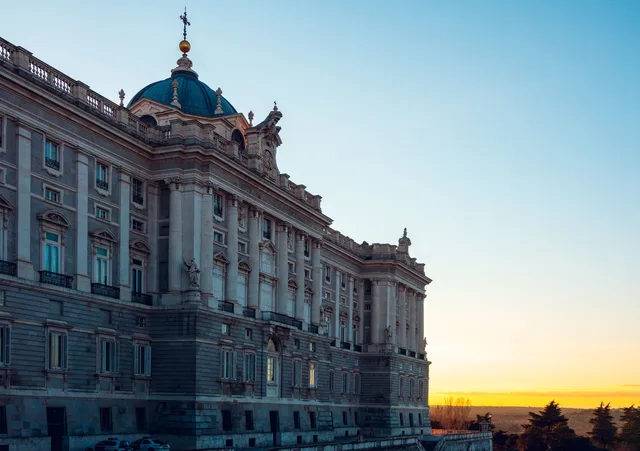
Madrid Río is the riverside park along the Manzanares River: a generous stretch of paths, gardens, and open space with good views of the old city walls and the Royal Palace (Palacio Real) on the hill above. In February it is almost empty, which makes it a good option for a clear afternoon when you want fresh air without a museum entrance fee.
Events and experiences
Chinese New Year in Usera
On 17 February 2026, the Year of the Horse begins, and Madrid's celebrations take place in the Usera neighbourhood. The grand parade runs along Avenida Marcelo Usera with dragon dances, lion costumes, imperial dress, and fireworks. Usera is Madrid's Chinese quarter, and this is the day the whole neighbourhood fills with red lanterns and the smell of street food. Free to attend. Metro Usera (Line 3).
Valentine's Day in Madrid
Valentine's Day (14 February) falls on the opening day of Carnival in 2026, giving the city an unusually festive energy. The Templo de Debod, a genuine 2nd-century BC Egyptian temple in Parque del Oeste donated to Spain by Egypt in 1968, is one of the most unusual and romantic spots in the city at sunset. Entry to the temple is free. Metro Ventura Rodríguez (Line 3) or Plaza de España (Lines 3 and 10).
Las Ventas bullring tour
The bullfighting season at Las Ventas does not begin until spring, making February the ideal time to visit the arena without any of the ethical complexity of an actual bullfight (corrida). The building itself is worth looking at, and the museum inside takes the history of bullfighting seriously rather than treating it as a tourist spectacle. You will likely have it almost to yourself. Check lascorridas.com for tour schedules and admission prices.
Real Madrid or Atlético: a February match
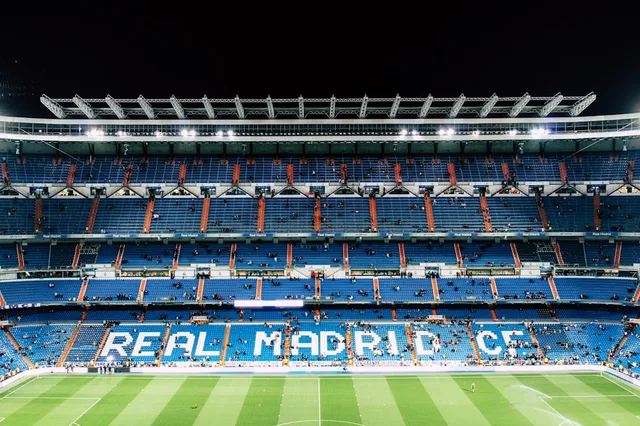
February is mid-La Liga season, and both Real Madrid and Atlético de Madrid play home fixtures this month. An afternoon at the Estadio Santiago Bernabéu or the Cívitas Metropolitano is the kind of experience people still talk about years later. Tickets for popular fixtures sell quickly; check club websites as soon as you know your travel dates.
Day trips from Madrid in February
Toledo: a full day in a UNESCO World Heritage city
Toledo is the most rewarding day trip from Madrid, and February is close to ideal for it. The Renfe AVANT high-speed train takes about 33 minutes from Madrid-Atocha to Toledo station. The city sits on a rocky hill above the Tagus River, with a Gothic cathedral, two medieval synagogues, a mosque, and El Greco's house and museum all within walking distance of each other. A full day goes fast. Book trains at renfe.com.
Valdesquí: skiing in the Sierra de Guadarrama
For skiers and snowboarders, Valdesquí is the most accessible resort from Madrid, with around 22 kilometres of slopes in the Sierra de Guadarrama mountains. February is typically one of the most reliable months for snow. Bus 691 departs from Moncloa station and the journey takes around 77 minutes; the bus is included in the standard Madrid public transport card (abono). Check current day pass prices and snow conditions at valdesqui.es before travelling.
Visiting at a different time of year? Read our guides to Madrid in January or Madrid in March.
Frequently Asked Questions
Is February a good time to visit Madrid?
Yes. February is one of the quietest and most affordable months to visit Madrid. Hotel prices are lower, museum queues are short, and the full cultural programme is running. Cold evenings (around 3°C at night) are the main challenge, so pack warm layers. The main reward is Carnival (five free days of street celebration in mid-February), plus the almond blossoms at Quinta de los Molinos if you time your visit right.
Does Madrid have a Carnival?
Yes. Madrid Carnival (Carnaval de Madrid) runs for five days in mid-February. All events are free and no ticket is needed to attend anything. For the Grand Parade on Saturday, arrive at Madrid Río by 12:30pm to get a spot along the route. For the Entierro de la Sardina on Ash Wednesday, the procession moves slowly so you can join it at any point along the route from San Antonio de la Florida to the Casa de Campo. Fancy dress is welcomed but not required.
Which is better in February, Madrid or Barcelona?
Both cities are worth visiting in February. Madrid has lower crowds and more affordable hotels; Barcelona has milder temperatures (typically around 3°C warmer) and its own Carnival in the Gràcia neighbourhood. If you prefer art museums and want to avoid tourist crowds, Madrid in February has a clear edge. If you want warmer weather and more time outdoors, Barcelona tips the balance. Many visitors split a trip between both.
What are the best day trips from Madrid in February?
Toledo is the strongest choice: about 33 minutes by Renfe AVANT train from Madrid-Atocha, with a full day of medieval architecture, art, and narrow streets to explore. Segovia is another excellent option (around 30 minutes by high-speed train), known for its Roman aqueduct, medieval castle, and roast suckling pig. For skiing, Valdesquí in the Sierra de Guadarrama is open in February and reachable by bus from Moncloa.
What food is Madrid famous for?
In February, the essential dish is cocido madrileño, Madrid's slow-cooked chickpea stew: served in three courses from one pot, starting with the broth, then the chickpeas and vegetables, then the meats. Beyond that: a bocadillo de calamares near the Plaza Mayor; tortilla de patatas at any traditional taberna; and churros con chocolate for a cold-morning breakfast.
How long should I spend at the Reina Sofía?
Allow at least two hours. Guernica is the centrepiece, but the permanent collection covers the full arc of Spanish modern art including Salvador Dalí, Joan Miró, and Juan Gris alongside Picasso. The temporary exhibitions on the upper floors change regularly and are usually worth the extra 30 minutes. If you are going in the free evening window from 7pm, note that it is also the most popular time to visit: weekday evenings are quieter than weekend ones.