How an 18th-Century Hospital Became Madrid's Centre for Modern Art
The Museo Nacional Centro de Arte Reina Sofía is Spain's national museum of 20th-century art and one of Madrid's most visited cultural institutions. Originally a hospital commissioned by Charles III, the Sabatini building was converted into an art centre in 1986 and officially became a national museum in 1992. In 2005, Jean Nouvel added a €92 million extension: 8,000 square metres of new galleries wrapped in a steel and glass structure that looks entirely different from the Sabatini side.
Most tourists visit for Guernica. That's reason enough. But the museum holds far more than one painting, and a little planning makes the visit dramatically better in 2026.
Picasso's Guernica: The Painting That Refused to Come Home
Pablo Picasso painted Guernica in 1937 in response to the Nazi and fascist bombing of the Basque town of Guernica on 26 April that year. It was shown at the 1937 Paris International Exposition and Picasso refused to allow it to return to Spain while Franco remained in power. The painting spent over four decades at New York's MoMA. Picasso had declared it could not return to Spain until democracy was restored, and that wish was honored: it arrived in Madrid in September 1981 and moved to the Reina Sofía when the museum opened its permanent collection in 1992. It hangs in Room 206 on the second floor of the Sabatini building, alongside the preparatory studies that show how the composition was built up.
The scale (more than 3.4 metres tall and nearly 8 metres wide) is something no reproduction gets right. Most people go quiet when they first see it.
Local tip
For over 30 years, photographing Guernica was banned. Since September 2023, the ban has been lifted. You can now photograph it freely: no flash, no tripods, but otherwise go ahead. Many visitors still arrive assuming this is forbidden.
The Collection and Exhibitions: What to See on Each Floor
Floor 2 of the Sabatini building runs from 1900 to 1945: Cubism, Surrealism, and the Spanish Civil War era. This is where you find Dalí's The Great Masturbator and major works by Miró alongside Guernica. Floor 4, regularly skipped by tourists who leave after the second floor, covers post-1945 Spanish art and is far quieter. Check the museum's website for current exhibition and activity schedules across both buildings.
The Nouvel building covers the second half of the 20th century. Felix Gonzalez-Torres, Alberto Greco, Andrea Canepa, Aurèlia Muñoz, and Dumile Feni are all here, alongside Spanish artists from the same period. Plan at least two hours. Three is more realistic if you want to do the full tour of both buildings properly.
Local tip
Start on Floor 4 and work down to Floor 2. Most visitors head straight for Guernica, making the second floor the most crowded spot from the moment the museum opens. Reversing the route gives you a quieter experience through the upper collection and means you reach Guernica when the morning rush has already thinned out.
Tickets, Hours, and Practical Visit Information
General entry to the centro de arte reina sofía is €12. The museum is open Monday and Wednesday to Saturday from 10:00 to 21:00, and Sundays from 10:00 to 14:30. It is closed every Tuesday.
| Ticket type | Price |
|---|---|
| General admission | €12 |
| Two visits, valid 1 year | €18 |
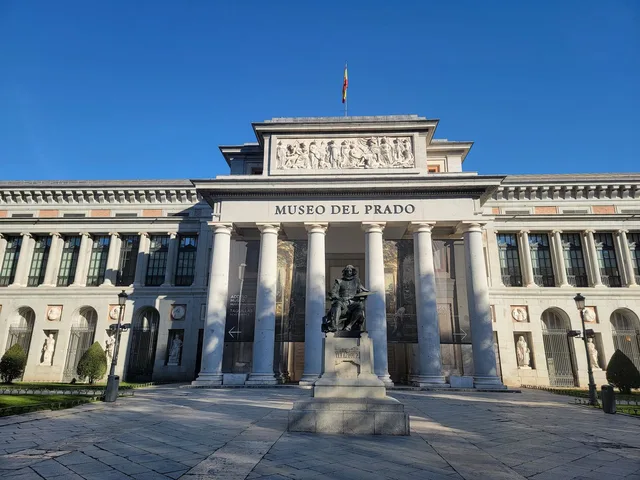
| Paseo del Arte (Prado + Thyssen + Reina Sofía) | €32.80 |
| Under 18 / students / 65+ | Free (ticket office only) |
Free entry runs daily from 19:00 to 21:00 (Sundays: 12:30 to 14:30), plus several national culture holidays throughout the year. Those windows are consistently the busiest. Wednesday and Thursday mornings, between 10:00 and 13:00, are the quietest windows. Pay the €12 and go then. Book tickets online at museoreinasofia.es to select a timed slot and skip the queue.
The main entrance is at Calle de Santa Isabel, 52. The nearest metro station is Estación del Arte (Line 1), a 4-minute walk away. Atocha train station is about 9 minutes on foot.
Frequently Asked Questions
What is the Reina Sofía Museum famous for?
The Museo Nacional Centro de Arte Reina Sofía is Spain's national collection of modern and contemporary art. It is best known for housing Pablo Picasso's Guernica (1937), but the collection also includes major works by Dalí, Miró, Tàpies, and dozens of other Spanish and international 20th-century artists.
How much time do you need at the Reina Sofía Museum?
Two hours gets you through the main highlights. Three is better if you want to see both buildings properly.
What is the most famous painting in the Reina Sofía Museum?
Guernica by Pablo Picasso, painted in 1937 in response to the Nazi and fascist bombing of a Basque town during the Spanish Civil War. It is in Room 206 on the second floor of the Sabatini building, and the sheer scale of it in person is unforgettable.
Is the Reina Sofía worth visiting?
Yes. Standing in front of Guernica is one of the better things you can do in Madrid. No photograph prepares you for how big it is, or for what it feels like to be in the room with it. The collection beyond that is a real bonus.
How many days in Madrid is enough?
Three days allows time for the Reina Sofía, the Prado, and the Thyssen-Bornemisza without rushing. The Paseo del Arte ticket at €32.80 covers all three museums and is valid for a full year, so you can spread visits if your trip is short.