April is when Madrid steps outside
Holy Week processions fill the streets in the first week, the terraces reopen, Retiro Park turns properly green, and day trips to Aranjuez coincide with peak strawberry season. The Spanish capital sits at around 19°C on a good April afternoon, cool enough to sightsee all day and warm enough to eat lunch outside. Tourist numbers are lower than July and August, the art museums are quieter, and the whole city has an energy that has been pent up since February.
April 2026 is particularly good for visitors: Semana Santa (Holy Week) puts its final processions into the first days of April (Good Friday April 3, Easter Sunday April 5), the Aranjuez Strawberry Train (Tren de la Fresa) is running every weekend, and the Madrid Marathon closes the month on April 26. There is no obvious feria or local festival in April the way May has San Isidro, but the combination of outdoor life, spring parks, and day trips makes it one of the more satisfying months to be in Madrid.
April weather in Madrid
What the weather is actually like
April in Madrid averages a high of around 19°C and a low of around 8°C. Expect 8 to 12 rainy days across the month, but these are almost always short showers rather than full-day rain. A sunny April morning in Madrid is hard to beat: clear skies, the Sierra de Guadarrama still snow-capped in the distance, and the Prado to yourself before the summer tour groups arrive.
What to pack for April
Light layers work best. Afternoons warm up to around 19°C but mornings and evenings sit closer to 8°C, so a jacket is essential after dark. Pack a small fold-up umbrella for the occasional shower and comfortable walking shoes above everything else. Sunglasses are worth having from mid-month onwards.
Events in Madrid in April
Holy Week: the processions that fall in April
Semana Santa (Holy Week) 2026 runs from March 27 to April 5. Three days fall in April. Good Friday, April 3 is the most dramatic evening: the Jesús de Medinaceli procession departs in the early evening and passes through Puerta del Sol around 9pm. The Cristo de los Alabarderos follows, escorted by the Royal Guard in full dress uniform. The Hermandad del Silencio candlelit procession happens later that night, moving through the streets with no music and barely a sound from the crowd. It is strange and genuinely worth staying up for.
Holy Saturday (April 4) brings the Santo Entierro procession. Easter Sunday, April 5 brings the Tamborrada drum parade at Plaza Mayor and the Cristo Resucitado procession through central Madrid. All processions are free to watch. Hotels in the city centre fill up from March 27 onwards; book accommodation well in advance if your trip overlaps with Holy Week.
The Madrid Marathon
The Madrid Marathon takes place on Sunday, April 26, 2026. The route runs through the city centre, so expect road closures around Gran Vía, Paseo del Prado, and the Retiro area on race day. If you are not running, the atmosphere along the route is lively enough to make it worth watching for an hour. The finish line near the Retiro brings a good crowd.
Things to do in Madrid in April
Retiro Park in spring
Retiro Park (El Retiro) is at its best in April. The trees are in full leaf, the lake is busy with rowing boats, and there is enough warmth to sit on the grass without a coat. The park is free and open daily. Metro Retiro (Line 2) or Príncipe de Vergara (Lines 2 and 9) both drop you close to the main entrance.
The Rosaleda rose garden
The Rosaleda rose garden sits in a dedicated section of Retiro Park and holds more than 4,000 roses across 350 varieties, laid out by municipal gardener Cecilio Rodríguez in 1915. Peak bloom is May and June. Late April already sees the first roses open, so you will get early colour and near-empty paths rather than the full display. If your dates are flexible, the first week of May is better for the roses specifically.
Rowing on the Estanque Grande
The rowing boats on Retiro's central lake are a simple pleasure that holds up better than it sounds. Boats hold up to four people and cost €6 on weekdays and €8 on weekends and public holidays. The lake is big enough to feel like you are properly out on the water, with the Alfonso XII monument watching from one end. Weekday mornings are quietest.
Crystal Palace exhibitions
The Crystal Palace (Palacio de Cristal) stands in the southeastern corner of Retiro Park: a 19th-century iron-and-glass greenhouse that the Reina Sofía Museum uses as a free exhibition space for large-scale contemporary art. The building is worth seeing regardless of what is currently on display. Light pours through the glass panels in a way that makes almost anything inside look good. Free entry, no booking required.
Parque del Capricho: the garden most tourists never find
Most visitors to Madrid have heard of Retiro Park. Almost none have heard of Parque del Capricho, and that is a shame. The park was laid out from 1787 by the Duchess of Osuna (María Josefa Pimentel) on her estate at Alameda de Osuna, designed in a romantic English style with ornamental pavilions, a small lake, and winding paths that feel nothing like the rest of the city. It is free to enter. Metro El Capricho (Line 5). One important rule: it is only open on Saturdays, Sundays, and public holidays, from 9am to 9pm (April to September). It is closed all week. Plan accordingly.
Local tip
Beneath Parque del Capricho's ornamental gardens hides a Civil War bunker called Posición Jaca, built between May and August 1937 as the Republican high command's emergency shelter. It runs 15 metres underground, covers about 2,000 square metres, and was designed to house 200 people for months, with offices, toilets, and an electricity supply. Historians consider it one of the first purpose-built military command bunkers in history. You can visit it on a free guided tour, but you must book in advance at reservaspatrimonio.es. Almost no mainstream travel article about Madrid in April mentions it.
Puerta de Alcalá: the gate that predates the Arc de Triomphe
The Puerta de Alcalá stands at Plaza de la Independencia, right where the Retiro Park begins and Calle de Alcalá opens up. Commissioned by King Carlos III and designed by Italian architect Francesco Sabatini, it was inaugurated in 1778: the first modern triumphal arch built in Europe since the fall of Rome. It predates the Brandenburg Gate (Berlin, 1791) and the Arc de Triomphe (Paris, completed 1836). The five-arched granite gate stands 19.5 metres tall. It looks best lit up at night, and it is always free to walk past.
The art museums in spring
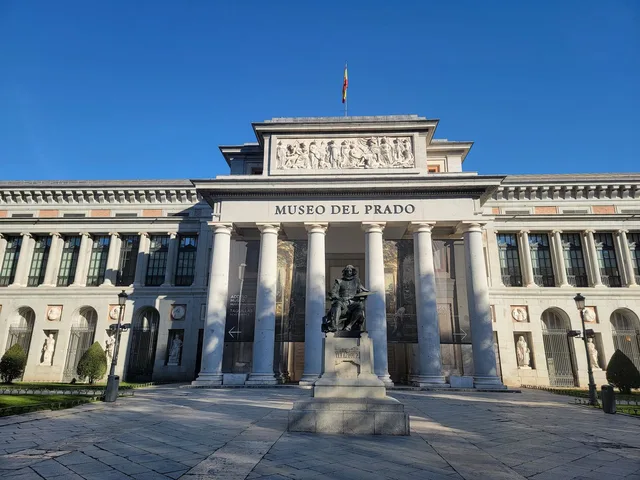
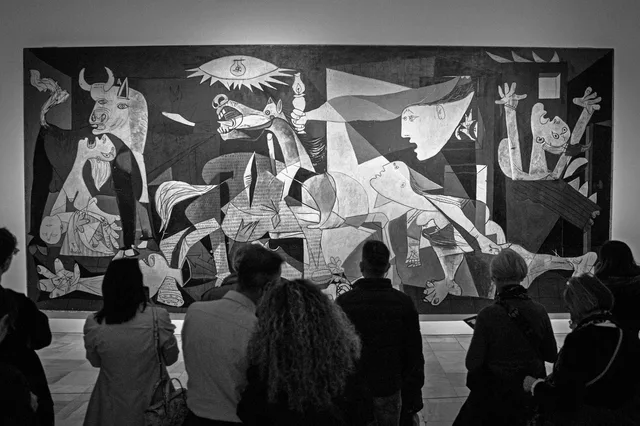
The three great museums along the Paseo del Prado boulevard are all more pleasant in April than in high summer. The Prado (€18, free Mon–Sat 6–8pm and Sundays from 5pm) has the Velázquez and Goya collections that justify the visit on their own. The Thyssen-Bornemisza Museum (€14, free Mondays 12–4pm) covers eight centuries of Western art in a single building. The Reina Sofía (€12, free from 7pm, closed Tuesdays) has Guernica on permanent display. Book the Prado online at museodelprado.es to skip the ticket queue. April crowds are lower than July and August, which means you can spend time in front of a painting rather than around it.
Flamenco
April is a good time for flamenco in Madrid. Audiences are smaller than in summer, which makes the shows more intimate, and performers are not yet on autopilot for peak tourist season. Most tablaos (flamenco venues) in Madrid run shows year-round; those in the La Latina and Huertas neighbourhoods tend to be less expensive than the big-name venues near the tourist centre.
Terrace season and outdoor life
The terrace culture reopens in April
Madrid's open-air terrace season restarts properly in April. Chairs and tables appear on pavements across the city, and the outdoor bar culture that shuts down in November comes back all at once. Best areas for terrace sitting: Plaza de Santa Ana (central and lively), La Latina (good for afternoon vermut), Malasaña (younger and more casual), and the boulevard stretch of Paseo del Prado. Several hotel rooftop terraces also reopen in April, including those at The Principal Madrid and the Madrid EDITION, for the outdoor season.
Madrid Río and cycling
Madrid Río is a 10-kilometre riverside park running along the Manzanares River, converted from a motorway into public green space. In April it is at its best: café terraces, cycling paths, and people in the sun. You can rent a BiciMAD electric bike (Madrid's public e-bike scheme, with docking stations across the city including one at the entrance to Parque del Capricho) and ride south from the Retiro area along the riverfront and through to Casa de Campo in under an hour. A tourist day pass covers unlimited rides. April is the right season for it: not yet too hot, and the paths are not crowded.
Tapas in Madrid in April
El Rastro and the Sunday in La Latina
El Rastro takes over Ribera de Curtidores and the surrounding streets in the Embajadores neighbourhood every Sunday and on public holidays, 9am to 3pm, with more than 3,000 stalls of antiques, leather goods, vinyl records, vintage clothing, and the occasional genuine find. Metro La Latina or Puerta de Toledo (both Line 5). Get there before 10:30am if you are looking for anything specific; by noon the serious antique hunters have been through and you are left with atmosphere, noise, and leather bags. After the market closes, walk up to La Latina. Calle Cava Baja is lined with tapas bars that fill up with the post-Rastro crowd from noon onwards: vermut, patatas bravas, croquetas, and a slow afternoon that feels very Madrid.
Holy Week food: torrijas
Torrijas (Holy Week French toast) appear in every patisserie and bakery in Madrid during the week around Easter. They are thick slices of bread soaked in milk and egg, fried, and dusted with cinnamon sugar, sold for around €2 a piece. They are heavier than they look, good with coffee, and available everywhere in early April. The city runs an informal ‘Dulces Pasiones’ route through the best patisseries each year if you want to take it seriously.
What to order on the terrace
Madrid's bar food is less showy than San Sebastián's pintxos but it travels well to a table outside in the April sunshine. The standards: croquetas de jamón (crispy, creamy), tortilla española (potato omelette, sliced thick and served at room temperature), patatas bravas with spicy sauce, and a plate of jamón. In La Latina and Chueca, many bars include a small free tapa with every drink order. It all tastes better outside. In April, that is finally an option again.
Day trips near Madrid in April
Aranjuez: royal gardens and strawberry season
Aranjuez is 44 minutes south of Madrid Atocha on the Cercanías C-3 (trains every 20 minutes, around €3–5 each way). It is a UNESCO World Heritage site built around the Royal Palace of Aranjuez and its four historic gardens. The palace costs €12 for adults (€7 reduced; free for EU and Ibero-American citizens on Wednesdays and Sundays from 3pm, April to September). Open Tuesday to Sunday 10am to 7pm in April; closed Mondays. Book at patrimonionacional.es. The gardens are included with the palace ticket and April is the best month to visit: the lime tree avenues are in leaf, the flowers are out, and the Aranjuez strawberry season is at its height. Stalls around the town sell strawberries and cream by the cup.
The Strawberry Train: not from Atocha
The Strawberry Train (Tren de la Fresa) is a heritage train running from Madrid to Aranjuez on weekends from March 22 to June 7 2026, plus Good Friday, April 3. The ticket costs around €56–60 per adult and includes the train journey, palace entry, strawberry tasting on board, and guided activities in Aranjuez. It is an experience as much as a journey, and the price reflects that. Book at trendelafresa.es.
Local tip
The Strawberry Train does not depart from Madrid Atocha. It leaves from the Museo del Ferrocarril (Railway Museum) at Paseo de las Delicias 61, about a 10-minute walk south of Atocha. Tourists who go to Atocha looking for the train miss it. Check the departure address before you travel.
Alcalá de Henares: Cervantes and a UNESCO city
Alcalá de Henares was inscribed as a UNESCO World Heritage City in 1998 as the first planned Renaissance university city in the world. It is also where Miguel de Cervantes was born in 1547. The Cervantes birthplace museum (Casa Natal de Cervantes) on Calle Mayor is free, open Tuesday to Sunday 10am to 6pm, and closed Mondays. Cercanías C-2 from Atocha or Chamartín runs every 15 minutes and takes about 39 minutes (around €3–4 each way). It makes a comfortable half-day and pairs well with Aranjuez if you want a full day out of the city. On Saturdays from April 11 to June 27 2026, a heritage Cervantes Train also runs from Atocha at 10:36am and returns from Alcalá at 18:35 (book separately).
Visiting at a different time of year? Read our guides to Madrid in March or Madrid in May.
Frequently Asked Questions
Is April a good time to visit Madrid?
Yes. Temperatures are pleasant (highs around 19°C), tourist crowds are lower than in summer, Holy Week puts free street spectacle into the first weekend, and Retiro Park is at its spring best. Hotels cost more around Holy Week (April 3–5), but outside that window April is generally good value for the experience you get.
Is Madrid expensive in April?
Holy Week pushes hotel prices up significantly for April 3–5; book well ahead for those dates. Outside that window, April is not especially expensive. Retiro Park is free, the Prado and Thyssen have free evening windows, Holy Week processions cost nothing to watch, and a tapa with a drink in La Latina still costs €2–3 in most bars.
Are the Holy Week processions worth watching?
Good Friday evening (April 3) is the most striking. The Jesús de Medinaceli procession passes Puerta del Sol around 9pm, accompanied by the Cristo de los Alabarderos with the Royal Guard. The Hermandad del Silencio candlelit procession later that night is quiet and genuinely atmospheric. All free, no booking needed.
What is the best day trip from Madrid in April?
Aranjuez. The royal gardens are in full bloom, the strawberry season is at its peak, and the palace is worth the entry fee. 44 minutes on the C-3 Cercanías from Atocha. If you want a different kind of trip, Alcalá de Henares is a UNESCO city on the C-2 line, 39 minutes from Atocha, with free entry to the Cervantes birthplace museum.