Why June is one of the best times to visit Madrid
Madrid in June is warm, busy, and unapologetically alive. The average high reaches 28°C, the rain almost disappears, and the city packs more into a single month than most capitals manage in a season. The Madrileños emerge from their offices at 9pm for dinner and don't seem remotely tired about it. Long days and a full festival calendar make it one of the best times to visit, not because the prices are low (they aren't), but because the city is fully switched on.
The practical reality: expect to be hot by noon. Sunscreen is not optional. But the evenings are perfect, the rooftops fill up at sunset, and the days are long enough to fill with whatever you like.
Weather in Madrid in June
June temperatures and what to expect
The average high in June is 28°C, with lows around 16°C at night. Early June can still cool down enough in the evenings for a light layer; by late June, that is no longer necessary. Rainfall is minimal: expect about 3–8 rainy days in the whole month, with roughly 20mm total. When it does rain, it tends to be a quick afternoon shower rather than an all-day downpour.
June also has the longest days of the year, with around 15 hours of daylight. You will find yourself still walking the city at 9pm in full sunshine, which is disorienting in the best way.
What to pack for Madrid in June
Light summer clothes, comfortable walking shoes, and sunscreen are the essentials. A thin cardigan for early June evenings is worth packing for the first week. The average high edges toward 30°C by the end of the month, so lighter is better for the second half.
Things to do in Madrid in June
Madrid Pride: Europe's biggest LGBTQ+ celebration
Orgullo Madrid (Madrid Pride) is Europe's largest Pride celebration, drawing over two million visitors to Chueca and the surrounding streets every year. In 2026, the festivities run from June 25 to July 5, so anyone arriving in the last week of June walks straight into the opening days of the festival.
The calendar: the Pride Proclamation takes place on Wednesday July 1 at Plaza Pedro Zerolo, officially launching the main programme. The High Heel Race follows on Thursday July 2 on Calle Pelayo, with competitors running in heels up to 15cm. The main State Pride Parade is on Saturday July 4, leaving the Carlos V roundabout at 7pm and finishing at Plaza de Colón. All street parties and the parade are free to watch. Chueca fills up from the first evening; the whole neighbourhood is the event.
The Madrid Book Fair in Retiro Park
The Feria del Libro (Madrid Book Fair) takes over Retiro Park's Paseo del Duque de Fernán Núñez every late spring. The 2026 edition is the 85th and runs from May 29 to June 14. Entry to browse is free. Books are sold at cover price across 366 booths, with the 2026 theme being “Reading and laughing: two ways to resist.”
If you are in Madrid before June 14, set aside an afternoon for it. The combination of books, large trees, and a city that takes reading seriously makes for one of the better ways to spend a Tuesday. It also pairs naturally with a walk around the lake and the rose garden at the other end of the park.
San Antonio de la Florida: Goya's tomb and a love ritual nobody talks about
Every June 13, the feast day of Saint Anthony of Padua, young unmarried women crowd the outside of the Ermita de San Antonio de la Florida in the Moncloa neighbourhood. A baptismal font is chained to a tree outside the hermitage. Each woman drops 13 pins into the font, places her palm gently in the water, and counts how many stick to her hand. That number, repeated three times, tells her how many admirers she can expect that year. The tradition dates to when the surrounding streets were full of seamstresses working long hours and hoping to find a match.
The hermitage contains Francisco Goya's fresco from 1798, painted directly on the dome in six months. Those are the originals, not copies: a second identical chapel was built alongside in 1928 specifically so the first could become a museum and the frescoes be preserved in place. Goya is also buried inside, or mostly buried. His remains were moved from Bordeaux in 1919, but when the grave was exhumed, the skull was missing, almost certainly taken by grave robbers at a time when phrenology made artist skulls valuable. The Spanish telegram sent to diplomats in Bordeaux reportedly read: “Send Goya, with or without head.”
Local tip
The June 13 pin ritual happens outside the hermitage, around the font chained to the tree, so it goes ahead regardless of whether the interior is open. The Ermita de San Antonio de la Florida reopened after renovation in mid-June 2026, so to see the Goya frescoes, visit after June 15 and confirm current hours before going. Address: Glorieta de San Antonio de la Florida, 5; Metro Príncipe Pío (Lines 6, 10, R); free admission; closed Mondays. Summer hours from June 15: Tue–Fri 9:30am–2pm and 3–7pm; weekends 9:30am–7pm.
The Real Jardín Botánico in summer bloom
The Real Jardín Botánico (Royal Botanical Garden) sits directly behind the Prado Museum at Plaza de Murillo, 2, and in June it is at its most colourful. The garden was founded in 1755 and moved to its current site in 1781, designed by Juan de Villanueva, the same architect behind the Prado building. The summer plants are at their peak in June: roses, Mediterranean species, and the tropical greenhouse collections all on show at once.
Adult admission is €4; reduced rate €1 for students aged 18–25, seniors, and large families; free under 18. On Tuesdays the botanical garden is free from 10am to 1:30pm. June hours: 10am–8:30pm daily. Metro Atocha (L1) or Banco de España (L2).
Retiro Park in June
El Retiro in June is good for two things: shade and water. The large plane trees along the main paths provide real relief once the temperature climbs above 25°C, and the rose garden (Rosaleda) still has late-season blooms in early June. The rowing lake is open: Mon–Fri €6 per boat, weekends and holidays €8, each holding up to four people. The Crystal Palace (Palacio de Cristal) is free and hosts Reina Sofía Museum exhibitions.
The Book Fair runs at the far end of the park until June 14, so combining a browse of the booths in the morning with a boat on the lake in the afternoon makes a good itinerary for the first two weeks of the month.
Madrid Río: cycling and outdoor pools
Madrid Río stretches 10km along the Manzanares River, with cycling paths, cafes, and outdoor pools. The piscinas open from May 15 and run through September 7, 2026; book via the DeportesWeb website or the Madrid Móvil app. BiciMAD e-bike docking stations are spread along the park; tourist day passes are available. The park itself is free.
Casa de Campo: zoo, lake, and Madrid's biggest park
Casa de Campo is Madrid's largest park, covering approximately 17 km², more than ten times the size of Retiro. Inside it: the Zoo Aquarium de Madrid, the Parque de Atracciones amusement park, and a lake where you can rent rowing and pedal boats.
The Zoo Aquarium opens at 11am daily; in June it closes around 6pm on weekdays and 7pm at weekends. Adult tickets run roughly €22–26 depending on when you book. The zoo uses dynamic pricing and online advance purchase is consistently cheaper. Children under 100cm enter free. Metro Lago or Casa de Campo (both Line 10).
Note: the Teleférico cable car, which normally connects Parque del Oeste to Casa de Campo with a good view over the Manzanares valley, is currently closed for structural works. Check teleferico.emtmadrid.es before your visit to confirm whether it has reopened.
Matadero Madrid: culture in a former slaughterhouse
Matadero Madrid, on Paseo de la Chopera, 14, is a cultural complex built in the 1920s as the city's main slaughterhouse and converted in the 2000s into exhibition spaces, a dance centre, and workshop studios. Entry to the public areas is free; ticketed events are listed at mataderomadrid.org. The CinePlaza outdoor cinema begins in July, but exhibitions and programming run year-round. Metro Legazpi (Lines 3 and 6).
Rooftop bars and views of Madrid
June is when Madrid's rooftops come into their own. Three worth knowing:
Azotea del Círculo (Círculo de Bellas Artes, Calle Alcalá 42): €6 entry for 360-degree views over Gran Vía, the Metropolis building, and Cibeles. Metro Banco de España. Go around sunset and arrive early enough to beat the queue. The entry ticket covers the rooftop; drinks are extra.
Ático del Principal (Hotel The Principal, Calle Marqués de Valdeiglesias): smaller and quieter than the Círculo, good for an evening drink without the crowd.
Tartan Roof (Hotel Riu Plaza España): directly above Gran Vía, with the full length of the street laid out below.
Flamenco at Cardamomo
Cardamomo on Calle Echegaray, 15, near Sol, is one of the more serious tablaos in the city. Sessions run daily at 19:30, 21:00, and 22:30 on weekdays; an extra 18:00 session is added at weekends. June audiences are smaller than the July–August peak, which means better seats and a show that feels less like a tourist event. Book in advance.
The Prado, Reina Sofía, and Thyssen: museum days
The Prado Museum
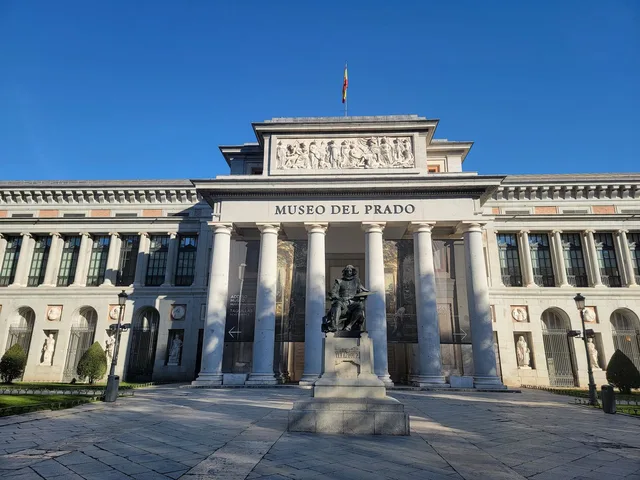
The Prado is fully air-conditioned, which matters on a 30°C afternoon in late June, and the permanent collection (Velázquez, Goya, El Greco, Bosch) needs no qualification. Adult admission is €18. Free entry Monday–Saturday 6–8pm and Sunday from 5pm. The free-evening queue can be long; arriving an hour before closing on a weekday is the quietest window.
Reina Sofía and the Thyssen
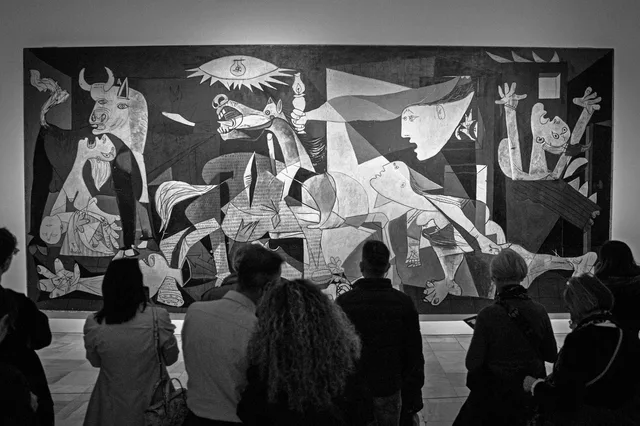
The Reina Sofía houses Guernica on permanent display alongside the best collection of 20th-century Spanish art anywhere, including work by Dalí, Miró, and Picasso. Adult €12; free from 7pm; closed Tuesdays. The Thyssen-Bornemisza covers eight centuries of Western painting in a single building: adult €14, free Mondays 12–4pm. Both run major temporary exhibitions through the summer; check the websites before arrival.
Tapas and eating in June
La Latina and the Sunday ritual
The standard Sunday sequence in Madrid: El Rastro flea market on Ribera de Curtidores from 9am until 3pm, then lunch tapas in La Latina on Calle Cava Baja. By noon the terraza bars are full of Madrileños doing exactly this. Order the croquetas, the jamón, and ask for something cold.
Gazpacho season and terraza dining
June is gazpacho and salmorejo season. Both are cold tomato-based soups: gazpacho is thinner and poured; salmorejo is thick and typically topped with hard-boiled egg and jamón. They appear on every terraza menu by June and are exactly right in the heat of the afternoon. Madrileños eat late: dinner starts at 9–10pm and terraza bars run past midnight.
Vermouth before lunch
The aperitivo hour (vermut time) runs roughly noon to 2pm. A glass of vermut with olives and a tapa is how the city handles the gap between morning and lunch. This is what Madrileños do on Sundays, and increasingly on Saturdays. La Latina and Malasaña are the neighbourhoods for it.
Day trips from Madrid in June
Toledo
Toledo is 30 minutes by high-speed train from Madrid Atocha. June is good timing: the walled medieval city gets genuinely uncomfortable in July and August, but in June the heat is manageable and the crowds are thinner. The Cathedral, the Museo del Greco, the Alcázar, and the Sinagoga del Tránsito are all walkable from the station in an easy half day. Buy the train ticket in advance.
Segovia
Segovia is 30 minutes by high-speed train from Madrid Chamartín. The Roman aqueduct in the city centre, still standing after 2,000 years, is free to walk past and photograph. The Alcázar castle at the far end costs €9 adult to enter, with the tower €4 extra. June light is good for both. Book the train in advance and go early to beat the coach tours.
What comes next: Veranos de la Villa
Madrid's summer arts festival starts in July
Veranos de la Villa, Madrid's outdoor summer arts festival, begins July 7, 2026, and runs through August 29. The 42nd edition fills outdoor stages at the Sabatini Gardens, Conde Duque, and Matadero with concerts, theatre, dance, and outdoor cinema. Events range from free to ticketed; the full programme is published at esmadrid.com. If your trip extends into July or August, it is worth planning around.
Visiting at a different time of year? Read our guides to Madrid in May or Madrid in July.
Frequently Asked Questions
Is June a good time to visit Madrid?
Yes. The weather is warm and mostly dry, the days are the longest of the year, and the city has a fuller events calendar than most other months. The trade-off is heat: midday temperatures reach 28°C and higher in late June. Plan outdoor sightseeing for mornings and evenings and use the museums for the middle part of the day.
How hot is Madrid in June?
The average high is around 28°C, climbing toward 30–32°C by late June. Nights are comfortable at around 16°C. The heat is dry rather than humid, which makes it more manageable, but sunscreen and water are essential for any afternoon spent outside.
Is Madrid Pride in June or July?
Both. Orgullo Madrid 2026 begins on June 25 and runs through July 5, with the main parade on Saturday July 4. If you arrive in the last week of June, you will be there for the opening days of Europe's largest Pride celebration in the Chueca neighbourhood.
What is the best day trip from Madrid in June?
Toledo and Segovia are both 30 minutes by high-speed train and are more comfortable in June than in the summer peak months of July and August, when the heat inside both walled cities becomes intense. Toledo has more to see; Segovia has the Roman aqueduct and the Alcázar castle.
Do you need to book Madrid's museums in advance?
For the Prado and Reina Sofía, booking online is worth doing to avoid the entry queue, especially if you are not going during the free evening hours. Walk-in is possible, but the free-entry windows attract lines. The Thyssen is generally less crowded and walk-in is usually fine.
What food should I try in Madrid in June?
Gazpacho and salmorejo are the seasonal choices: cold tomato soups that make complete sense in the June heat. For tapas, Calle Cava Baja in La Latina is the obvious destination. Order croquetas, jamón ibérico, and patatas bravas. Sunday aperitivo hour, a glass of vermut with olives at noon, is the most local thing you can do.