May is when Madrid throws its biggest party of the year
Visiting Madrid in May means landing in the middle of something. The San Isidro festival consumes the city for eleven days around May 15, turning parks, plazas, and neighbourhood streets into open-air stages. The Feria de San Isidro, the most prestigious bullfighting festival in the world, runs in parallel at Las Ventas. Retiro Park's rose garden hits peak bloom. And the Bernabéu squeezes out its last two home games of the La Liga season before the summer break.
It is also one of the most comfortable months to explore the Spanish capital on foot. May weather in Madrid runs warm without being punishing: average highs around 22°C in the first week, climbing towards 28°C by the end of the month, with long sunny days and evenings cool enough to keep you at a terrace table without a fan. If you have been putting off a trip to Madrid in May, the festival calendar alone is reason enough to book.
The San Isidro festival
Madrid's patron saint and the biggest week of the year
Every year on May 15, Madrid celebrates San Isidro Labrador, the city's patron saint, and the official San Isidro festival runs from May 7 to 17. This is not a tourist production. It is genuinely the festival Madrileños have been dressing up for, dancing at, and eating pastries around for centuries. Free concerts fill the Pradera de San Isidro every evening from May 8 to 17. The streets around Plaza Mayor and La Latina fill with chulapos and chulapas, the traditional figures whose dress has become the symbol of old Madrid. Parks, squares, and neighbourhood gardens host verbenas (open-air dances) until late into the night.
Pradera de San Isidro: the festival meadow
The Pradera de San Isidro is a 25-hectare park in the Carabanchel district, next to the Ermita de San Isidro chapel and bordered by Madrid Río. During the festival it becomes a giant open-air venue: food stalls, a funfair, and a free concert stage running every evening from May 8 to 17. The 2026 programme includes Fangoria, Las Ketchup, Los Chunguitos, and others. No ticket required for any of it.
To get there: Metro Marqués de Vadillo (Line 5), then about 11 minutes on foot; or the Cercanías C5 or C10 to Pirámides station. You can also cycle down Madrid Río from the city centre, a route that deposits you at the north entrance of the Pradera after a pleasant 25 minutes along the river.
Chulapos, chulapas, and the chotis
Chulapos and chulapas are the traditional figures of Madrid's working-class neighbourhoods, born in Lavapiés and La Latina in the 19th century. During San Isidro, thousands of Madrileños dress as them: men in checkered vests, flat caps, and carnations in the buttonhole; women in polka-dotted dresses, embroidered shawls, and flowers in the hair. You will see them on the streets, in the parks, and at every plaza around May 15.
The dance they do is the chotis, Madrid's traditional couple dance, introduced to the city on November 3, 1850, at the court of Queen Isabella II as the German Polka (Polca Alemana). The standing line about the chotis is that you can dance it on a single tile: the man turns slowly on his own axis while the woman orbits around him. It is easy to watch and surprisingly hard to do.
Rosquillas: the four pastries of San Isidro
Every festival needs a pastry, and San Isidro has four. Rosquillas (ring-shaped pastries) come in four traditional types: tontas (plain, flavoured with anise and cinnamon), listas (lemon glaze), Santa Clara (dry meringue coating), and francesas (sugar glaze with almonds). Every patisserie in Madrid sells them throughout May, and the best ones sell out by lunchtime. Buy them the morning you plan to eat them. They do not keep.
Dos de Mayo in Malasaña
May 2 and the 1808 uprising
Two weeks before San Isidro, Malasaña holds its own celebration. Dos de Mayo (May 2) marks the 1808 uprising of Madrid's citizens against Napoleon's occupying forces. The insurrection was violently suppressed, and on May 3 the French executed civilians at Príncipe Pío hill, the events Francisco Goya painted in two of the most important works in European art. Both "The Second of May 1808" and "The Third of May 1808," completed in 1814, hang at the Prado Museum.
In Malasaña, the festivities run April 30 to May 3 around Plaza del Dos de Mayo, Plaza de las Comendadoras, and Plaza de San Ildefonso. The programme includes free concerts (2026: Judeline and Alcalá Norte), a batucada parade through the neighbourhood streets, dance workshops, and a historical scavenger hunt retracing the 1808 events. For a good day: Prado in the morning to see the Goya paintings in context, then walk north to Malasaña for the afternoon atmosphere and a terrace beer.
Feria de San Isidro at Las Ventas
The bullfighting festival that defines careers
The Feria de San Isidro runs from early May through mid-June, and it is the bullfighting event that every matador measures their season against. Cutting ears at Las Ventas changes careers. The bullring at Calle de Alcalá 237 is also an impressive piece of architecture: a 1934 neo-Mudéjar building with a terracotta facade, decorative tilework, and iron gates that reward a stroll around the exterior even if the fights are not something you want to watch.
Metro Ventas (Lines 2 and 5) is directly outside. Tickets range from €25 in the sun (sol) to €150 in the shade (sombra), and the most anticipated evenings sell out weeks in advance. Book through the official Las Ventas website.
Retiro Park in May
The rose garden at peak bloom
The Rosaleda, Retiro Park's rose garden, was designed by Cecilio Rodríguez in 1915 and its 4,000-plus roses across more than 350 varieties reach their best in May and June. On a mid-May weekday morning, before the school groups arrive, the scent reaches you before you see the first bloom. Arrive before 11am if you want the paths quiet enough to take it in properly.
The Rosaleda is free, open 10am to 8pm in spring and summer. El Retiro Park itself is free and open daily. Metro: Retiro (Line 2).
Rowing boats on the Estanque
Retiro's central lake, the Estanque Grande, rents rowing boats: €6 per boat on weekdays, €8 at weekends and holidays, each holding up to four people. You row out, someone takes a photograph that never quite does justice to the Alfonso XII monument from the water, and then you stroll the rest of the park. It remains one of those things that holds up every time.
Crystal Palace
On the southeast edge of the park, the Crystal Palace hosts free contemporary art exhibitions by the Reina Sofía Museum. The building itself, a cast-iron and glass pavilion from 1887, is worth seeing before you even look at the art. Check the Reina Sofía website for the current show before you go.
Madrid's second rose garden (almost nobody knows about it)
Parque del Oeste and the Rosaleda Ramón Ortiz
While most visitors to Madrid in May go to Retiro's rose garden, the larger one is in Parque del Oeste, about three minutes from Príncipe Pío station. The Rosaleda Ramón Ortiz covers 32,000 square metres with around 20,000 roses across 650 varieties. In 2006 it won the Garden Excellence Award from the World Federation of Rose Societies. It is free, open 10am to 9pm from mid-April to mid-September, and on most May weekdays you will have stretches of it to yourself.
Local tip
From May 15 to 20, you can vote for the "Rosa de Madrid 2026" in person at the Rosaleda Ramón Ortiz (10am-8:30pm) or online until 9pm. Then on May 22, the 70th International Rose Competition takes place: an international jury evaluates 82 new varieties from 12 countries. The garden stays closed until 4pm for the judging, then opens to the public with workshops and live music in the afternoon. Almost no English travel guide mentions this event, and admission is free.
The Rosaleda Ramón Ortiz is at Calle de la Rosaleda, 1. Metro: Argüelles (Lines 3, 4, 6) or Príncipe Pío (Lines 6, 10, Ramal). After visiting, walk a few minutes uphill to the Temple of Debod for one of the better sunset views in the city.
Viewpoints, neighbourhoods, and terrace life
Jardines de las Vistillas
The Jardines de las Vistillas sit on a hill in La Latina, five minutes from the tapas bars of Calle Cava Baja. From the top, the view takes in the Royal Palace on the left, the Almudena Cathedral beside it, the Manzanares River valley below, Casa de Campo to the west, and on clear May evenings, the Sierra de Guadarrama outlined along the horizon. Locals use it as a pre-dinner stop. During San Isidro the Vistillas hosts verbenas and open-air concerts as part of the official programme, and the park fills with people in chulapo dress.
La Latina for tapas
La Latina is the neighbourhood to visit Madrid in May for tapas. Calle Cava Baja and Calle Cava Alta run parallel along the base of the old city wall, lined with bars that have been serving cañas and plates of food for generations. In May the terraces come out and the Sunday ritual takes shape: El Rastro flea market on Calle Ribera de Curtidores (9am-3pm), then a stroll up to La Latina for vermouth and patatas bravas by noon. There are worse ways to spend a Sunday in the Spanish capital.
Malasaña
Malasaña is where a younger, more informal Madrid collects. Vintage shops, record stores, independent coffee bars, and murals cover Calle Fuencarral and the surrounding streets. Plaza del Dos de Mayo, at the centre of it all, has terrace bars that fill from 7pm and stay full until after midnight on any warm May night. It is the right neighbourhood to end a day that started at the Prado.
Outdoor terrazas in full swing
May is the month Madrid's terrace culture normalises completely. By mid-May, rooftop bars have reopened, and the pavement terraces around Paseo del Prado, Plaza de Santa Ana, and the streets near Gran Vía are busy by 8pm every evening. The Paseo del Prado boulevard is a good walk: the trees are green, the museums are lit, and there are terrace bars between the Prado and the Thyssen where you can sit for an hour and watch the city slow down.
Madrid Río and cycling
The 10km riverside park along the Manzanares is at its best in May. Cafés along the route are all open, the cycling paths are busy without being crowded, and the stretch near the Pradera de San Isidro connects directly to the festival site. BiciMAD docking stations are throughout the city. A ride from Príncipe Pío to the Pradera takes under 30 minutes and gives you a better sense of this part of Madrid than any bus route would.
Football, culture, and day trips
Bernabéu: the last home games of La Liga
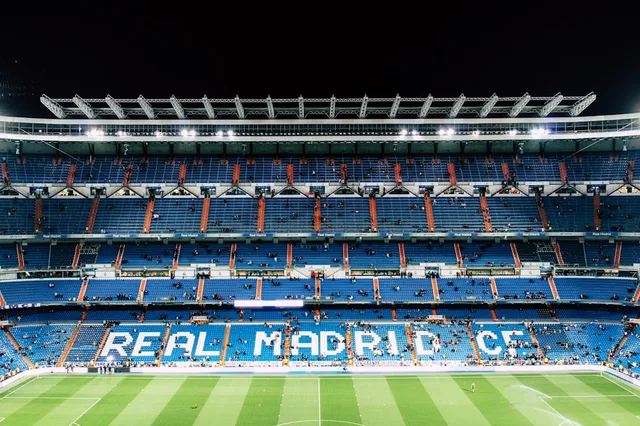
The 2025-26 La Liga season ends at the Bernabéu in May. Real Madrid's last two home games are on Thursday May 14 (vs Real Oviedo, 9:30pm) and Saturday May 23 (vs Athletic Club, 9pm, the season finale). If you have any interest in football and you are visiting Madrid in May, one of these evenings is worth booking around. The atmosphere at a season-closing Bernabéu night is different from the middle of the season. Tickets at realmadrid.com.
Royal Palace of Madrid
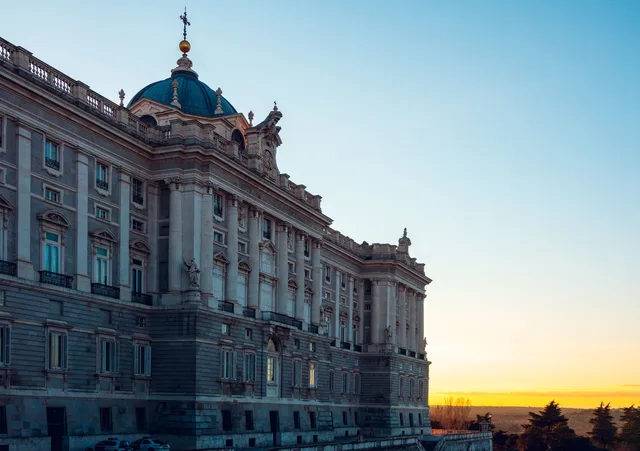
The Palacio Real is open Monday to Saturday 10am-7pm and Sunday 10am-4pm in May, closed on May 1 (Labour Day) and for state ceremonies (check patrimonionacional.es on the morning of your visit). Adult tickets are €22 self-guided. EU citizens and nationals of Latin American countries get free entry Monday to Thursday from 5pm with valid ID. Metro Ópera (Lines 2, 5, and Ramal).
The Prado, Thyssen, and Reina Sofía
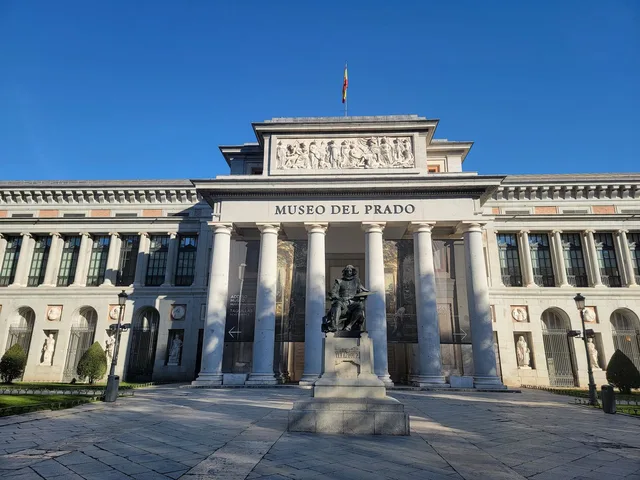
All three art museums sit within walking distance of each other on the Paseo del Arte. May is a particularly good time for the Prado if you have spent any time in Malasaña for Dos de Mayo: both of Goya's 1808 paintings hang in the Goya rooms, and seeing them after standing in the neighbourhood where it happened makes them land differently. The Prado is €18 (free Monday to Saturday 6-8pm and Sunday from 5pm). Thyssen: €14 (free Mondays 12-4pm). Reina Sofía: €12 (free from 7pm, closed Tuesdays).
Zarzuela: Spain's own music theatre
Zarzuela is the Spanish lyrical music-theatre form that never crossed borders, which makes Madrid one of the few places in the world where most tourists will ever have a chance to see it performed live. The Teatro de la Zarzuela is behind the Congress building in central Madrid. Teatro Amaya's Zarzuela and Opera Festival runs through May 31, 2026, with productions including "Luisa Fernanda" by Federico Moreno Torroba and "Doña Francisquita." Check esmadrid.com for the current programme and tickets.
Flamenco
May is a good month for a flamenco show in Madrid. The tourist season is building but has not peaked yet, which means more focused shows with smaller audiences than July or August. The tablaos near Plaza Mayor and Sol run performances most evenings. Book in advance to get a good seat at the front.
Day trips from Madrid in May
Toledo
Toledo is the most visited day trip from Madrid, and May is a good time to go: the spring light on the Alcázar and the Cathedral is at its best, and the city has not yet filled with summer crowds. Train from Atocha takes around 34 minutes (from about €17 one way). Toledo has been a UNESCO World Heritage Site since 1986, recognised for its medieval architecture and its centuries of Christian, Jewish, and Muslim coexistence. El Greco's paintings are in the Museo del Greco and the Cathedral. Plan for a full day.
Segovia
Segovia in May means the fields between the city and the Sierra de Guadarrama are still green, which makes the approach from the train station one of the better arrivals in the region. The Roman aqueduct (built in the 1st century AD) leads you into the old city; the Alcázar at the far end is the kind of castle that updates your expectations of what a castle can be. High-speed Renfe Avant from Chamartín takes about 25 minutes (around €22 round trip). UNESCO World Heritage since 1985. Half a day covers the main sights; a full day is better if the weather holds.
Visiting at a different time of year? Read our guides to Madrid in April or Madrid in June.
Frequently Asked Questions
Is May a good time to visit Madrid?
Yes, it is one of the best months. The weather is warm and sunny (average highs from about 22°C to 28°C through the month) without the intense summer heat. The San Isidro festival brings the city's biggest celebrations to the streets around May 15, the rose gardens are at peak bloom, and the La Liga season is wrapping up at the Bernabéu. Crowds are noticeable but well short of the July-August peak.
What is the San Isidro festival in Madrid?
San Isidro is Madrid's celebration of its patron saint, San Isidro Labrador, held every May 15. The 2026 festival runs May 7-17 and includes free concerts at the Pradera de San Isidro every evening (May 8-17), open-air dancing (verbenas) at plazas and parks across the city, and the Feria de San Isidro bullfighting series at Las Ventas. It is the biggest local event of the year, and most activities are free.
What is the weather like in Madrid in May?
May starts around 22°C for daily highs and ends around 28°C, with lows around 11°C. There are around 11 days with some rain per month, usually short afternoon showers rather than full-day rain. Sunshine averages about 9 hours a day. Bring light layers and a jacket for evenings; sunscreen becomes useful from mid-May onwards.
What food should I try in Madrid in May?
The San Isidro pastry is the rosquilla, sold in four versions throughout May: plain tontas, lemon-glazed listas, meringue-topped Santa Clara, and almond francesas. Buy them in the morning from any patisserie before they sell out. For daily eating, La Latina's terrace bars serve the full range of Madrid tapas: croquetas, jamón ibérico, patatas bravas, tortilla española. By late May, some places start offering gazpacho as the temperatures climb.
What is the best day trip from Madrid in May?
Both Toledo and Segovia work well. Toledo (34 min by train from Atocha, from about €17 one way) for the UNESCO medieval city, El Greco paintings, and the Cathedral. Segovia (25 min by Renfe Avant from Chamartín, about €22 round trip) for the Roman aqueduct, the Alcázar, and the surrounding countryside still green from spring. If you only have time for one: Segovia is slightly less crowded and tends to surprise first-time visitors more.