Madrid's Greatest Park Has Been Free for Over 150 Years, and Most Tourists Still Don't Use It Right
El Parque del Retiro is one of those places that takes most people by surprise. They come for a pleasant walk in a city park and discover a 125-hectare former royal estate with two spectacular iron-and-glass palaces, a rowing lake watched over by a soaring bronze monument, by most accounts the world's only major public sculpture of Lucifer, a rose garden with over 4,000 varieties, a memorial forest, and a newly restored 19th-century royal menagerie. Entry to all of it costs nothing.
The park was declared a UNESCO World Heritage Site in July 2021 as part of the Paisaje de la Luz, alongside the Paseo del Prado. It was the first UNESCO designation in the city of Madrid. On a summer weekend it can feel as busy as any world-famous museum. But visit at the right time and through the right gate, and you might find yourself nearly alone with all of it. This guide covers exactly how to do that.
Del Buen Retiro: How a Royal Garden Became Madrid's Park
El Parque del Retiro was created in the 1630s as a private retreat for King Felipe IV, attached to the Palacio del Buen Retiro. That palace (once a vast and lavish complex) has almost entirely vanished, leaving only the Salón de Reinos and the Casón del Buen Retiro. For nearly two centuries the gardens were closed to ordinary Madrileños. Carlos III opened the gates on certain days from 1767, but it was only in 1868, when Queen Isabella II was exiled and the Ayuntamiento de Madrid took ownership, that the park became fully and permanently public.
What to See En El Retiro: The Essential Highlights
The park is large enough to be genuinely disorienting on a first visit, so it helps to know which spots to prioritise.
El Estanque Grande and the Monumento a Alfonso XII
The artificial lake at the centre of the park is the first thing most visitors head for, and with good reason. The Estanque Grande is one of Madrid's most recognisable settings, its eastern bank dominated by the Monumento a Alfonso XII: a sweeping semicircular colonnade in marble and bronze, with an equestrian statue of the king perched 30 metres above the water. The monument was completed in 1922 after a design competition launched in 1902, and inaugurated by Alfonso XIII. From the water, in a rented rowboat, it frames itself perfectly against the Madrid sky.
Rowing boats rent for €6 from Monday to Friday, and €8 on Saturdays, Sundays, and public holidays. Each boat holds up to four people and the rental period is 45 minutes. Solar boats are available at €2 per person. Seniors aged 65 and over pay €1.80 on weekday mornings before 2pm. The boating station is open from 10am to 2pm and again from 3:15pm, closing between 5:15pm and 8:30pm depending on the season.
Local tip
Most visitors see the Monumento a Alfonso XII from the water. Very few know that the colonnade tower has a free public viewpoint, accessed by booking through the Pasea Madrid programme on the Madrid city council website. Standing up there, looking out over the lake and the full sweep of the park, is one of the best free views in the city. Book a few days in advance.
El Palacio de Cristal: The Glass Palace of El Retiro
The Palacio de Cristal is one of the most beautiful buildings in Madrid. Designed in 1887 by architect Ricardo Velázquez Bosco as a greenhouse for tropical plants brought from the Philippines for the Philippine Exhibition, it was built in just five months using prefabricated iron framework and glass panels set on a ceramic-tiled brick base. The cupola rises more than 22 metres, and on a bright day the entire interior glows with natural light. The Crystal Palace is now managed by the Museo Reina Sofía and used as a free exhibition space for temporary contemporary art installations. Check what is showing before your visit and allow 20 to 30 minutes inside.
El Palacio de Velázquez
A short walk from the Crystal Palace stands the Palacio de Velázquez, built between 1881 and 1883 by the same architect, Ricardo Velázquez Bosco, for the International Mining Exhibition. The red-brick exterior with its colourful ceramic tiles by Daniel Zuloaga is striking, and the interior, with its iron-vaulted glass roof flooding the space with natural light, is equally impressive. Like el Palacio de Cristal, it is a free Reina Sofía annex. Both palaces are worth visiting on the same afternoon.
La Fuente del Ángel Caído: Madrid's Monument to Lucifer
Madrid has the unusual distinction of being, by most accounts, the only city in the world with a major public monument dedicated to Lucifer. La Fuente del Ángel Caído sits in the southern section of the park at an altitude of 666 metres above sea level. The bronze sculpture was created by Ricardo Bellver in 1878 for the Paris World Fair and inaugurated in the park in 1885. It depicts the fallen angel at the exact moment of his expulsion from Heaven, as described in Milton's Paradise Lost. The figure itself stands 2.65 metres on an octagonal granite pedestal decorated with demon faces, lizards, and snakes. The total fountain structure reaches 7 metres.
It sits away from the main tourist routes and is quieter than the lake. It is also, once you know the context, impossible to forget.
La Rosaleda: Over 4,000 Roses in the Heart of the Park
Designed in 1915 by municipal gardener Cecilio Rodríguez, La Rosaleda is a formal rose garden with more than 4,000 rose varieties arranged in a circular layout with central fountains and pergolas. In May and June the garden is at its most spectacular, with blooms covering virtually every surface. It is open daily from 10am to 8pm (April to September) and 10am to 6pm (October to March), and it is free to enter. If you are visiting in spring, do not skip it.
El Bosque del Recuerdo: A Quiet Moment in El Retiro
Not every part of El Retiro is cheerful. Near the southern perimeter, the Bosque del Recuerdo (Forest of Remembrance) commemorates the 192 people killed in the Madrid train bombings of 11 de marzo de 2004. The memorial was inaugurated on the first anniversary of the attacks, on 11 March 2005, and consists of 192 olive trees and cypresses, one for each victim, surrounded by a channel of water. The name was chosen by survivors and victims' families to convey that those killed are permanently present, not departed. It takes five minutes to walk through and considerably longer to leave behind.
How to Visit El Retiro: Getting There, Hours, and Tips
| Season | Opening Hours | Entry |
|---|---|---|
| April to September | 6:00am to midnight | Free |
| October to March | 6:00am to 10:00pm | Free |
No tickets or booking required for the park grounds. The Palacio de Cristal and Palacio de Velázquez are also free, but check the Museo Reina Sofía website for exhibition schedules and any temporary closures.
Getting to El Retiro
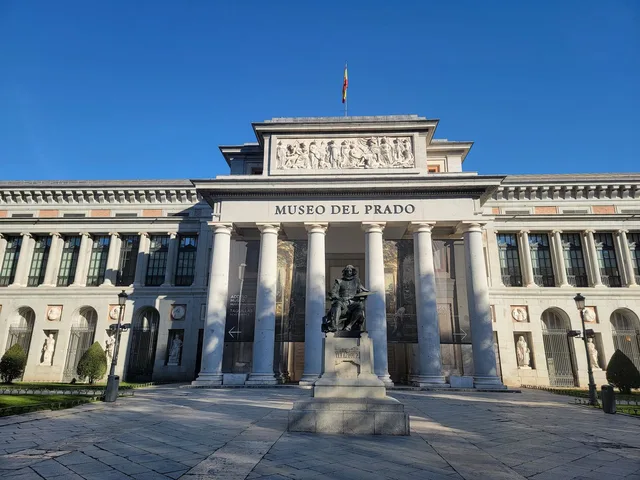
The most famous entrance is the Puerta de Alcalá on the Plaza de la Independencia, five minutes on foot from Retiro metro station (Line 2). This is also the most crowded gate. For a quieter start, use the entrances on Calle de Ibiza or Puerta de Mariano de Cavia on the park's southern side, accessible from Ibiza station (Line 9). From there you will reach the Rosaleda and el Bosque del Recuerdo within minutes of entering. The park is also a comfortable 20-minute walk from the Prado Museum along the Paseo del Prado.
When to Go
Weekday mornings between 7am and 10am are the calmest. Los fines de semana (weekends) bring crowds that can rival the busiest parts of the city centre, especially around the lake. A Tuesday or Wednesday morning in spring is the ideal time for a genuine paseo por el parque. Late afternoon between 6pm and 8pm brings the best light for photographs and the area around the lake is at its most atmospheric.
Tip
In spring 2026, the Madrid city council launched a free audio guide covering 38 landmarks inside the park, available in Spanish, English, and sign language via QR codes at the park entrances.
If the park has given you a taste for Madrid's historic gardens, El Capricho de la Alameda de Osuna in the northeast of the city is worth a visit on a separate day. It is quieter, stranger, and has a small pyramid.
Frequently Asked Questions
Is El Retiro Park free to enter?
Yes. The park is free and open to all, with no tickets or booking required. The Palacio de Cristal and Palacio de Velázquez inside the park are also free, managed by the Museo Reina Sofía as exhibition spaces. The only paid service inside the park is rowboat rental on the lake.
How long does a visit to El Retiro take?
A focused tour covering the lake, Palacio de Cristal, and Ángel Caído takes about two hours at a comfortable pace. Add the Rosaleda, Bosque del Recuerdo, Palacio de Velázquez, and a boat ride and you are looking at a half-day. The park is large enough to fill an entire day.
Why is El Retiro a UNESCO World Heritage Site?
The park was added to the UNESCO World Heritage List on 25 July 2021, jointly with the Paseo del Prado, as the Paisaje de la Luz (Landscape of Light). It was the first UNESCO site in the city of Madrid. The designation recognises the area as a cultural landscape of outstanding universal value, where nature, science, and art have intersected since the 16th century.
What is the Foso de los Mandriles?
El Foso de los Mandriles (Baboon Pit) was part of the Casa de Fieras, the royal menagerie that served as Madrid's precursor to a modern zoo. It was home to baboons for around 150 years. Fully restored in autumn 2023, it is now open to visitors as a curious piece of the park's history that most tourists walk straight past.
How much does it cost to rent a rowboat on the lake?
Boats rent for €6 on weekdays and €8 on weekends and public holidays. Each boat holds up to four people for 45 minutes. Seniors aged 65 and over pay €1.80 on weekday mornings before 2pm. Solar boats are €2 per person.