Why Madrid is worth visiting in December
December is Madrid's most festive month, and it earns that title properly. The Christmas lights have been on since late November: 13 million LED bulbs across 240 locations. By the first weekend of December, Plaza Mayor is packed with market stalls selling nativity figures, ornaments, and hand-painted decorations. Three national holidays fall this month (December 6, 8, and 25), so plan around closures, but those same holidays also push madrileños out onto the streets to shop, eat, and argue about whose turrón is best.
Visiting Madrid in December means thinner crowds than summer for most of the month, apart from Christmas week and New Year's Eve. Weather is cold: highs around 12°C early in December, dropping to 8–9°C by month's end, with nights that can reach near-freezing. Snow is rare, but frost is not. Most days are crisp and sunny, which makes outdoor strolling pleasant if you dress for it. A real coat, scarf, hat, and gloves are not optional.
Christmas lights across Madrid
Gran Via is the most photogenic stretch. Thirty-one snowflake arches rise 10.5 metres overhead with 309,000 LEDs, and a 22.2-metre Christmas tree blazes at the crossroads with Calle Alcalá. Walk it from Callao down toward Sol and the whole route is pure festive decoration.
The switch-on happens each year at Plaza de Cibeles in late November, with a 3D videomapping show projected onto the Palacio de Cibeles facade. From there, the route north along Paseo de Recoletos is the most atmospheric Christmas evening stroll in the city: the full length of the boulevard from Cibeles to Plaza de Colón is lined with market stalls and Christmas trees. Most tourists go straight to Gran Via and skip this stretch entirely.
Lights are on daily from 6pm until midnight (1am on Fridays and Saturdays), and the display runs until January 6.
Christmas markets: Plaza Mayor and beyond
The Plaza Mayor Christmas market has been running for over 100 years. The 104 stalls sell nativity scene pieces, ornaments, tinsel, and traditional Christmas items, not artisan food but the proper old-school kind of market where you buy a ceramic shepherd for the family belén. Open Sunday–Thursday 10am–9pm; Friday, Saturday, and December 23 until 10pm. It runs from late November through December 31.
The Community of Madrid Craft Fair (Mercado de Artesanía) at Plaza de España runs December 1 to January 5, with 150+ artisans showing pottery, ceramics, leather goods, and handmade jewelry. Paseo de Recoletos hosts another 150+ stall market along the full length of the boulevard: toymakers, glassmakers, and craft goods. Combine it with the evening lights walk for an easy night out.
Belenes: Madrid's nativity scene tradition
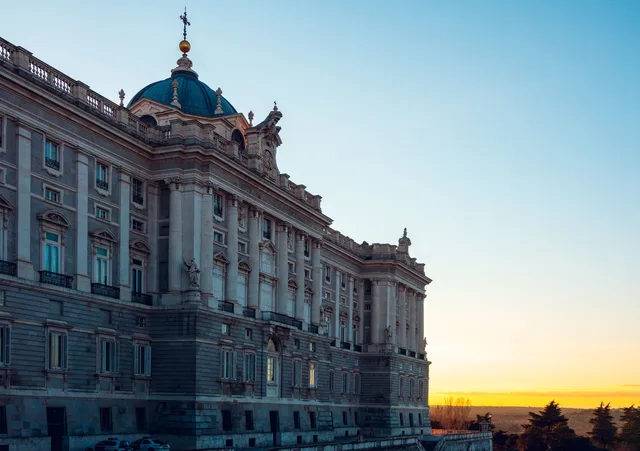
Madrid takes belenes (nativity scenes) seriously. There are three public ones worth planning around. The Royal Palace displays the Belén del Príncipe, a Neapolitan nativity commissioned by Charles III for his son, the future Charles IV, assembled between 1786 and 1788 by Neapolitan craftsmen. It has over 200 figures spanning three centuries and is included in standard palace entry. On display December 5 to January 5.
The Palacio de Cibeles (the City Hall on Plaza de Cibeles) installs a free belén on a comparable scale: 200+ figures, 20 buildings, Hebrew-style staging designed by the Association of Nativity Scene Makers of Madrid. Free entry (€0.50 fee applies to online booking). The Real Casa de Correos at Puerta del Sol also hosts a free belén from November 28 to January 6, and this building matters for a second reason: it is the one whose clock you will be staring at on New Year's Eve.
New Year's Eve at Puerta del Sol: 12 grapes at midnight
Nochevieja (New Year's Eve) at Puerta del Sol is the biggest night of the Spanish year. Thousands pack the square and count down to midnight by watching the clock on the Real Casa de Correos. At the first chime, everyone eats one grape. Then another per chime, all 12. Each grape covers one month of the coming year. Get them all down in time and tradition says you'll have luck for each month ahead.
The backstory almost nobody knows
The 12 grapes tradition is older than most tourists assume, and stranger in origin. By 1895, wealthy Madrid families were already eating grapes with champagne on New Year's Eve, copying a French custom. It was a 1909 marketing campaign that made it a national ritual: Alicante grape growers, sitting on a massive surplus harvest, promoted the grape-eating custom across Spain to shift their stock. The gimmick worked so well the tradition never died. When Televisión Española began broadcasting the Puerta del Sol countdown live in 1962, the whole country started eating to the same clock at the same second. The Real Casa de Correos clock is, in effect, Spain's midnight.
Practical tips for attending in person: The fenced area holds around 15,000 people. Sol metro station closes at 9pm and does not reopen until the following morning, so arrive before then or walk in. Entry is only possible via four streets: Mayor, Arenal, Alcalá, and Carrera de San Jerónimo. Arrive by 9pm for a spot with a view of the clock. Bring your 12 grapes ready to eat fast: small tins of seedless grape segments are sold in every supermarket in December for exactly this purpose. After midnight, wait 30–45 minutes before trying to leave; the crowds clear faster than you'd expect.
Gourmet December: seasonal food and Christmas sweets
Cocido madrileño is in its prime season through December (the season runs October to April). The classic version is at La Bola on Calle de la Bola 5, near the Royal Palace, which has been cooking it in clay pots over an open wood flame since 1870. Lunch service starts around 1:30pm; reserve ahead or you will not get a table.
The Christmas sweets are everywhere from early December. Turrón (Spanish Christmas nougat) comes in two forms: Turrón de Alicante, the hard version with whole almonds set in honey, and Turrón de Jijona, the soft, ground-almond kind. Both trace to Moorish-era recipes from around the 11th century. Mazapán (marzipan) is the Christmas specialty of Toledo, where the first documented recipe dates to 1512; pick some up if you go for the day trip. Polvorones are crumbly shortbread made with pork lard and flour that collapse to dust the moment you bite them, which is exactly the point.
For the churros con hot chocolate ritual, Chocolatería San Ginés at Pasadizo de San Ginés (near Puerta del Sol) is open 24 hours. The queue after Nochevieja at 2am is part of the experience.
Most restaurants run a menú navideño (Christmas tasting menu) through the month, and Nochebuena (Christmas Eve) dinners book out weeks in advance.
Museums in December: the Paseo del Prado triangle
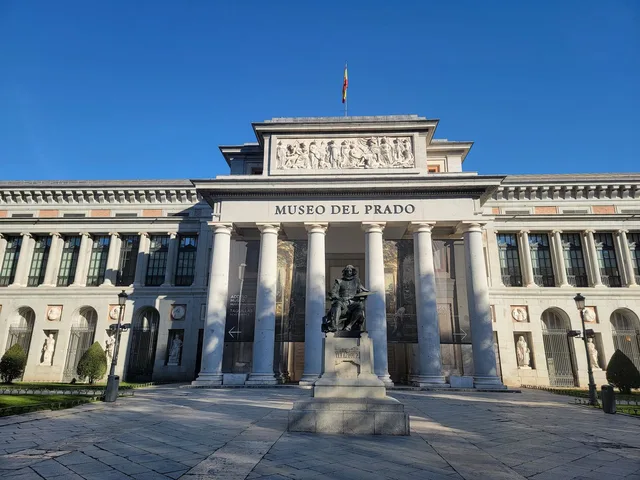
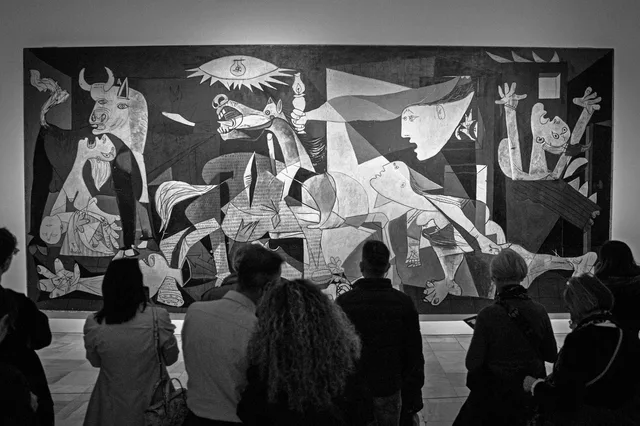
The Prado, Reina Sofía, and Thyssen are all open for most of December, but the holiday closures matter, and December is actually the quietest the Paseo del Prado gets all year. Worth knowing before you book:
| Museum | Regular hours | Closed entirely | Reduced hours (10am–2/3pm) |
|---|---|---|---|
| Prado (€18) | Mon–Sat 10am–8pm; Sun 10am–7pm | Dec 25, Jan 1 | Dec 24, Dec 31, Jan 6 (closes 2pm) |
| Reina Sofía (€12) | Mon, Wed–Sat 10am–9pm; Sun 10am–2:30pm | Tue always; Dec 24, 25, 31, Jan 1, 6 | None |
| Thyssen (€14) | Tue–Sun 10am–7pm; Sat to 11pm | Dec 25, Jan 1 | Dec 24, Dec 31 (closes 3pm) |
Free entry times: the Prado is free Monday–Saturday 6–8pm and Sunday 5–7pm (not on reduced-hours days). The Reina Sofía is free from 7pm on open days. The Thyssen is free on Mondays 12–4pm. December 8 (Inmaculada Concepción) is a national holiday, so confirm hours in advance for that day.
The Royal Palace runs its winter schedule through December (Monday–Saturday 10am–6pm; Sunday 10am–4pm), but closes at 3pm on December 24 and December 31, and is closed entirely on December 25, January 1, and January 6. Entry is €22 adult; EU nationals get in free Monday–Thursday 4–6pm. Metro Ópera (lines 2 and 5).
Day trips outside Madrid in December
Toledo in December is the best version of Toledo for atmosphere. The AVE from Atocha takes around 30 minutes, and the medieval skyline in grey winter light is exactly what a medieval city should look like. The city runs Christmas markets through most of the month: Plaza Zocodover (until December 29) and Plaza del Ayuntamiento (until January 6). The Toledo Cathedral (begun 1226), the Jewish Quarter, and El Greco's paintings are all open through the season.
Segovia makes sense if you want something quieter. The Avanza bus from Moncloa takes 80–90 minutes and costs €6–8 one way; it drops you near the Roman Aqueduct in the city centre. In December, frost or light snow on the aqueduct's 167 arches (1st century AD, no mortar) is possible, and the low winter light through the stone is worth the trip. Almost nobody is there.
Ice rinks, evenings, and flamenco
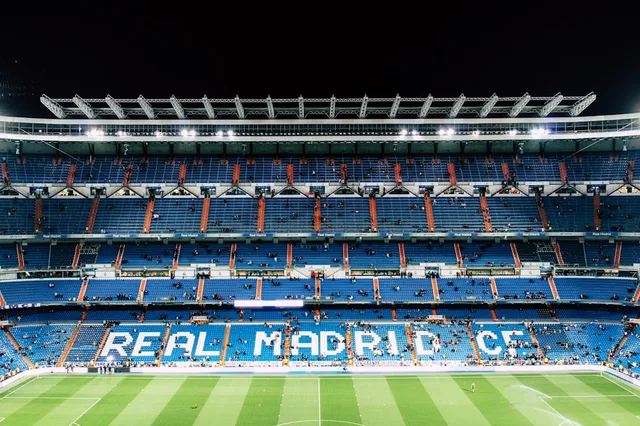
Madrid gets three ice rinks in December. The outdoor rink at Plaza de España opens around November 25 and runs to January 11. The covered Matadero rink opens in early December and runs to January 6. The flagship is Madrid On Ice at the Riyadh Air Metropolitano (Atlético de Madrid's stadium): 4,200 m² of ice, up to 1,500 people at once, open December 22 to January 11.
For evenings in the Barrio de las Letras, Calle Huertas and Plaza de Santa Ana have heated terrace bars and tapas stops from around 8pm. Café Central, now at the Ateneo de Madrid (it relocated in April 2026), runs two jazz concerts every night at 8pm and 10pm. For flamenco, this month's rotation in the series is Café Ziryab, one of Madrid's most intimate tablaos.
El Rastro runs every Sunday through December, 9am–3pm, on Calle de la Ribera de Curtidores (Metro La Latina, line 5). Follow it with tapas on Calle Cava Baja.
Plan ahead: the Cabalgata de Reyes on January 5
If you are visiting in late December, consider staying until January 5 for the Cabalgata de Reyes (Three Kings Parade). Madrid's version is one of the largest in Spain: 2,100+ participants, 12 themed floats, and the three royal carriages carrying Melchior, Gaspar, and Baltazar through the city centre from 6pm. The route goes from Plaza de San Juan de la Cruz through Plaza de Colón and Paseo de Recoletos to Plaza de Cibeles, finishing around 9pm. Sweets are thrown to the crowd the whole way. Broadcast live on TVE La 1 and Telemadrid from 6pm.
Visiting at a different time of year? Read our guides to Madrid in November or Madrid in January.
Frequently Asked Questions
Is December a good time to visit Madrid?
Yes, with some planning. You get the full Christmas experience (lights, markets, belenes, and New Year's Eve at Puerta del Sol) with smaller crowds than summer for most of the month. The main trade-off is cold nights and several national holidays (December 6, 8, and 25) when attractions close or operate on reduced hours. Christmas week is the busiest period, and New Year's Eve at Sol is a crowd event that requires arriving early.
Does it snow in Madrid in December?
Rarely. Madrid's climate is continental: cold and mostly dry. Most Decembers stay clear and sunny. Snow does happen occasionally but an average December gives you bright cold days rather than snowfall. Overnight frost is more common than snow, especially toward the end of the month.
What is the 12 grapes tradition at Puerta del Sol?
At midnight on New Year's Eve, Spain eats one grape per bell strike from the Puerta del Sol clock: 12 grapes, 12 chimes, one for each month. The ritual started in Madrid in the late 19th century and went national in 1909 when Alicante grape growers promoted it as a way to sell a bumper surplus harvest. Since 1962, TVE has broadcast the countdown live from Sol, making the Real Casa de Correos clock Spain's official midnight. For full practical tips on attending in person, see the tip box in the New Year's Eve section above.
What are the best Christmas sweets to try in Madrid?
Turrón is the essential one: the hard Alicante version with whole almonds in honey, or the soft Jijona version made from ground almonds. Both trace to Moorish recipes from around the 11th century. Mazapán (marzipan from Toledo, first recipe 1512) is sold at every market and bakery. Polvorones are crumbly lard-and-flour shortbread that fall apart when you bite them. All of these are sold in the Christmas markets and in tins at El Corte Inglés and supermarkets across the city.
Are museums open on Christmas Day and New Year's Day?
No. The Prado, Reina Sofía, Thyssen, and the Royal Palace are all closed on December 25 and January 1. The Reina Sofía is also closed on December 24 and December 31. The Prado and Thyssen operate on reduced hours (closing at 2pm and 3pm respectively) on December 24 and December 31. Plan your museum days for the first two weeks of December or the days between December 26 and December 30.
What is the Cabalgata de Reyes and is it worth staying for?
The Cabalgata de Reyes is the Three Kings Parade on January 5, the evening before Epiphany. In Spain, children traditionally receive their Christmas gifts from the three kings (Melchior, Gaspar, and Baltazar) on the morning of January 6, not from Father Christmas on December 25. The parade the night before is when the kings arrive in the city, throwing sweets to the crowd, and it draws enormous turnouts. Madrid's version, with 2,100+ participants, is one of the largest in Spain. The route and times are in the plan-ahead section above.