Why March is one of the smartest months to visit Madrid
Madrid in March is the city making up its mind about winter. The temperatures are climbing, the light is softer and longer, and the tourists who filled the museums last summer have not arrived yet. What you get is the Thyssen-Bornemisza with breathing room, Retiro Park (El Retiro) showing its first green of the year, and a calendar packed with events that most travel guides miss: a city-wide march that fills the entire Paseo del Prado on 8 March, a final week of the Madrid Design Festival, and Holy Week (Semana Santa) processions filling the streets from 27 March. March in Madrid rewards the tourists who show up.
Hotel prices run well below the summer peak, museum queues are short, and the mild temperatures make walking the city genuinely pleasant. The Golden Triangle of Art (the Prado, Thyssen-Bornemisza, and Reina Sofía) is all within walking distance along the Paseo del Prado, and the Thyssen offers free entry on Monday afternoons and Saturday evenings. If you are deciding between spring months, March earns its place.
March weather in Madrid
Average temperatures and rainfall
March brings average daytime highs of around 16°C, with nights dropping to roughly 6°C. These are mild temperatures: comfortable for walking all day, cool enough in the evenings to need a jacket. The Sierra de Guadarrama mountains are still snow-capped on clear days and visible from the city centre. Rainfall is spread across around 12 rainy days in the month, but the pattern is short bursts rather than sustained grey. Between showers, the Madrid sky tends to be very clear.
What to pack for March
Layers work better than one heavy coat. Bring something light for sunny afternoons in Retiro Park and something warm for evenings in Malasaña. A packable waterproof jacket is the most useful item you can pack. By the second half of March, some days feel properly warm and the terrace culture starts to come back to life. Sunglasses and sunscreen are worth carrying from mid-March as the sun strengthens.
Things to do in Madrid in March
Thyssen-Bornemisza Museum: eight centuries of Western art
The Thyssen-Bornemisza sits at Paseo del Prado 8, the third of Madrid's three art museums on the same boulevard. Where the Prado is deep in Spanish masters, the Thyssen covers everything else: Dürer, Caravaggio, El Greco, Monet, Edward Hopper, Wassily Kandinsky, Lucian Freud. Eight centuries in one building, and it does not feel rushed. Adult admission costs €14; €10 for students and over-65s. Metro Banco de España (Line 2).
There are two free-entry windows worth knowing about. On Mondays, the permanent collection is free from noon to 4pm; pick up your ticket at the door on the day. On Saturday evenings from 9pm to 11pm, the museum runs Thyssen Nights: free entry to the temporary exhibitions on the lower floors. An odd but genuinely good way to spend a Saturday evening, and half the crowd of daytime. Open Mon 12:00–19:00, Tue–Fri and Sun 10:00–19:00, Sat 10:00–23:00.
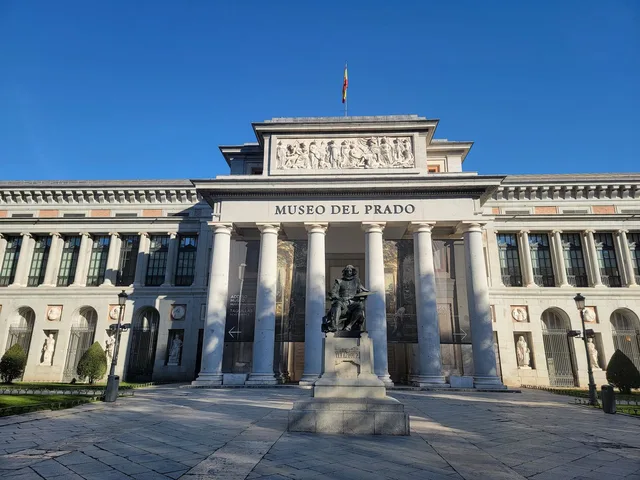
Prado Museum: Velázquez and Goya without the summer crush
The Prado is one of the great art collections in the world. In March, the rooms holding Velázquez's Las Meninas and Goya's Black Paintings are busier than January but still entirely manageable. Adult tickets cost €18; free entry Mon–Sat from 6pm to 8pm and Sundays from 5pm (reserve in advance at museodelprado.es, limited availability). Metro Atocha (Line 1) or Banco de España (Line 2).
Reina Sofía: Guernica in spring
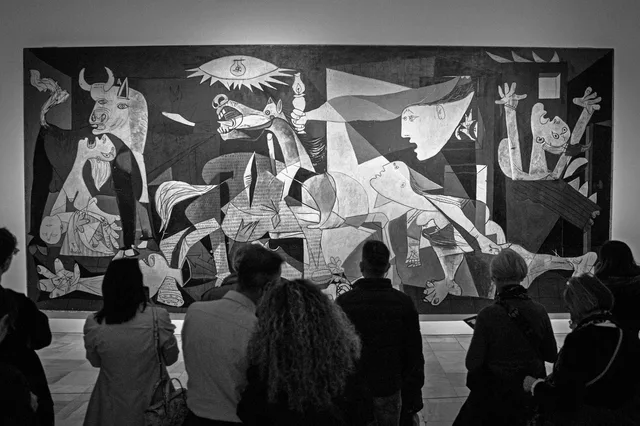
Picasso's Guernica hangs in Room 205.10 on the second floor of the Sabatini Building at the Reina Sofía. General admission costs €12; free for under-18s and over-65s; free from 7pm daily (book at museoreinasofia.es). Closed Tuesdays. In March the queue at opening time is minimal compared to summer. Metro Atocha (Line 1).
Royal Botanical Garden: €4 and the first spring flowers
The Royal Botanical Garden (Real Jardín Botánico) sits at Plaza de Murillo 2, pressed right up against the Prado's south wall. Most visitors walk straight past the gate. In March, early bloomers are starting to open: camellias, the first magnolias, daffodils along the lower terraces. Peak colour is April and May, but March gives you early spring flowers for €4 and fits naturally into an afternoon beside the Prado. Open daily 10am–7pm in March. Metro Atocha (Line 1).
Retiro Park: spring returns to Madrid's great park
El Retiro is Madrid's most visited public park: 140 hectares in the centre of the city, free and open every day. In March the trees are budding, the rowing lake is open, and the paths fill with locals on weekend afternoons. The Crystal Palace (Palacio de Cristal), a free 19th-century glass pavilion used by the Reina Sofía for exhibitions, is worth finding on the park's far side. The rose garden does not bloom until May, but the rest of the park is pleasant all month.
Royal Palace: free entry for EU visitors on March afternoons
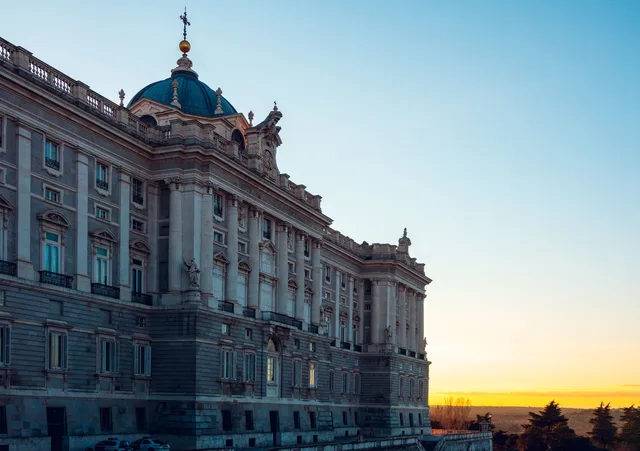
The Royal Palace (Palacio Real) is the largest royal palace in Western Europe by floor area: 3,418 rooms across 135,000 square metres. Standard adult entry costs €22. EU and Ibero-American citizens enter free Monday to Thursday between 4pm and 6pm in winter (through March only, before summer hours replace it), on presentation of a passport. Open daily 10:15am–6pm in March. Metro Ópera (Lines 2 and 5).
Templo de Debod: the best sunset in Madrid
A genuine 2nd-century BC Egyptian temple, dismantled stone by stone and donated to Spain by Egypt in 1968 after Spain helped rescue monuments threatened by the Aswan Dam. It stands in Parque del Oeste with open westward views. The sunset from the terrace here, looking past the temple toward the Royal Palace and the Sierra de Guadarrama, is the best free viewpoint in the city. Entry to the temple itself is free. Metro Ventura Rodríguez (Line 3) or Plaza de España (Lines 3 and 10).
CentroCentro and the Madrid Viewpoint
The Cibeles Palace (Palacio de Cibeles) at the top of the Paseo del Prado houses CentroCentro, a free contemporary culture centre with rotating exhibitions on art, design, and the city. The Madrid Viewpoint (Mirador Madrid) on the upper floors costs €4 (€2 reduced) and gives a full panoramic view over the rooftops. Open Tue–Sun 10am–8pm; viewpoint hours 10:30am–2pm and 4pm–7:30pm. Closed Mondays. At €4, it is strong value for one of the better rooftop views in the city.
Matadero Madrid: free contemporary arts in a former slaughterhouse
Matadero Madrid is a cluster of early 20th-century neo-Mudéjar slaughterhouse buildings on the banks of the Manzanares River, now one of the city's most active contemporary arts centres. Exhibitions, theatre, design shows, and film screenings run year-round; most spaces are free to enter. Plaza de Legazpi 8. Open generally 9am–10pm (individual events vary; check mataderomadrid.org). Metro Legazpi (Lines 3 and 6). Pairs well with a walk along Madrid Río.
Culinary delights and neighbourhoods
La Latina: the best tapas bars in old Madrid
La Latina is the best neighbourhood for traditional tapas: the streets around Cava Baja and Plaza de la Paja are lined with old bars serving patatas bravas (fried potatoes with spiced sauce), jamón, and croquetas alongside decent house Spanish wine. On Sunday mornings, the El Rastro flea market sets up nearby on Calle Ribera de Curtidores: one of the better Sunday morning experiences in the city. Metro La Latina (Line 5).
Chueca: the neighbourhood that comes alive in spring
Chueca is Madrid's LGBTQ+ neighbourhood and one of its most enjoyable to wander through. The café bars around Plaza de Chueca stay busy year-round, but March is when the terraces start to reopen and the neighbourhood shakes off its winter rhythm. Less crowded with tourists than Sol or Gran Vía, and more rewarding to walk. Metro Chueca (Line 5).
Salamanca: grand avenues and the Velázquez street
The Salamanca neighbourhood, east of Retiro Park, is Madrid's most elegant barrio: a 19th-century grid of wide streets and ornate apartment buildings, with designer shops along Calle de Serrano and quiet residential blocks behind. Calle de Velázquez runs through the heart of it. A March afternoon walk through Salamanca gives you a sense of how the city lives at its most prosperous. Not primarily a tourist area, which is exactly the point. Metro Velázquez (Line 4) or Serrano (Line 4).
San Miguel Market: a glass of wine under a 1916 iron roof
The San Miguel Market (Mercado de San Miguel), just off Plaza Mayor, is a cast-iron covered market from 1916 where vendors sell jamón, oysters, pintxos, croquetas, and Spanish wine by the glass. Good for a mid-morning snack or a stand-up lunch between museum visits. Open daily 10am–midnight; Thursday to Saturday until 1am. Plaza Mayor itself is worth a slow walk: the 17th-century arcaded square is at its best on a clear March morning before the afternoon crowds arrive.
The last good month for Madrid chickpea stew
By April, Madrid restaurant menus shift toward lighter spring dishes. In March you can still order the city's great winter dish, the slow-cooked chickpea stew (cocido madrileño): three courses from one pot, starting with the broth as soup, then the chickpeas and vegetables, then the meats (chorizo, black pudding, pork). By April, menus shift toward lighter dishes. In March you can still order cocido madrileño at a traditional restaurant with full confidence. La Bola, Malacatín, and Taberna La Daniela are three celebrated spots. Book ahead.
Flamenco: better tables in smaller rooms
Live flamenco shows run year-round in Madrid, and March is a good month for them: smaller audiences mean better sight lines and a closer atmosphere than summer. Several venues near the city centre run 60–90 minute shows in the evenings. Book ahead to secure a good seat.
March events in Madrid
Women's Day (8 March): one of the biggest marches in Europe
On 8 March, Madrid holds one of the largest Women's Day marches in Europe. In 2026, over 80,000 people marched from Atocha at noon, up the Paseo del Prado to the Cibeles Fountain, then along Gran Vía to Plaza de España. The demonstration is free to watch, colourful, and peaceful. Parts of central Madrid are closed to traffic. Worth planning around. If you are in the city that morning, the atmosphere is unlike most things you will see on a European city break.
Madrid Design Festival (first week of March)
The Madrid Design Festival runs from 5 February to 8 March 2026, with over 50 exhibitions across the city covering architecture, graphic design, fashion, and product design. The final days fall in early March. Most events are free; check the full programme at madrid.es.
San José Day (19 March): Spain's Father's Day
March 19 is the feast of San José (Saint Joseph) and functions as Spain's Father's Day. Pastry shops fill with buñuelos de viento (light fried dough puffs, often filled with cream or chocolate), and family restaurants book out at lunchtime. Not a public holiday in Madrid itself, but widely celebrated with a warm, local feel. A good day to seek out a traditional café or neighbourhood pastry shop.
Holy Week processions (from 27 March): Madrid's most dramatic annual event
In 2026, Holy Week (Semana Santa) begins on 27 March and runs to Easter Sunday on 5 April. The final days of March bring over 30 religious processions through central Madrid: hooded penitents, brass bands, and elaborately carved wooden floats carried on the shoulders of brotherhoods that have practised all year. Locals (madrileños) and visitors line the streets together. The epicentre is Puerta del Sol and the streets surrounding it. All processions are free to watch.
The first major procession, La Borriquita (depicting Jesus entering Jerusalem on a donkey), sets off from the Almudena Cathedral on Palm Sunday (29 March) at 3:15pm. On Good Friday (3 April), the Jesús de Medinaceli procession is one of the most attended, passing through Sol at around 9pm. Even if your visit only overlaps with the opening days from 27 March, the atmosphere in central Madrid is unlike any other time of year.
Local tip
Hotel prices jump sharply from 27 March as Holy Week begins. Book well in advance if you are arriving around that date, or plan to arrive before the 27th for better rates. The best combination is arriving in mid-March to enjoy the city at its quietest, then staying through the opening days of the processions before the weekend crowds peak.
La Liga football in March
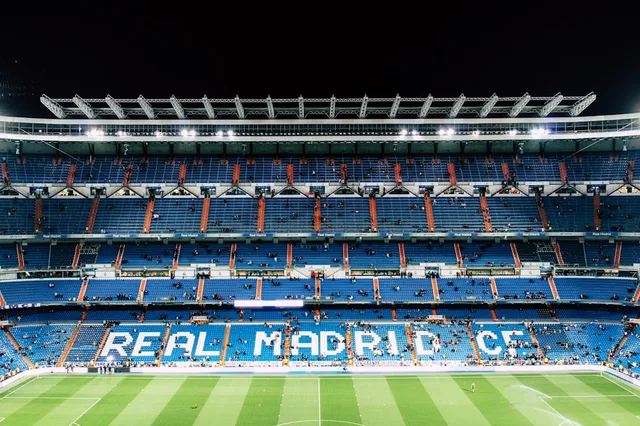
March sits in the heart of La Liga, with Real Madrid at the Estadio Santiago Bernabéu and Atlético de Madrid at the Cívitas Metropolitano both playing home fixtures. An afternoon at either stadium is the kind of experience people talk about for years. Check club websites as soon as your travel dates are confirmed: popular fixtures sell out quickly.
Day trips around Madrid in March
El Escorial: a monastery-palace and the room where a king died
The Royal Monastery of El Escorial (Real Monasterio de El Escorial), about 55 kilometres northwest of Madrid, is Philip II's defining statement in stone: a vast granite complex combining monastery, basilica, royal palace, and library, built between 1563 and 1584. Nothing else in Spain looks quite like it. Adult tickets cost €14 (€7 for students and over-65s). Since February 2026 advance booking is mandatory; book at patrimonionacional.es before travelling. Open Tuesday to Sunday 10am–6pm in March, closed Mondays. Take Cercanías C-8a from Atocha or Chamartín; the journey takes around one hour each way and costs roughly €4.90.
Local tip
In Philip II's private apartments, look for the small window cut into the bedroom wall. From his bed, the king could see directly through to the high altar of the basilica without ever leaving the room. In his final years, crippled by gout, he watched Mass from that window every day. He died there in 1598. Most tour groups move through quickly; this room is worth stopping in. It tells you more about the man than any portrait.
Segovia: Roman aqueduct, a castle, and the 27-minute train
Segovia packs a Roman aqueduct (free, 167 granite arches, no mortar, 2,000 years old), the Alcázar castle (€5.50 for palace and museum, €8 with the tower), and a Gothic cathedral (€5) into a centre you can walk across in 20 minutes. The high-speed AVE train from Chamartín reaches Segovia's Guiomar station in 27 minutes; a connecting bus runs to the centre from there. Book at renfe.com. In March the streets are quiet and the afternoon light on the aqueduct is exceptional.
Toledo: Spain's old capital in 33 minutes
Toledo is Spain's former capital: a walled city on a rocky hill above the Tagus River, with a Gothic cathedral, two medieval synagogues, a Moorish mosque, and El Greco's house all within walking distance of each other. The Renfe AVANT from Madrid-Atocha takes about 33 minutes; book at renfe.com. March is close to ideal: comfortable temperatures, tourist numbers well below summer, and a full day that goes fast.
Visiting at a different time of year? Read our guides to Madrid in February or Madrid in April.
Frequently Asked Questions
Is March a good time to visit Madrid?
Yes. March gives you mild temperatures (around 16°C by day), short museum queues, and a packed events calendar including Women's Day on 8 March and Holy Week processions from 27 March. Hotel prices are well below summer rates. The trade-off is around 12 rainy days across the month, but the rain usually comes in short bursts rather than full grey days.
How warm is Madrid in March?
Average daytime highs of around 16°C, with nights falling to about 6°C. The second half of March is noticeably warmer than the first. Pack layers rather than a heavy coat: something for sunny afternoons in the park and something warm for evenings out. By late March, outdoor terrace lunches are genuinely pleasant on a clear day.
Is Women's Day a big event in Madrid?
Yes, one of the largest in Europe. In 2026, over 80,000 people marched from Atocha at noon through the Paseo del Prado and along Gran Vía to Plaza de España. It is free to watch and parts of central Madrid are closed to traffic for the afternoon. If you are visiting on 8 March, plan museum visits for the morning and be in the city centre from noon onward.
Segovia or Salamanca: which day trip is better from Madrid?
Segovia and Salamanca are different types of day trip. Segovia is 27 minutes from Chamartín by AVE and packs a Roman aqueduct, the Alcázar castle, and a Gothic cathedral into a walkable centre: very achievable in a single day. Salamanca is about 1 hour 40 minutes from Chamartín by ALVIA train (or around 2.5 hours by bus from Moncloa) and rewards a longer visit with two cathedrals, a famous 13th-century university, and beautiful golden sandstone architecture. If you have one full day and want maximum impact per hour of travel, Segovia wins. If you have a full day and enjoy slower, more atmospheric cities, Salamanca is worth the journey.
What food is Madrid famous for in March?
March is the last good month for the city's great winter gastronomy: the chickpea stew (cocido madrileño) served at traditional restaurants in three courses from a single pot. Beyond that: tapas at the bars on Cava Baja in La Latina (patatas bravas, croquetas, jamón); a bocadillo de calamares near Plaza Mayor; and churros with hot chocolate for a cold morning. The San Miguel Market near the Plaza Mayor is a good single stop for a tapa and a glass of Spanish wine.
Is Barcelona or Madrid better in March?
Both are good choices in March, with similar average temperatures of around 16°C. Madrid has slightly fewer rainy days than Barcelona in March and a richer events calendar: Women's Day brings 80,000+ onto the streets on 8 March, and Holy Week processions start on 27 March. Barcelona has the coast and milder evenings. If art museums, walking a historic city, and witnessing local life are your priority, Madrid in March has a clear edge.