If you ask most first-time visitors what brought them to Barcelona, they will mention one name: Gaudí. And they will not be wrong. But the city's world-famous architect is really just the opening act. Behind the spires of the Sagrada Família, behind the stalls of La Boqueria market and the ancient stones of the Gothic Quarter, you will find a city that has been doing things its own way for over 2,000 years, and has plenty more to say for itself. Barcelona is a city that rewards curiosity. The top things to do here span Roman ruins, Modernista masterpieces, food markets that have been running for eight centuries, a waterfront rebuilt from scratch for the 1992 Olympics, and one of the most storied football clubs in the world.
Barcelona is one of Europe's most visited cities, and there are good reasons why it keeps filling up. It sits on the Mediterranean Sea with a beach running along its eastern edge, Montjuïc hill rising to the southwest, and some of the most extraordinary architecture on the planet packed into a centre you can walk across in under an hour. What Barcelona offers is rare: a city where the famous architect, the Roman history, the Catalan food culture, and the beach all exist within a few kilometres of each other. Whether you are planning a first visit or a fifth, here is what Barcelona is genuinely famous for, and why each one matters.
Antoni Gaudí: The Architect Who Turned Barcelona Into Art
No single person has shaped a city the way Antoni Gaudí shaped Barcelona. The Catalan architect, born in 1852, spent decades producing buildings that looked as if they had been sculpted by nature rather than designed on paper. His rooftops move like ocean waves. His columns branch like trees. His facades are alive with colorful mosaics and organic curves that seem physically impossible. In 2026, the centenary year of Gaudí's death, Barcelona is marking the occasion with exhibitions, concerts, and international events at every major Gaudí site. And it has just witnessed something no previous generation of visitors has seen: his central masterpiece, structurally complete after 144 years of construction.
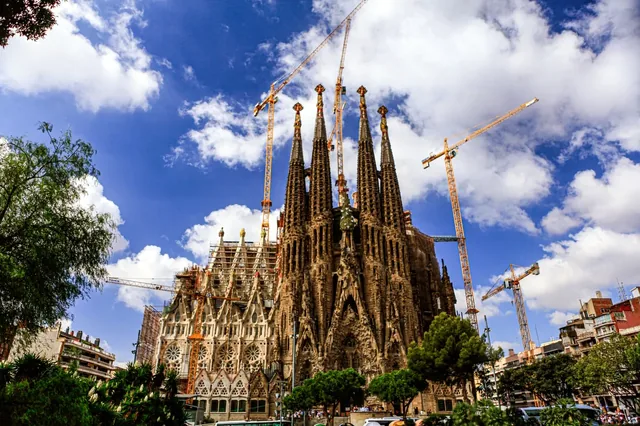
The Sagrada Família is where every visit to Barcelona should begin. Construction began in 1882, and on 20 February 2026, the Tower of Jesus Christ was completed, bringing the basilica to its full planned height of 172.5 metres, making it the tallest church in the world. That height was not accidental: Gaudí designed the tower to sit just below the summit of Montjuïc hill, because he believed no human creation should surpass the work of God. Inside, what matters is the light. The stained glass windows flood the nave in shifting pools of amber, gold, and violet as the sun moves across the facades, turning the building into something that feels less like a church and more like a living organism.
Local tip
The Sagrada Família has two completely different stained-glass personalities depending on the time of day. The east nave (Nativity Facade side) catches the morning sun: arrive between 9 and 11am and the windows throw warm amber and gold across the white stone columns. The west nave (Passion Facade side) catches afternoon light from around 3pm, turning the whole space a cool, deep blue.
Tuesday, Wednesday, and Thursday mornings have the smallest crowds. Arrive at 9am on one of those days and you get the best light with the emptiest aisles. Most visitors don't appear until mid-morning. Book your tickets well in advance: slots sell out weeks ahead in peak season, and there is no door queue to join.
Gaudí chose 172.5 metres for the Tower of Jesus Christ with a specific intention: the tower sits just below the summit of Montjuïc hill, which rises to 177 metres. The story goes that the architect insisted a human creation should never surpass the work of God. Whether or not he used those exact words, the deliberate restraint is written into the building's dimensions, and it is the reason the Barcelona skyline still feels like a conversation between the city and the landscape around it, rather than a competition with it.
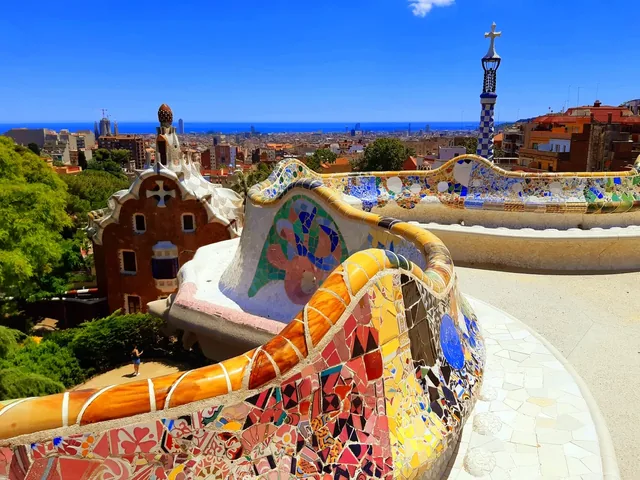
Park Güell shows Gaudí at his most playful. The terraces of colorful mosaics, the gingerbread gatehouses, and the famous serpentine bench overlooking the city from a hilltop position were originally designed for a private residential development that never found buyers. The project was abandoned in 1914 and eventually donated to the city. Today it is a UNESCO World Heritage Site, and the monumental zone requires a timed-entry ticket booked well ahead. The views from the main terrace are some of the best in the city and do not cost extra once you have paid the entry ticket.
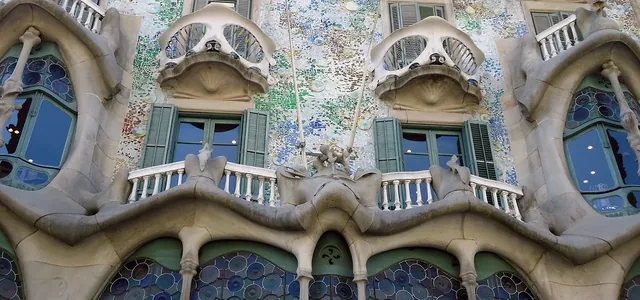
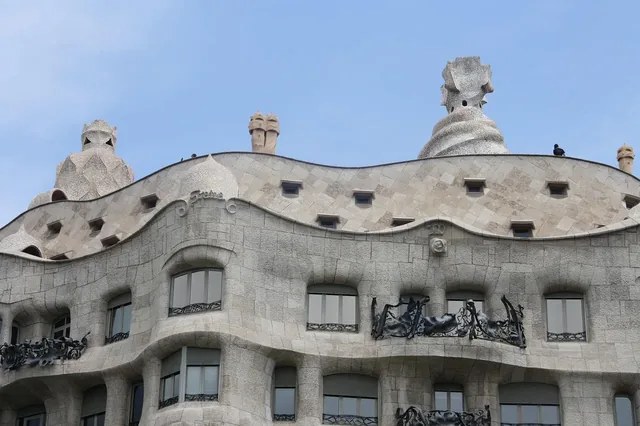
Passeig de Gràcia, the city's elegant central boulevard, is where you find Gaudí side by side with his great contemporary Lluís Domènech i Montaner, in what locals call the Block of Discord: three competing Modernista buildings from three different architects, each trying to outdo the others. Casa Batlló has a facade of coloured glass and scaled ceramic tiles that Gaudí based loosely on the legend of Sant Jordi and the dragon (the roof is the dragon's back). A few blocks up, Casa Milà, known as La Pedrera, has a rooftop of warrior-like chimney sculpture that is one of the most photographed spaces in Europe. Not sure which to visit? Our Casa Batlló vs La Pedrera comparison makes the choice straightforward. And if you want a complete picture of the famous architect's work, the best Gaudí buildings in Barcelona guide covers everything from his earliest experiments to his final masterpiece.
The Gothic Quarter: 2,000 Years of History in One Neighbourhood
Walk five minutes south of Plaça de Catalunya and you are inside the oldest part of the city. The Gothic Quarter (Barri Gòtic) began as the Roman colony of Barcino, founded around 15 BC. Medieval walls were built on top of Roman walls. Gothic churches rose beside Roman temples. You can still see four Roman columns from the 1st century BC inside a courtyard that most tourists walk past without noticing: the hidden Temple d'August, tucked inside a medieval building near the Barcelona Cathedral. The cathedral itself dates to the 13th century. The cloister, where thirteen white geese are kept as a symbol of Saint Eulalia (the city's patron saint), is free to enter and inexplicably calming on a hot afternoon.
Beneath the Pont del Bisbe (the Bishop's Bridge) in the Gothic Quarter, there is a stone skull pierced by a dagger. According to local legend, if the dagger is ever removed, Barcelona's buildings will crumble and the city will fall. The bridge itself was built in 1904 and is not actually medieval, despite its Gothic styling, but the legend has stuck fast, and no one appears keen to test it.
The Gothic Quarter rewards slow exploration: it is one of the few parts of Barcelona where getting lost is the point. The lanes are narrow, the buildings lean in, and the occasional square opens up without warning into something beautiful. Stroll through in the morning before the crowds arrive from the cruise ships and you will have stretches of it almost to yourself. The nearby El Born neighbourhood extends the medieval city with better bars and the Picasso Museum, which traces the formative years of the artist who lived in this neighbourhood as a young man.
La Boqueria Market: More Than a Photo Opportunity
La Boqueria market has a mixed reputation among people who know Barcelona well. The stalls nearest the Las Ramblas entrance are overpriced and aimed squarely at visitors who want a photogenic cup of cut fruit. But walk past those, into the interior of the market, and you find something else: a working food market first mentioned in documents from 1217, moved to its current site in 1836, with more than 300 stands across 2,583 square metres selling fish, meat, cheese, charcuterie, spices, and produce that local traders have been sourcing for generations. For food lovers, La Boqueria market is still worth visiting, as long as you ignore the entrance and head straight to the fish counters and the back of the hall. The market is currently undergoing renovation until 2027 but remains open throughout.
The most common mistake at La Boqueria is treating it as a tourist attraction rather than a food market. Go with an appetite, order a portion of jamón at one of the counters, and eat it standing up. That is the correct way to use a food market.
Catalan Food: Pa Amb Tomàquet, Tapas, Cava, and Pintxos
Catalonia has its own culinary identity, and it is distinct from the rest of Spain. The foundation is pa amb tomàquet: bread rubbed with a ripe tomato and drizzled with olive oil, served with everything at every meal. It sounds almost insultingly simple and tastes better than it has any right to. From there, the local food tradition builds outward: botifarra (Catalan sausage), escalivada (smoky roasted aubergine and peppers), anchovies from L'Escala on the Costa Brava, and the kind of fresh seafood that comes from having the Mediterranean Sea on your doorstep.
Tapas belong to the broader Spanish tradition, but Barcelona does them well. The cheapest and most social version is pintxos, the Basque-style small plates found on Carrer de Blai in the Poble Sec neighbourhood. This short pedestrianised street is lined with bars where you pick pieces from the counter, eat standing, and pay per item, usually around €2 each. A pintxos crawl here on a weekday evening is one of the best-value eating experiences in the city, and one of the things most travel guides skip over in favour of the restaurant scene.
Cava is Catalonia's sparkling wine, made by the same traditional method as champagne, with most production coming from the Penedès region an hour south of Barcelona. In the city, cava is cheap, served cold, and drunk at almost every occasion from breakfast onwards. A glass at a bar on a warm evening is one of those small, correct decisions that makes a trip feel like a trip.
FC Barcelona and Camp Nou
In Barcelona, FC Barcelona functions almost as a parallel civic identity. Founded in 1899, the club's motto is més que un club (more than a club), a phrase that earned its weight during the Franco era, when a Barcelona home game was one of the few public spaces where Catalan identity could be openly expressed. Understanding that history makes the atmosphere at Camp Nou make sense at a deeper level than football usually requires.
The stadium is currently being rebuilt. Spotify Camp Nou is under construction in 2026, and the traditional stadium experience tour is not available while the work continues. The museum is open, with immersive exhibits, historic trophies, and a construction viewpoint over what will become the largest football stadium in Europe when it is finished. Find out what the Camp Nou experience offers right now before you book, so you know exactly what to expect.
Montjuïc: Castle, Cable Car, and the Best Views of Barcelona
Montjuïc hill rises to 177 metres on the southwestern edge of the city, and it provides the best views in Barcelona available without leaving solid ground. The Montjuïc Castle at the summit has a difficult history: it served as a military fortress and a political prison, and was an execution site during the Spanish Civil War. Today it is a museum with views across the entire port and out over the Mediterranean. The Montjuïc cable car runs from the mid-station (reachable by funicular from Paral·lel metro) to the castle, swinging out over the city and the harbour in a ride that is dramatic even if you travel by cable car regularly.
Lower on the hill, the Fundació Joan Miró is one of the finest sculpture and painting collections in the city, inside a Josep Lluís Sert building designed to flood the space with natural light. Below that, the Magic Fountain of Montjuïc (Font Màgica) puts on free light and sound shows on Thursday to Sunday evenings throughout spring and summer. It is theatrical in the best possible way, the kind of thing you would normally roll your eyes at and then find yourself standing in the crowd longer than you planned.
Las Ramblas and Barceloneta Beach
Las Ramblas is the most famous street in Barcelona: a broad, tree-lined boulevard running from Plaça de Catalunya to the Columbus Monument and the waterfront. It is busy, tourist-heavy, and frequently the subject of articles about pickpockets. Our honest guide to Las Ramblas gives you the full picture. The short version: walk it once, see the flower stalls and the entrance to La Boqueria, and then spend your remaining time in Barcelona elsewhere. It is part of the city's character without being the city's best offer.
Five minutes from the foot of Las Ramblas is Barceloneta, Barcelona's most famous beach, running along the Mediterranean edge of the city. The beach was created for the 1992 Olympic Games, when Barcelona remade its entire waterfront. It is city beach culture: packed in summer, lined with chiringuitos (beach bars) serving cold drinks and fresh seafood, and close enough to the Gothic Quarter that you can spend a morning with Roman columns and an afternoon in the sea. The best beaches in Barcelona extend further up the coast, but Barceloneta is the one that puts the city and the Mediterranean in the same frame.
Palau de la Música Catalana
While Gaudí commands most of the attention, the Palau de la Música Catalana, designed by Lluís Domènech i Montaner and completed in 1908, may be the most extraordinary interior in the city. The concert hall's centrepiece is an inverted stained glass dome that floods the space with natural light during daytime performances, designed so that artificial lighting is almost never needed at a morning concert. The columns are covered in mosaics of Catalan folk songs, the sculptures cascade from every surface, and the whole building vibrates with a kind of exuberant joy that Gaudí's more austere religious spaces rarely attempt. It is the only concert hall in the world to hold UNESCO World Heritage status, a distinction awarded in 1997. Guided tours run daily, but the right way to see it is to book a morning concert: you pay a few euros more than a tour ticket and the light through the dome during a live performance is one of those things you will describe for years.
Catalan Identity: A City That Speaks for Itself
Barcelona is in Spain, but it does not feel entirely Spanish. Catalonia has its own language, its own culture, and a long history of asserting both. You will notice Catalan immediately: street signs, metro stations, menus, and official communication appear in Catalan before Spanish. Most Barcelonans speak both languages fluently, and English is widely understood in the centre. But the Catalan identity runs deep and shapes everything from the food to the politics to the way the city organises public celebrations.
The most visible symbol is the senyera, the red and yellow striped Catalan flag draped from balconies across the city. Barcelona is also the home of the castellers, human tower builders who form competitive teams and raise structures of people eight or nine levels high in town squares during festivals. It is alarming, impressive, and entirely Catalan. Understanding that this city considers itself Catalan first, and Spanish second, makes a great deal of Barcelona fall into place, including why the meal starts with pa amb tomàquet rather than gazpacho, and why the street art in the Gothic Quarter occasionally includes independence slogans. Barcelona is a city with a clear sense of what it is, and visiting it means spending time with a place that has been arguing for that identity for a long time.
Frequently Asked Questions
What is Barcelona most famous for?
Barcelona is most famous for the architecture of Antoni Gaudí, particularly the Sagrada Família, Park Güell, Casa Batlló, and La Pedrera. Beyond architecture, the city is known for its Gothic Quarter, La Boqueria market, FC Barcelona, Barceloneta beach, and Catalan food and drink culture including tapas, cava, and pintxos.
Is Barcelona worth visiting for the first time?
Yes, Barcelona rewards first-time visitors exceptionally well. The city is compact enough that you can walk between most major attractions, the food is excellent at every price point, and the combination of architecture, history, beach, and culture is hard to match in a single European city. Three days covers the main sights. Five days lets you breathe and explore the neighbourhoods.
What language do they speak in Barcelona?
Barcelona is officially bilingual in Catalan and Spanish. Street signs, menus, and official communication are typically in Catalan first. Most people in the city speak both languages fluently, and English is widely spoken in tourist areas. Learning a few words of Catalan, like gràcies for thank you and bon dia for good morning, is appreciated but never expected.
When is the best time to visit Barcelona?
April to June and September to October offer the best combination of good weather, manageable crowds, and reasonable hotel prices. July and August are peak season: temperatures regularly exceed 30°C, the city is at its most crowded, and accommodation costs peak. December to February is the quietest period and surprisingly pleasant for sightseeing, though the beach is not really an option.
Do you need to book tickets in advance for Gaudí sites?
Yes, and this is not optional. The Sagrada Família and Park Güell operate timed-entry systems and sell out weeks in advance in peak season. Casa Batlló and La Pedrera use dynamic pricing, so booking early is also significantly cheaper. If you arrive in Barcelona without tickets for these popular attractions, you will almost certainly miss them. Book before you fly.
What are 5 interesting facts about Barcelona?
1. The Sagrada Família reached its full height in February 2026, 144 years after construction began, with Gaudí deliberately designing the central tower to sit just below Montjuïc hill. 2. Barcelona was founded as the Roman colony of Barcino around 15 BC. 3. La Boqueria market is first documented in 1217, making it one of the oldest markets in Catalonia. 4. FC Barcelona's motto, més que un club, reflects its role as a symbol of Catalan identity during the Franco dictatorship. 5. Cava, the sparkling wine you will drink throughout your visit, comes almost entirely from Catalonia.