The Question Every Tourist on Passeig de Gràcia Asks
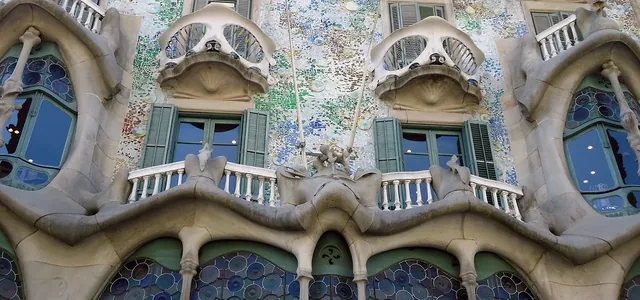
You're standing on Passeig de Gràcia, staring at Casa Batlló's facade: a shimmer of blue and green ceramic tiles, balconies that look like the skulls of something from a fairy tale, and a roof that curves and ripples like a dragon's back. The building is extraordinary even from the pavement. Then you see the ticket price. Worth it?
The honest answer is that it depends on who you are. Casa Batlló is one of the most genuinely astonishing interiors in Europe, but it is also one of the priciest attractions in Barcelona. This guide gives you a real answer based on your priorities, not the usual 'absolutely yes, don't miss it' that every travel site defaults to.
What's Inside Casa Batlló: The Immersive Experience
Antoni Gaudí didn't build Casa Batlló from scratch. He took an unremarkable 1877 apartment building on Passeig de Gràcia and, between 1904 and 1906, reinvented it so completely that nothing of the original building is recognisable. The commission came from Josep Batlló, a wealthy Barcelona textile industrialist who had seen Gaudí's work at Park Güell and wanted his own Gaudí masterpiece on Passeig de Gràcia.
Inside, every surface curves. The Noble Floor has a ceiling that ripples like a calm sea, columns that taper organically, and windows of diffuse glass that fill the room with soft, even light. A staircase leads up through the central light well, its walls lined with handmade ceramic tiles that shift from deep cobalt at the top to pale sky-blue at the base. The attic above has a gallery of curved brick arches Gaudí called the dragon's belly. The Gold ticket adds the Dragon Rooftop: the building's famous ceramic-scale ridge curving above the Eixample skyline. It is a UNESCO World Heritage Site.
Look closer
Pause at the central light well and look at the tiles as you climb. The tiles are darkest blue at the top (where the most sunlight enters) and become progressively lighter as you descend. This was a deliberate optical trick by Gaudí: the further from the light source, the lighter the tile, creating the illusion of perfectly even brightness from floor to skylight.
The windows on each landing also get slightly larger as you move down, for the same reason. Almost every visitor walks straight past this without noticing it.
Casa Batlló Tickets 2026: What Each Tier Includes
Casa Batlló offers dynamic pricing that rises as your visit date approaches. Book online in advance. The Blue (Standard) ticket starts from €31.00. Children under 12 enter free on all tiers.
| Ticket | From | What it includes |
|---|---|---|
| Blue (Standard) | €31.00 | Noble Floor, main floors, SmartGuide audio guide (15 languages), Gaudí Cube 360°. Dragon Rooftop not included. |
| Gold (Premium) | €41.00 | Everything in Blue, plus Dragon Rooftop, augmented reality tablet, Gaudí Dome (over 1,000 LED screens), private residence floors. |
| Be the First | €45.00 | All Gold features plus exclusive access from 8:30am before general opening. Best for photography without crowds. |
| Magic Nights | €59.00 | Evening visit, rooftop concert by top Barcelona musicians, glass of cava, your own table. Available spring through summer. |
Is Visiting Casa Batlló Worth It? An Honest Answer
Most travel articles say yes automatically. The answer here breaks down by visitor type.
Worth it if you: have any genuine interest in architecture, art, or design, even casually; want photographs that look unlike anything else from your Barcelona trip; or are doing a Gaudí day along Passeig de Gràcia (Casa Batlló and La Pedrera are five minutes apart on the same street). Budget for at least the Gold ticket so you see the Dragon Rooftop, which is the part visitors remember most.
Not worth it if you: are on a strict budget and have already committed to Sagrada Família (the more unmissable visit for first-timers); are travelling with children under eight who won't engage with the audio guide; or have limited time and would rather spend it at Park Güell or the Gothic Quarter. The facade on Passeig de Gràcia is free and genuinely extraordinary. Standing outside costs nothing and gives you the dragon roofline, the skull balconies, and the full ceramic facade without a ticket.
Consider the Magic Nights concert if you are on a city break with a partner, celebrating something, or simply want an evening that isn't just another dinner out. A rooftop concert at dusk with live jazz and a glass of cava turns Casa Batlló from a museum visit into an evening out. It costs more, but it is a fundamentally different experience.
Casa Batlló vs Casa Milà: Which Gaudí Building Is Better?
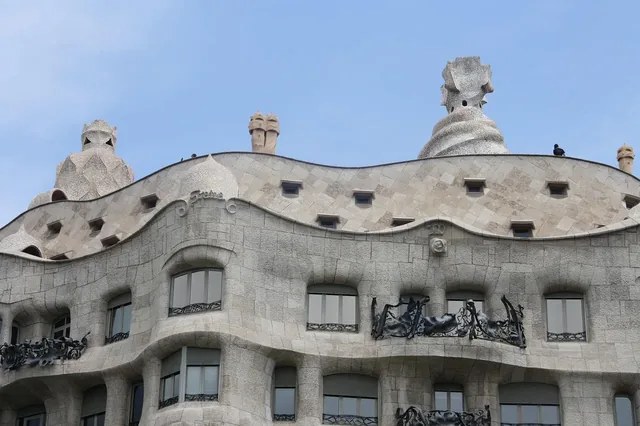
La Pedrera (Casa Milà) is five minutes up Passeig de Gràcia. If you're choosing between them: Casa Batlló is more theatrical and emotionally immediate. The colour, the fantasy, the dragon story encoded into every surface make it a building that wants to astonish you. La Pedrera is more architectural, more restrained, and has a permanent exhibition about Gaudí's life and methods that Casa Batlló lacks. La Pedrera tickets are also somewhat cheaper.
First-time visitors: Casa Batlló is the stronger visual experience. Returning visitors, or anyone interested in Gaudí's process rather than just his results: La Pedrera rewards a closer look. If you have time for both, they sit on the same street and make a natural afternoon pair.
Getting There and Booking Tips for Casa Batlló
Casa Batlló is at Passeig de Gràcia, 43 in the Eixample district. The nearest metro station is Passeig de Gràcia (lines L2, L3, and L4), a five-minute walk. The building is open every day from 8:30am to 10:30pm, with last entry at 9:30pm. Timed-entry tickets are required, and peak-season slots (July and August in particular) sell out days ahead.
Booking tip
Casa Batlló uses dynamic pricing: the closer your visit date, the higher the price. Book at least a week in advance during spring and summer to secure the base rate. Walk-up prices at the door are significantly higher than online advance booking prices.
Frequently Asked Questions
Is the rooftop included in the standard Blue ticket?
No. The Dragon Rooftop is only accessible with the Gold ticket and above. The Blue ticket covers the main floors, the Noble Floor, the SmartGuide audio guide, and the Gaudí Cube 360° experience, but not the rooftop terrace.
Which is better, Casa Batlló or Casa Milà (La Pedrera)?
If you can only pick one on a first trip to Barcelona, choose Casa Batlló for pure visual impact. If you want to understand how Gaudí designed rather than just marvel at the result, La Pedrera offers a better architectural exhibition and is slightly cheaper. If you have half a day and the budget, both sit on the same street and pair well together.
Is Casa Batlló better at night?
Different, not necessarily better. Daytime visits showcase Gaudí's use of natural light, particularly the light well design and the way diffuse sunlight fills the Noble Floor. Night visits and the Magic Nights concert offer a different, more atmospheric experience on the rooftop. If the interior design interests you, visit during daylight. If you want an event, go at night.
Do people live in Casa Batlló?
No. The Batlló family sold the building in the 1950s. In 1995, the Bernat family, owners of the Chupa Chups confectionery brand, bought it and opened it to visitors. It is now a museum and cultural venue, privately owned and also used for private events.
How much time do I need for a visit?
The Blue ticket visit takes around 1 hour 15 minutes at a relaxed pace. The Gold ticket, with extra floors and augmented reality features, takes closer to 2 hours. The Magic Nights evening programme is a fixed 2-hour experience.