Barcelona has over 40 markets, and most tourists only ever see one. La Boqueria gets all the attention, and for good reason, but the city's real market scene stretches into every neighbourhood: food halls where locals actually shop, flea markets under a spectacular mirrored roof, Sunday art fairs in medieval squares, and Christmas fairs that have been running since 1877. This guide covers the best of all of them.
Whether you are after fresh fruit and Catalan specialities, second-hand books and vintage finds, or handmade gifts and local art, a Barcelona market has it.
Food Markets in Barcelona
La Boqueria Market
Mercat de Sant Josep de La Boqueria, right on La Rambla, is one of the most visited food markets in Europe, and the hype is justified if you go at the right time. Over 300 stalls sell fresh fruit, fish, cured meats, cheeses, and Catalan specialities, and the bars inside are a great spot for a quick breakfast or a glass of vermouth around noon.
Open Monday to Saturday from 8am to 8:30pm; closed Sundays. The Liceu station (L3) drops you at the entrance off La Rambla. Buses 14 and 59 also stop outside.
Local tip
Skip the main La Rambla entrance and use the side door on Carrer del Carme instead. You walk straight into the quieter interior of the market, past the tourist-facing stalls near the front that charge noticeably higher prices. Aim to arrive before 10am, when chefs are buying and the produce is at its freshest.
Sant Antoni Market
Mercat de Sant Antoni, in the Eixample neighbourhood, has been feeding the city since 1882, making it one of the oldest food markets in Barcelona. It was designed by Antoni Rovira i Trias using a striking iron structure arranged in the shape of a cross, and after a thorough renovation from 2009 to 2018, the building looks better than ever. This is where locals actually do their grocery shopping: fresh fruit and vegetables, good prices, and zero tourist theatre.
On Sundays, the market transforms into one of the best book and coin markets in Barcelona, and considered one of the largest markets of its kind in Europe. Around forty stalls sell second-hand books, comics, magazines, vinyl records, stamps, and collector's items. Bring cash, as all stalls are cash-only. The Sunday market runs from 8:30am to 2:30pm. Metro: L2 to Sant Antoni.
Santa Caterina Market
Mercat de Santa Caterina is Barcelona's most architecturally striking food market. Designed by Enric Miralles and Benedetta Tagliabue and completed in 2005, its undulating roof covered in 325,000 hand-cut ceramic tiles has made it one of the city's icons. The market has fewer stalls than La Boqueria, around 60, which means it is far less crowded and far more representative of where locals actually buy their food.
Metro: L4 to Jaume I. Buses 17, 19, 40, and 45 also stop nearby.
Local tip
Most visitors walk through Santa Caterina without noticing what is on one side of the building: a glass-enclosed archaeological site run by the Museu d'Història de Barcelona (MUHBA). Excavations during the 2005 renovation uncovered remains going back to the Bronze Age, including a medieval convent and a late-Roman necropolis. You can see it from inside the market, and it costs nothing extra.
Mercat del Ninot
Mercat del Ninot, in the Eixample, first opened in 1893 and was substantially redesigned by architect Antoni de Falguera in 1933. After a full renovation completed in 2015, the market reopened with 81 stands, tasting bars, and a modern façade with metal latticework. The renovation gave the market a fresh look while keeping its neighbourhood character: it is a relaxed, local food market with tapas bars inside worth stopping at.
Metro: L5 to Hospital Clínic. Buses 59, 63, and 109 also stop nearby.
Mercat de la Llibertat
Mercat de la Llibertat sits in the heart of Gràcia and opened in 1888, when Gràcia was still an independent town outside Barcelona. The characteristic modernist ironwork decoration is the work of Francesc Berenguer i Mestres, a close collaborator of Gaudí, and it gives the market a warmth that newer buildings rarely achieve. A renovation in 2009 refreshed the interior while keeping the neighbourhood feel intact. Expect fresh produce, good tapas spots, and almost no other tourists.
FGC to Gràcia station (S1, S2, S55, L6, L7) or Metro L3 to Fontana.
Mercat de la Barceloneta
Mercat de la Barceloneta has served the fishermen's district since 1884. Designed originally by Antoni Rovira i Trias, the market was carefully renovated between 2005 and 2007 by architect Josep Miàs, who preserved the wrought-iron structure while adding solar panels that now generate 40% of the market's energy, making it the first market in Barcelona to use solar power. The project won the 2007 City of Barcelona award. Fresh fish, fruit, vegetables, and cured meats make up most of the stalls, plus a few shops selling clothing and souvenirs.
Metro: L4 to Barceloneta.
Fira Artesana (Mercat del Pi)
This artisan market sets up in Plaça de Sant Josep Oriol, in front of the Gothic basilica of Santa Maria del Pi, on the first and third weekend of each month. The stalls focus on organic and handcrafted goods: local honey, homemade preserves, cheeses, and artisan products from producers across Catalonia. Metro: L3 to Liceu.
Flea Markets in Barcelona
Encants Barcelona (Mercat dels Encants de Barcelona)
Encants Barcelona is the city's largest and most famous flea market, with roots going back to the 14th century. The current building, opened in 2013 and designed by Fermín Vázquez, is one of the most visually memorable structures in the city: an open square of stalls covered by a spectacular stainless steel and glass mirrored canopy that reflects the city around it in fractured, kaleidoscopic detail. Around 500 traders cover 15,000 square metres, and roughly 100,000 people visit every week.
The range is genuinely everything: power tools and antiques, vintage clothing and household items, books, ceramics, and curiosities from every decade. On Mondays, Wednesdays, and Fridays the market also holds morning auctions starting at 8am, a tradition reportedly found nowhere else in Europe. Open Monday, Wednesday, Friday, and Saturday from 9am to 8pm. Metro: L1 to Glòries. Buses 7, 92, and H12 stop at Plaça de les Glòries Catalanes.
Mercat de Numismàtica i Filatèlia (Plaça Reial)
Every Sunday morning in Plaça Reial, in the Gothic Quarter, around 36 stalls sell coins, banknotes, stamps, postcards, medals, and commemorative pins. The crowd is a mix of collectors, dealers, and curious regulars, and most stalls accept contactless payment as well as cash. Open Sundays from 9am to 2:30pm. Metro: L3 to Liceu (two-minute walk).
Art Markets in Barcelona
Mercadillo de la Plaça de Sant Josep Oriol
On weekends, Plaça de Sant Josep Oriol in the Gothic Quarter hosts a small outdoor art market where around fifteen Catalan artists display and sell original works. It is a low-key, genuinely local affair: oil paintings, watercolours, photography, and drawings, with prices that reflect the artist rather than a gallery markup. Metro: L3 to Liceu.
Barcelona Market Guide: A Monthly Pick
Palo Alto Market Fest
Palo Market Fest takes place on the first weekend of each month (occasionally the second, depending on the calendar) at Palo Alto, a renovated 19th-century factory complex in Poblenou. The stalls cover fashion, accessories, vintage items, records, books, organic food, and street food, and there is usually live music. The venue itself, a converted 19th-century factory, is worth the trip to Poblenou on its own. Tickets must be bought online in advance from the Monday before each event. Address: Carrer dels Pellaires, 30. Metro: L4 to Selva de Mar.
Christmas Markets in Barcelona
Fira de Santa Llúcia
The oldest and most traditional Christmas market in Barcelona, Fira de Santa Llúcia has been running in front of the Cathedral for centuries. Stalls sell nativity figures, Christmas decorations, and Catalan festive crafts. Open weekdays 10am to 9pm; weekends and holidays until 10pm. Metro: L4 to Jaume I.
Fira de Nadal de la Sagrada Família
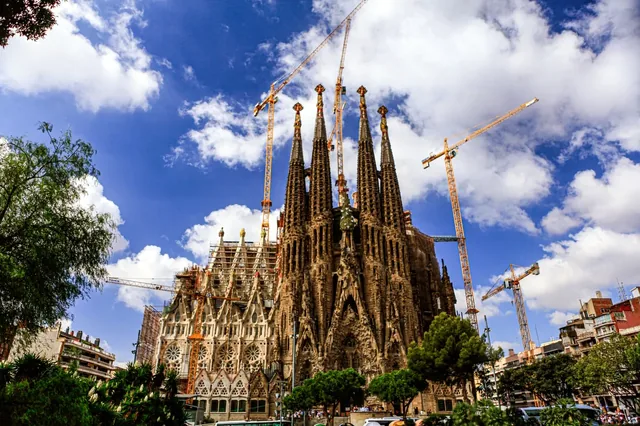
This Christmas fair began in the 1960s next to the Sagrada Família, when the Santa Llúcia market had run out of space for new stallholders. Around a hundred stalls now sell nativity figures, trees, plants, sweets, churros, and gift items, all set against the backdrop of Gaudí's masterpiece. Metro: L5 to Sagrada Família. Buses 19, 33, 34, 43, 44, 50, and 51 also stop nearby.
Fira de Reis a la Gran Via (Kings Market)
First held in 1877 and now running along the Gran Via, this market is dedicated to the tradition of the Three Kings. On the evening of 5 January, families come after watching the Three Kings procession through the city, and the market stays open until 3am that night. Stalls sell toys, gifts, sweets, artisan crafts, and seasonal items, and the market runs from mid-December until 6 January. Metro: Urquinaona (6-minute walk).
Flower Market Barcelona
Mercat de la Concepció
Mercat de la Concepció is primarily a flower market on Carrer d'Aragó, near Passeig de Gràcia. It is an aromatic and colourful experience whether you are a flower enthusiast or not, and flower stalls also line the nearby stretch of La Rambla. Hours: Monday and Saturday 8am to 3pm; Tuesday to Friday 8am to 8pm. Closed Sundays. Metro: L3 or L4 to Passeig de Gràcia.
Frequently Asked Questions
What is the most famous market in Barcelona?
La Boqueria (Mercat de Sant Josep de La Boqueria) on La Rambla is the most famous and most visited market in Barcelona, with over 300 stalls selling fresh food, fish, meat, cheeses, and Catalan specialities. For a more local experience with fewer crowds, Mercat de Sant Antoni or Mercat de Santa Caterina are better options.
Is La Boqueria open on Sundays?
No. La Boqueria is closed on Sundays. It is open Monday to Saturday from 8am to 8:30pm. If you are in Barcelona on a Sunday and want a market, the Sant Antoni book and coin market (8:30am to 2:30pm, cash only) and the Mercat de Numismàtica i Filatèlia in Plaça Reial (9am to 2:30pm) are both good options.
What is the best market in Barcelona on Sunday?
The Sant Antoni Sunday market is one of the best, with around forty stalls selling second-hand books, comics, vinyl records, stamps, and coins. It runs from 8:30am to 2:30pm and is cash-only. The outdoor art market in Plaça de Sant Josep Oriol and the Mercat de Numismàtica i Filatèlia in Plaça Reial also run on Sundays.
What is the best flea market in Barcelona?
Encants Barcelona (Mercat dels Encants de Barcelona) near Plaça de les Glòries is the largest and most well-known flea market in the city, with roots going back to the 14th century. Its 2013 building, covered by a striking mirrored steel canopy, is worth visiting just to see the space. Open Monday, Wednesday, Friday, and Saturday from 9am to 8pm.
Are Barcelona markets free to enter?
Yes, all of Barcelona's main markets are free to enter. La Boqueria, Encants, Mercat de Sant Antoni, Santa Caterina, and all the others in this guide have no admission fee. The one exception is Palo Alto Market Fest, which requires a ticket bought online in advance.
When are the Christmas markets in Barcelona?
Barcelona's main Christmas markets typically open in late November and run until 23 December. The Fira de Reis a la Gran Via (Kings Market) continues until 6 January. Dates shift slightly each year, so check the Barcelona city tourism website for the exact calendar closer to your trip.