2026 is a genuinely special year to spend a week in Barcelona. The Torre de Jesús, the tallest spire of Sagrada Família and the crowning piece of Gaudí's life's work, was formally blessed on 10 June 2026, exactly one hundred years after the architect's death. A city already addictive to visit has added one more reason to come right now.
Seven days is the sweet spot for Barcelona travel. Long enough to see the great Gaudí buildings without rushing, eat your way through a proper tapas crawl, take a day trip to Montserrat, and still spend a lazy afternoon on the beach. Short enough that you'll leave wanting more, which is the correct way to leave. This detailed Barcelona travel itinerary covers all the classic Barcelona sights: the real day-by-day logistics tourists need, rather than the aspirational nonsense most guides dish up.
One week in Barcelona: before you start
One warning before the day-by-day plan: if you fly into Barcelona in 2026, you're arriving in the busiest year for Gaudí sites in living memory. The Gaudí centenary has driven demand to historic highs, and Sagrada Família tickets sell out three to six weeks in advance. Book that one before you book your flights, not after. No other attraction in this itinerary requires the same urgency. For the first few days, prioritise Gaudí. Everything else can flex around it.
For transport around the city, the T-Casual card (€13.00 for 10 journeys) is the most practical option. It works on the metro, bus, tram, and local train, and it is the cheapest way to get around for a week. The Hola Barcelona 5-day unlimited pass (€43.60) is worth considering if you plan to use public transport more than four times per day.
Day 1: Gothic Quarter, La Rambla, and the old city
Start where Barcelona's history starts. The Gothic Quarter (Barri Gòtic) is a medieval warren built on Roman foundations, with stretches of the original Roman walls still visible near the Temple d'August. Get lost in it deliberately. If you want a guide, free walking tours of the Gothic Quarter leave from near the Cathedral most mornings. The narrower the lane, the better the morning.
Anchor your first few hours at the Barcelona Cathedral (the Cathedral of Barcelona, La Catedral de Barcelona, or La Seu), whose main Gothic nave was completed in 1460, though most visitors don't realise the famous facade was only added in 1889. Climb to the roof terrace for sweeping views of Barcelona's rooftops, with almost no queue and very few tourists. The thirteen white geese in the cloister (one for each year of Santa Eulàlia's age when she was martyred) have been a fixture for centuries.
From the Cathedral, walk south toward La Rambla (Las Ramblas to most visitors), the great promenade connecting Plaça de Catalunya to the port. It gets a bad press from travel writers (Rick Steves famously included) who complain about tourists, which is fair but also ironic given the context. Walk it once, in the late morning when it's lively. La Boqueria market is attached at the north end: spectacular to look at, overpriced for lunch. Buy one thing, take a photo, and keep moving.
In the afternoon, cross back through the Gothic Quarter into El Raval, the neighbourhood immediately to the west of La Rambla. It is grittier and more lived-in than the tourist maps suggest, and the walk along Carrer del Carme toward the MACBA (the contemporary art museum in the sharp white Richard Meier building, permanently surrounded by skateboarders) is one of the better urban walks in the city.
Evening: tapas in El Born, just east of the Gothic Quarter. This neighbourhood has the best concentration of good bars in Barcelona that have not yet been entirely conquered by tourist menus.
Day 2: Sagrada Família and Recinte Modernista de Sant Pau
All of Day 2 belongs to Gaudí. Or rather, most of it does.
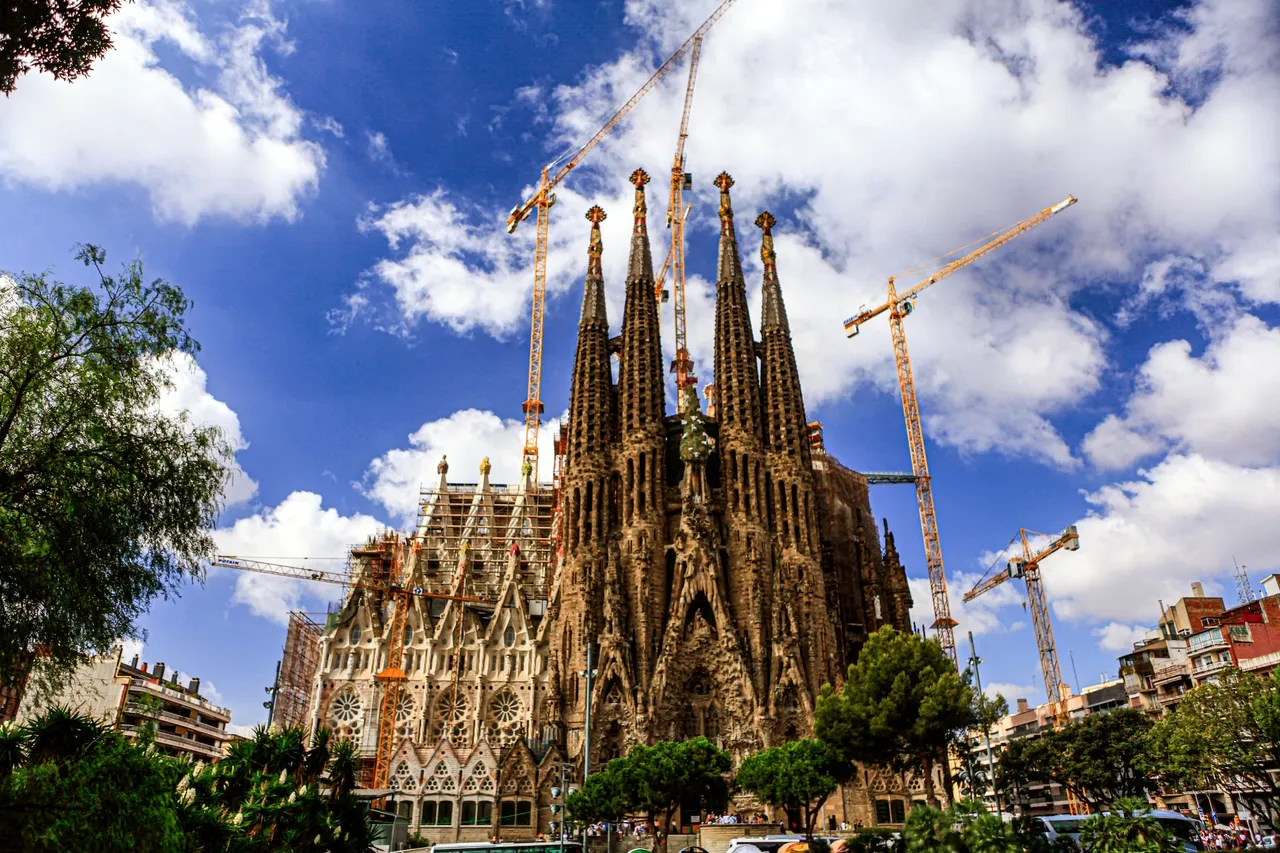
Book the earliest available time slot for La Sagrada Família and plan at least two hours inside. The interior is more extraordinary than the exterior, which is saying something. Morning light through the west-facing stained glass throws blue and purple across the nave; the east side fills with amber and gold in the afternoon. The architecture press has covered the building for 144 years and still cannot agree on what category it belongs to.
The Torre de Jesús, the central spire completed in 2026, now makes Sagrada Família the tallest religious building in Europe at 172.5 metres. It has changed the city's skyline permanently. The construction began in 1882; Antoni Gaudí took over in 1883 and devoted the rest of his life to it. Standing underneath them, 144 years suddenly makes sense.
Local tip
From Sagrada Família, walk 500 metres down Avinguda de Gaudí, the straight diagonal avenue directly in front of the main facade, to reach Recinte Modernista de Sant Pau. This UNESCO World Heritage hospital complex was designed by Lluís Domènech i Montaner, Gaudí's great rival and arguably the more underrated of the two. The pavilions are covered in coloured ceramic tiles and ornate stonework, the gardens are peaceful, and the tourists are sparse. It is one of the most beautiful buildings in Spain and almost entirely absent from the average Barcelona one week itinerary. If you only follow one tip from this guide, make it this one.
Afternoon: walk west toward the neighbourhood of Gràcia for a late lunch. Dinner back in Eixample, the grid neighbourhood where most first-time visitors stay.
Day 3: Passeig de Gràcia, Gaudí's houses, and the Bunkers
Passeig de Gràcia is Barcelona's great Modernista avenue, lined with buildings by multiple architects competing to outdo each other in early-20th-century ambition. The most famous block is the Manzana de la Discordia (Block of Discord), where Casa Batlló, La Pedrera (Casa Milà), and Casa Amatller sit within metres of each other on the same street.
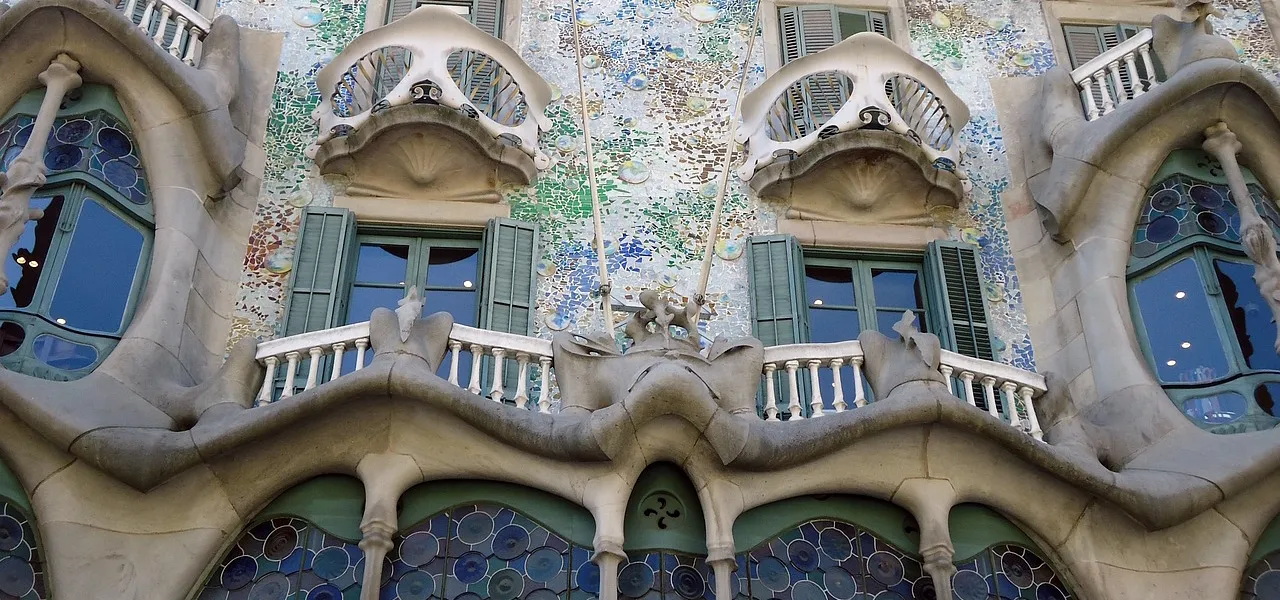
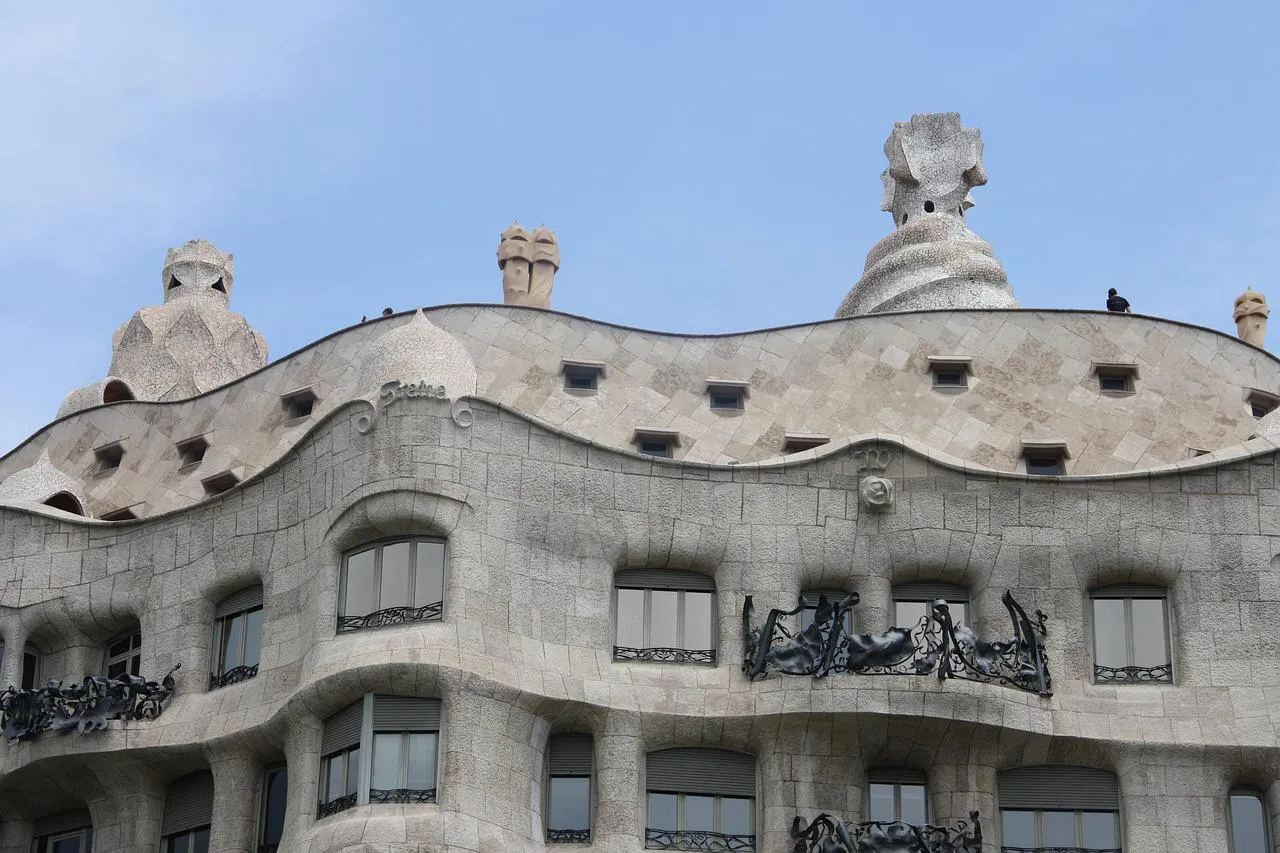
Casa Batlló is the more theatrical of the two Gaudí houses on this street. The facade looks like it was designed by a marine biologist, all undulating bones and iridescent dragon scales. The interior is no less surreal. La Pedrera (Casa Milà) is calmer and more quietly revolutionary: the rooftop terrace with its warrior-helmet chimneys is one of the great architectural moments in the city. Both need advance tickets. Both are worth it.
You do not need to visit both on the same day if budget is a constraint. Locals tend to rate La Pedrera's rooftop slightly above Casa Batlló for the views, but Casa Batlló's interior slightly above La Pedrera's for the immersive experience. Choose based on which matters more to you.
In the late afternoon, change gear entirely. Take bus 24 or walk 15 minutes from Gràcia up to the Bunkers del Carmel.
Local tip
The Bunkers del Carmel are the ruins of Civil War-era anti-aircraft gun batteries on Turó de la Rovira hill, in the working-class neighbourhood of El Carmel. They are completely free, reach a genuinely 360-degree panoramic view of the entire city (the Sagrada Família spires, the full Eixample grid, the port, the mountains), and are almost entirely absent from tourist guides because they have no marketing budget behind them. Pick up a cold drink from the shop at the bottom of the hill and watch the sun go down over Barcelona for free. It is the most honest view the city offers and beats every paid rooftop bar in the city without question.
Day 4: Park Güell and the Picasso Museum
Start this morning slowly. No early alarms.
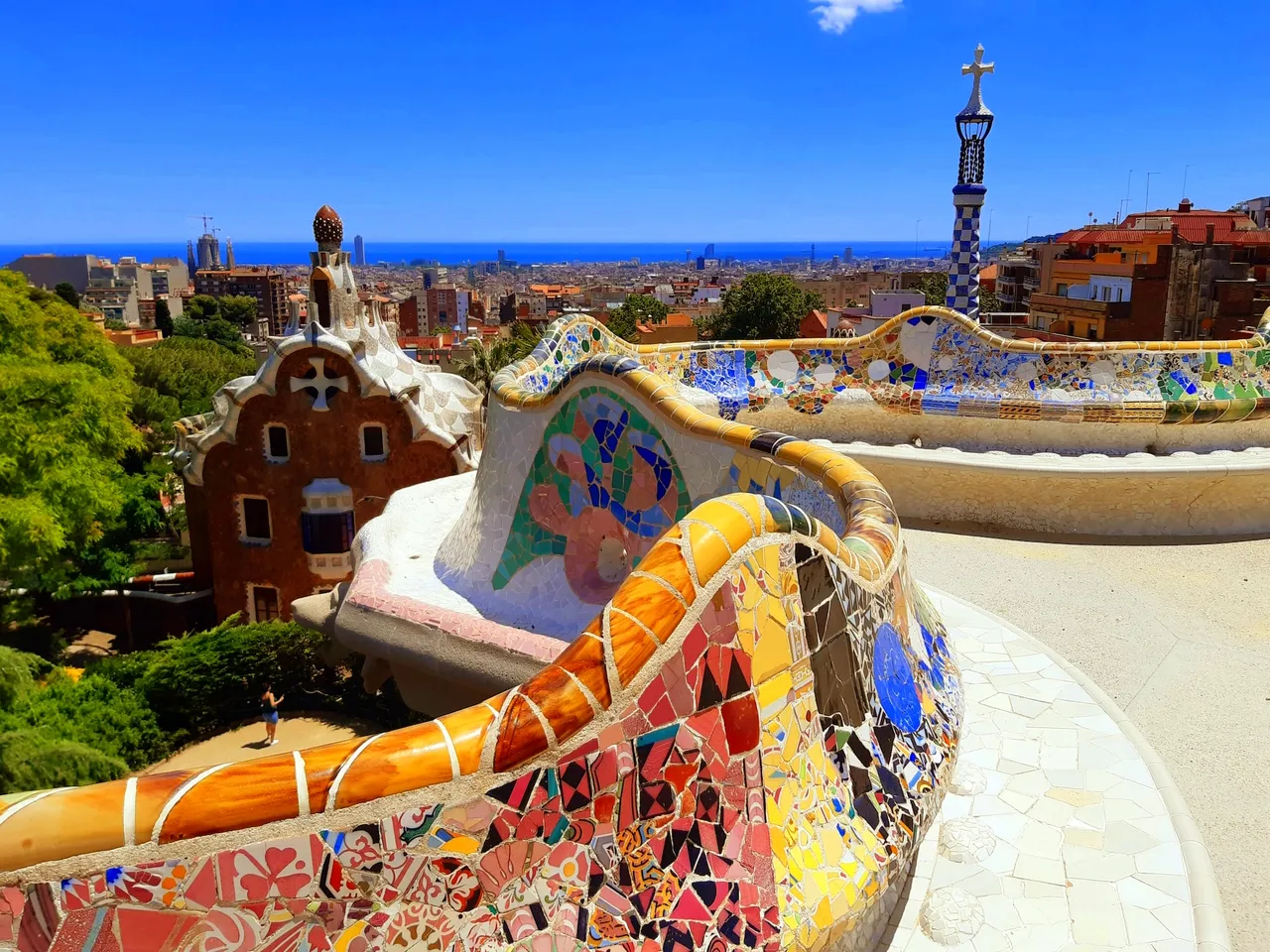
Parc Güell was Gaudí's most eccentric commission: a residential garden city development for wealthy buyers that completely failed to find them. The estate was donated to Barcelona's city council in 1922 and became a public park. The dragon staircase and the serpentine tile bench on the main terrace are the famous images. The Monumental Zone, the ticketed area that includes these features, requires a timed-entry ticket. The rest of the park, forested paths and stone viaducts in all directions, is free and far less crowded. Arrive for your timed slot, explore the Monumental Zone, then spend an extra hour in the quieter upper parts.
After Park Güell, come back down through Gràcia for lunch. This is the most authentically local neighbourhood within walking distance of the centre: village squares, independent cafés, and none of the tourist pressure you feel in El Born or the Gothic Quarter. Eating here is the closest most visitors get to experiencing the city like a local. The terraces along Carrer de Verdi are particularly good.
Afternoon: Museu Picasso in El Born. The museum traces Picasso's early years in Barcelona through more than 4,000 works, housed in five connected medieval palaces in the Born neighbourhood. It is not a survey of his whole career, but the early sketchbooks and the Las Meninas series are genuinely startling. Note: it is free on the first Sunday of every month and on Thursday afternoons from October to April.
Day 5: Barceloneta beach and the Parc de la Ciutadella
Day 5 is the day you stop sightseeing and start inhabiting the city.
Morning: Parc de la Ciutadella. This is Barcelona's main urban park, built on the cleared site of a military fortress in the 19th century. (Barceloneta beach was itself created when the original Ribera neighbourhood was demolished to build that fortress in the 18th century, displacing thousands of residents, which is worth knowing before you spend a relaxed afternoon there.) The ornamental lake, the waterfall that a young Gaudí reportedly helped design, and the zoo are all inside. It is a good place to walk, read, or do nothing at all.
From the park, walk five minutes south to Barceloneta. The old fishing neighbourhood backs onto the city beach and has some of the best seafood restaurants in the city along its back streets. Barceloneta beach is fine: busy, social, and exactly what a city beach should be.
Local tip
Walk 20 minutes north from Barceloneta along the seafront promenade toward the Olympic Village to reach Platja del Bogatell. This is where Barcelona residents actually go for a beach day: cleaner, wider, less crowded, and with better chiringuito beach bars. Most tourists stop at Barceloneta and never discover that something much quieter is a 20-minute walk away along the promenade.
Afternoon: dry off and explore El Born more carefully. Santa Caterina Market (not La Boqueria) is the one worth visiting for actual food shopping: a neighbourhood market with a spectacular wavy ceramic roof designed by Enric Miralles, used by locals rather than aimed at tourists.
Day 6: Day trip to Montserrat
Leave this one for a weekday if possible. Weekends at Montserrat are significantly busier than the week.
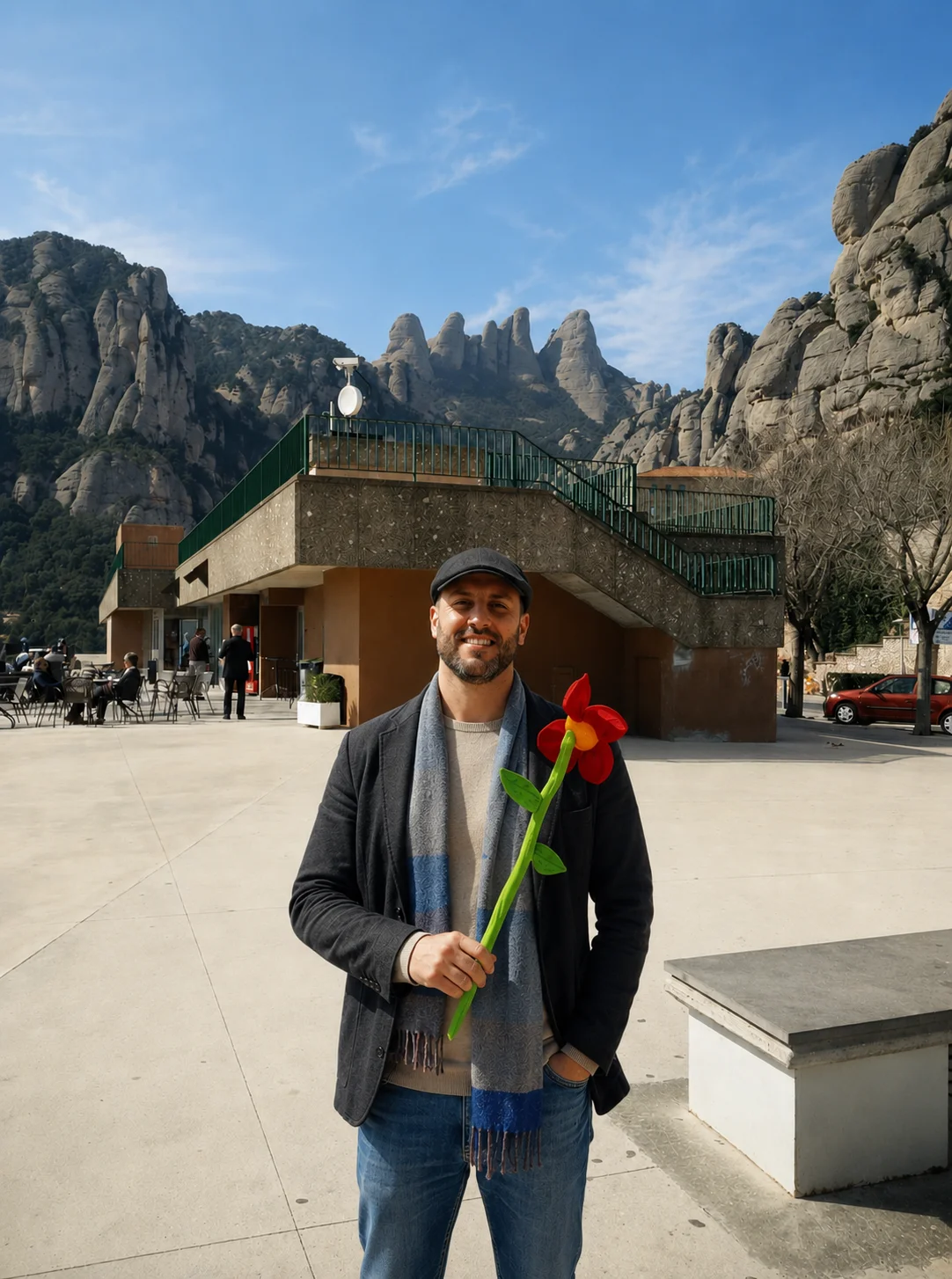
Montserrat is the jagged mountain range an hour west of Barcelona that holds a medieval monastery, a venerated Black Madonna, and some of the most dramatic rocky scenery in Catalonia. It is the most popular day trip from Barcelona, and it earns that reputation.
From Plaça d'Espanya station, take the R5 FGC line (direction Manresa). Get off at Monistrol de Montserrat for the rack railway (cremallera) up the mountain, or at Aeri de Montserrat for the cable car. Both arrive at the same point near the monastery. The rack railway runs more frequently and is not closed by wind and rain, which makes it the more reliable option. The combined adult return ticket (FGC train plus rack railway) is €28.80.
At the top: visit the basilica and see La Moreneta, the Romanesque Black Madonna. Then take the Sant Joan funicular up to the higher ridge for the views that most day-trippers miss because they don't budget the time.
Legend
Legend has it that La Moreneta was carved by Saint Luke and brought to Spain by Saint Peter. When Bishop Gotmar of Manresa tried to carry the statue down to the city in the 9th century, it became supernaturally heavy and refused to move. The monastery, the story goes, was built around the spot where the statue insisted on staying. Catalan athletes still climb to visit her before major events, asking for luck. Whether or not you're superstitious, the hike to the higher ridge is worth it regardless.
Allow a full day. The mountain is larger than it looks from the valley, and the cable cars and funiculars run on fixed schedules. Rushing it costs you the views.
Day 7: Montjuic and a slow goodbye
Montjuic is the hill that looms over the city's port, accessible by cable car from Barceloneta, by funicular from Paral·lel metro station, or on foot if you want the climb.
The MNAC (Museu Nacional d'Art de Catalunya) houses the world's finest collection of Romanesque art, much of it transferred from Catalan churches in the early 20th century to prevent deterioration. The building, a former palace from the 1929 International Exhibition, is also worth seeing for its own sake, and the view from the front steps down the avenue toward the city is one of the great urban views in Spain.
Also on Montjuic: the Fundació Joan Miró (Miró's colourful work is a useful counterbalance to Gaudí's Gothic intensity), the Olympic Stadium from 1992 (free to enter), and Montjuic Castle at the summit for the most comprehensive views of the city, the port, and the sea.
For your last afternoon, stop adding things to the list. Go back to whichever neighbourhood you liked best and sit in it. Order a menu del día even at 3pm. Barcelona's lunch culture runs late: eating at 2:30pm is perfectly normal, and the three-course set menus (typically €12 to €15) are the most honest representation of Catalan cooking you will find in the city.
Day trips from Barcelona: if you have more time
If you're extending this itinerary to 8 or 9 days, the following are the most rewarding day trips from Barcelona beyond Montserrat:
Costa Brava is the dramatic coastline north of Barcelona, with rocky coves, clear water, and medieval towns like Tossa de Mar and Cadaqués. Renting a car or booking an organised tour is the practical way to reach most of the coast; public transport is slow and infrequent. Tossa de Mar is about 1.5 hours by bus from Barcelona's Nord station.
Girona is a beautifully preserved medieval city one hour north by high-speed train, with cathedral stairs that Game of Thrones viewers will recognise and a Jewish quarter that predates the Christian settlement. An easy half-day or full day from Barcelona.
Sitges is the beach town 35 minutes south by train: more attractive than Barceloneta and significantly more relaxed. Good for a half-day if you want beaches without the commitment of the Costa Brava.
If your Spain trip includes Madrid, the high-speed train to Madrid from Barcelona Sants takes around 2 hours 30 minutes. It is one of the fastest intercity rail journeys in Europe and far more comfortable than flying.
How much does a week in Barcelona cost?
A rough guide for 2026, excluding flights:
| Traveller type | Daily budget | 7-day total |
|---|---|---|
| Budget | €80 | €560 |
| Mid-range | €150 to €180 | €1,050 to €1,260 |
| Luxury | €350 and above | €2,450 and above |
Note: Barcelona doubled its tourist tax in April 2026. Budget an extra €4 to €8 per night depending on accommodation type.
The menu del día is the single best value meal in Spain. Three courses, bread, and a drink for €12 to €15. Eating it every day at lunch will stretch your budget and improve your meals simultaneously.
Where to stay during your one week in Barcelona
Eixample is the best base for first-time visitors. The grid layout is easy to navigate, you're within walking distance of the Gaudí houses on Passeig de Gràcia, and metro connections reach the rest of the city quickly.
Gothic Quarter and El Born offer more atmosphere and medieval character at the cost of slightly more noise at night and slightly smaller rooms.
Barceloneta is the right choice if beach proximity is the main priority, with the rest of the city a 20-minute walk away.
Gràcia is for people who want to feel less like a tourist. Genuinely local, charming, and 15 minutes from the centre by metro.
Book as early as possible if visiting in July or August, or during the Primavera Sound music festival in late May or early June, when availability evaporates and prices follow.
Frequently asked questions
Is one week in Barcelona enough?
Yes. Seven nights in Barcelona covers the essential Gaudí buildings, the Gothic Quarter, a day trip to Montserrat, proper time in the city's best neighbourhoods, and at least one afternoon at the beach. You won't exhaust Barcelona in a week (few cities are less exhaustible), but you will see its best face without rushing through it.
Is 7 days in Barcelona too long?
Not if the week is structured well. Seven days is the right amount of time in Barcelona. The city rewards slowing down. A day that combines one major attraction with neighbourhood walking, a long lunch, and an evening in a local bar is a very good day. Tourists who find the week too long are usually hitting the same tourist spots twice or moving too fast to enjoy any of them.
What are the must-see attractions in Barcelona?
For a first visit to Barcelona city: Sagrada Família, the Gothic Quarter, Park Güell, one of the Passeig de Gràcia houses (Casa Batlló or La Pedrera), the Picasso Museum, and a day trip to Montserrat. Those are the Barcelona sights no itinerary should skip. The Bunkers del Carmel for a sunset costs nothing and is the one thing most tourists miss.
What is the best time of year to visit Barcelona?
April to May and September to October are the best months to visit Barcelona: pleasant temperatures around 18 to 22 degrees, smaller crowds, and hotel prices 25 to 40 percent below the summer peak. July and August are hot, busy, and expensive. November to March is quiet and cheap, with mild but occasionally rainy weather.
How much does a week in Barcelona cost per person?
See the budget table above for a full breakdown by traveller type. The short answer: budget travellers can do it on under €600 for the week excluding flights, mid-range on around €1,200. One cost to watch: Barcelona doubled its tourist tax in April 2026, so add €4 to €8 per night on top of whatever accommodation rate you're quoted.
How reliable is public transportation in Barcelona?
Very reliable. The metro runs frequently, covers all the main attractions, and is easy to navigate. The T-Casual card (€13.00 for 10 journeys) works across metro, bus, tram, and local train. For most of a week-long visit you will not need a taxi unless you are carrying luggage or travelling from the airport.
Is Barcelona friendly to Americans?
Very. English is widely spoken in tourist areas, restaurants, and hotels. The main cultural adjustment is meal timing: lunch runs from 2 to 3pm, dinner from 9 to 10pm. Restaurants that open for dinner before 8:30pm are catering to tourists, which is fine, but you'll eat better and pay less if you adopt Catalan hours.
How do you get to Montserrat from Barcelona?
Take the R5 FGC line from Plaça d'Espanya station in the direction of Manresa. Get off at Monistrol de Montserrat for the rack railway, or Aeri de Montserrat for the cable car. The combined adult return ticket (FGC train plus rack railway) costs €28.80. The journey takes about one hour each way, and a full day is the right amount of time to give it.
What are the best things to do in Barcelona for one week?
The best things to do in Barcelona in seven days: explore the Gothic Quarter on foot, see Sagrada Família and Park Güell, walk the length of Passeig de Gràcia, take a day trip to Montserrat, and end the week with a slow afternoon on Platja del Bogatell with a cold drink. The Bunkers del Carmel at sunset is the one Barcelona sight every other guide somehow misses.