You'll walk past it on Passeig de Gràcia without blinking. Then you step inside, and within ten minutes you've watched an egg dance on a jet of water, stood under a golden figure who is doing exactly what you think he's doing, and climbed to the top of a human tower in virtual reality. White Rabbit: The Immersive Experience of Barcelona, or simply White Rabbit, is nothing like a traditional museum: no glass cases, no hushed galleries, nobody telling you not to touch.
White Rabbit is Barcelona's immersive experience exploring Catalan traditions through ten installations created by local artists. Each one is something you can walk through, poke at and photograph. You'll find it at Passeig de Gràcia 55, about a minute's walk from Casa Batlló.
Think of it as the off-museum of Barcelona, the opposite of a classic museum: a gallery of contemporary art, street art, sculpture and folklore that lets you step inside the work instead of standing in front of it. Every installation is a different art experience, and people who normally skip museums tend to walk out smiling. With a 4.8 rating from more than 4,000 verified reviews on Google, it is one of the best-rated experiences in Barcelona.
Why White Rabbit is the best first day in Barcelona
Barcelona is full of traditions that look completely baffling to visitors: giant papier-mâché kings parading down the street, people climbing on each other's shoulders in Plaça Sant Jaume, devils running through crowds with fireworks. Without context, you just see chaos.
White Rabbit is a one-hour cheat sheet for all of it. Each room explains one piece of Catalan culture, so the rest of your trip suddenly makes sense. Local traditions that feel like folklore on the street become something you've already played with by the time you meet the real thing.
It also works as a warm-up for the neighbourhoods you'll visit afterwards. The giants and big heads parade through the Gothic Quarter and Gràcia during every festival, and the castellers build their towers in front of the city hall, so what you see here suddenly has a place on the map.
Local tip
Visit on your first or second day, not your last. Once you've seen the caganer room, you'll spot the little crouching figure in every Christmas market and souvenir shop. Once you've done the castells VR, a real human tower on a festival weekend stops being "people standing on people" and becomes something you'll actually understand.
Inside the White Rabbit museum: room by room
It's a self-guided tour, so there's no fixed route and no guide hurrying you along. Wander, double back, linger wherever you like, and bring your own headphones if you want to use the free audio guide.
Petó: TVBoy's famous kiss
The visit opens with TVBoy, the Italian street artist who calls Barcelona home. His graffito of Messi standing on tiptoe to kiss Ronaldo, rose in hand, first appeared on Passeig de Gràcia in April 2017, just before a Clásico that landed on Sant Jordi, the day Catalans give roses to the people they love.
Inside, the kiss is blown up to a scale that makes you feel like a very small guest at a very large romance. It's the room where everyone reaches for their phone first, and the one to come back to once the crowds thin out.
Xivarri: when a room becomes a canvas
Artist Mina Hamada has painted an entire room, walls, ceiling and floor, in a riot of pink, green, yellow and blue. Giants, castellers and the dragon hide among the shapes, so you spend a happy few minutes spotting them. It feels less like looking at a painting and more like being swallowed by one.
Capgrossos: the big heads go urban
The capgrossos are the oversized, smiling papier-mâché heads that bob through every neighbourhood festival in Barcelona. Carles Piera reimagines them as the city's modern urban tribes, so the old street-party characters turn up wearing today's attitude. It's a quick, funny room that shows how a tradition stays alive by changing with the people who love it.
Caganer: the golden pooper
Enric Planas and Carles Piera built a monumental, gilded caganer, the crouching man Catalans hide in their nativity scenes. Yes, he's doing exactly what you think, and yes, families have been tucking him between the shepherds and the baby Jesus for centuries. Ask three locals why and you'll get three different answers.
Part joke, part good-luck charm, he's the cheekiest tradition in the whole experience, and the one most visitors tell their friends about afterwards.
L'ou com balla: the dancing egg
At Corpus Christi, fountains in cloisters and courtyards across Barcelona are dressed with flowers, and a hollow egg bobs and spins on top of the water jet without ever falling off. Nobody quite agrees how it began, but it's one of the city's oldest and most charming spring sights.
Enric Planas turns it into an interactive water installation you can play with yourself. It's calm and a little hypnotic, a good moment to catch your breath between the louder rooms.
Farra: the party room
Playmodes built a room where the party only starts when you do. Sensors follow your movement and turn it into light, colour and sound, so a wave of the arm or a clumsy twirl becomes part of the show in real time. Feeling shy? Dance anyway; nobody you know is watching.
Esclat: the immersive cube
Onionlab's immersive cube surrounds you with 360° projections on every wall. Gaudí's trencadís mosaics ripple past, stained-glass windows glow like the ones in the Sagrada Família, and the fountains of Montjuïc dance around you. It's Barcelona's greatest hits, rebuilt around you, and for me it's the room that justifies the visit.
Enxaneta: virtual reality castells
Put on the VR glasses from Seeds XR and become the enxaneta, the child who scrambles up a castell, the human tower the castellers build several storeys high, to raise a hand at the very top. Your stomach does a little flip, and you suddenly understand why the crowd below holds its breath.
The ride doesn't stop there. You'll run through a correfoc, the fire run where costumed devils chase crowds with sparklers, and live the legend of Sant Jordi and the dragon. It's the room that makes teenagers put their phones down.
Bocabadat: Barcelona 92
La Fura dels Baus, the theatre company behind the opening ceremony of the 1992 Olympic Games, revisits that night in a large audiovisual installation. If you remember it, it's pure nostalgia. If you don't, it's an easy way to see why 1992 is still the year the city talks about as the one that put it on the world map.
Foc: the mirrored room
Vitamin Studio closes the visit with the largest infinity room in the city, a mirrored space of light and sound inspired by the Sant Joan bonfires of 23 June, when Barcelona lights up the beaches and the sky. The reflections repeat forever, and after an hour of colour and noise it's a quiet way to finish.
How the White Rabbit museum differs from a classic museum
A traditional museum asks you to look, read and keep your voice down. White Rabbit asks you to join in. There is hardly any text on the walls, because the installations do the explaining: you press, step, wave, climb and listen, and the story arrives on its own.
It is also more of an exhibition than a collection. Ten artists and studios, from street artists to theatre companies and digital collectives, each took one tradition and gave it a modern twist. Some rooms are sculpture, some are projection, one is virtual reality, so no two feel alike and you never sit through a slow stretch.
The tone is playful from the first room to the last. It feels like a party for Catalan culture rather than a lecture: the iconic characters of the street festivals become sculptures, and the history lessons you'd usually skim in a guidebook turn into interactive installations you remember because you did them yourself. Even the dance room, Farra, makes the point: nothing says festival like a party where everyone joins in.
For travellers, that makes it an easy attraction to fit in. You don't need any art background, you don't need to read a thing, and you leave knowing more about Catalonia than most guidebooks teach in an afternoon.
Local tip
Watch the Esclat cube twice. The projection loops, and there's too much happening on four walls to catch it all the first time. Find a spot in the centre, look up as well as around, and let the second round play out.
Legend
Long ago a dragon terrorised a Catalan town, until the knight Sant Jordi rode out and struck it down. From the dragon's blood grew a red rose, which he offered to the princess he had saved. That's why, every 23 April, Barcelona turns into a city of lovers and book lovers, with couples swapping a rose and a book on every corner. Spot the dragon here, then find him again on the balconies of Casa Batlló, and read the whole story in our Sant Jordi in Barcelona guide.
Related guides
Nearby destinations and other attractions in Barcelona
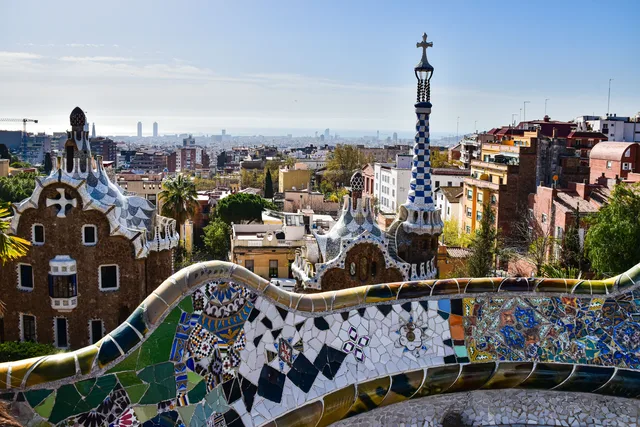
You're on Passeig de Gràcia, the street with Barcelona's best Modernista buildings, so there are plenty of other experiences in Barcelona to pair with the visit. Casa Batlló is a minute away, with its dragon-scale roof, and La Pedrera sits a short stroll up the boulevard with its famous undulating rooftop. If you can only choose one, our comparison of Casa Batlló vs La Pedrera will help.
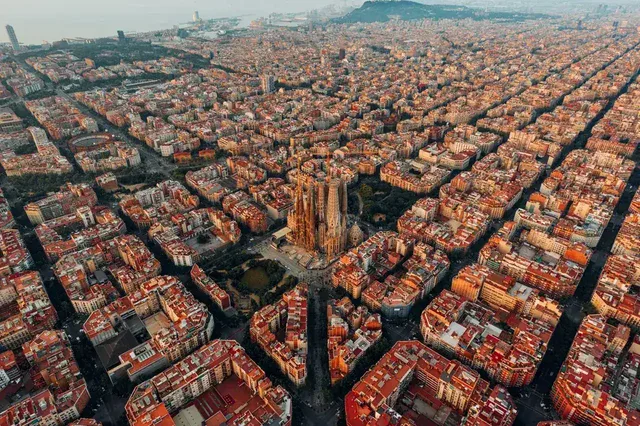
For nearby destinations on foot, Casa Amatller is next door to Casa Batlló, and the Gothic Quarter is a pleasant twenty-minute walk south. The Sagrada Família is a short metro ride away, which makes White Rabbit a good break between the big Gaudí sights.
White Rabbit Barcelona tickets and timing
| What | Details |
|---|---|
| Ticket price | From €16.00 |
| Open daily | 10:00 to 20:00, last entry 19:00 |
| Visit lasts | About 60 minutes |
| Age | No minimum; VR room suits ages 8 and up |
| Access | Wheelchair accessible |
Book a White Rabbit entry ticket for a specific date and you can turn up any time that day. The ticket can't be changed or refunded, so lock in your plans before you book. A hot afternoon or a rainy morning is perfect: it's indoors and over in about an hour.
Is White Rabbit Barcelona worth it?
It's worth it if you're travelling with kids or teenagers, or if you'd like to understand Catalan traditions before you run into them on the street. Families get the most out of it: kids run between rooms while parents finally learn what a capgròs is. Couples and friends enjoy it too, mostly for the photos, and the VR room wins over adults who never expected to enjoy a headset.
It also suits first-time visitors who want a quick introduction to the city's festivals and customs before they explore on their own.
Skip it if you only have a day or two and haven't seen Sagrada Familia, Casa Batlló or the Gothic Quarter yet. Those come first. Skip it too if you want a deep, traditional museum with a permanent collection; try the Museu d'Història de Barcelona instead.
Down the rabbit hole
Barcelona's big sights show you what the city built. White Rabbit shows you how it celebrates. Spend an hour inside, then walk back out onto Passeig de Gràcia and you'll start noticing giants, dragons and tiny crouching figures everywhere you go.
Frequently asked questions
What is the White Rabbit in Barcelona?
White Rabbit is Barcelona's immersive experience exploring Catalan traditions through ten installations created by local artists, on Passeig de Gràcia. Everything is designed to be touched, played with and photographed.
Why is it called White Rabbit?
It's a nod to Alice in Wonderland. Follow the white rabbit and you drop into a strange, colourful world, which is roughly what happens when you walk in off the street.
Can I combine it with Casa Batlló?
Easily. They share the same street, and combo tickets for Casa Batlló plus White Rabbit exist, so you can do both in one afternoon.
Is White Rabbit good for kids?
Yes. There's no minimum age, most rooms are hands-on, and children love the dancing egg, the party room and the golden caganer. The virtual reality room is best from about eight years old.
How long does the visit take?
Most people spend about an hour. Add a little extra if you want to watch the Esclat cube twice or queue for the VR headsets at busy times.
Do I need to speak Catalan or Spanish?
No. The installations are visual and the staff speak several languages.