One day. One city. One entirely unfair amount of choice. Madrid is not the kind of place that waits politely while you figure out your itinerary. It throws tapas, world-class art, royal palaces, and ancient Egyptian temples at you before you've even had your morning coffee. The good news: spending one day in Madrid is enough to feel what the city is actually about, and this Madrid travel guide is built to make sure you spend it well.
This itinerary is built around the one principle Madrid demands: trust the rhythm of the day. Mornings here are cool and unhurried. Afternoons grow warm and social. Evenings stretch long and golden. Lean into that structure, and the day adds up to considerably more than you'd expect from 24 hours.
Your One-Day Madrid Itinerary at a Glance
Before you dive in: this is not a race through every landmark on a travel app. It's a day that starts peacefully in a royal park, moves through some of the finest paintings in human history, lingers over lunch in Madrid's most beautiful market hall, strolls one of Europe's most theatrical boulevards, and ends with a 2,200-year-old Egyptian temple glowing against a Spanish sunset. Churros are compulsory.
| Time | Where | What to expect |
|---|---|---|
| 08:00 – 09:30 | Retiro Park | Peaceful morning stroll, boating lake, rose gardens |
| 09:30 – 13:00 | Prado Museum or Royal Palace | Choose your main highlight (see below) |
| 13:00 – 14:30 | Mercado de San Miguel | Tapas lunch in Madrid's last surviving iron market hall |
| 14:30 – 16:30 | Plaza Mayor + Gran Via | Historic square, architecture walk, Metropolis Building |
| 17:00 – 18:30 | Temple of Debod | Sunset views from Madrid's genuine Egyptian temple |
| 19:00 onwards | Puerta del Sol + San Gines | Kilometre Zero, churros con chocolate since 1894 |
Morning in Madrid: Start Where the Locals Do
Set your alarm. Madrid rewards early risers with something the afternoon crowds never see: a city still belonging to itself. By 8am, El Retiro Park is already alive with joggers, dog walkers, and people reading newspapers by the boating lake as if the rest of the world doesn't exist yet. The park covers 350 acres in the heart of the city, a UNESCO World Heritage site woven into central Madrid, with rose gardens, fountains, and enough shade to make a morning stroll genuinely comfortable. Take an hour. It's free, it's beautiful, and it sets exactly the right tone for the day ahead.
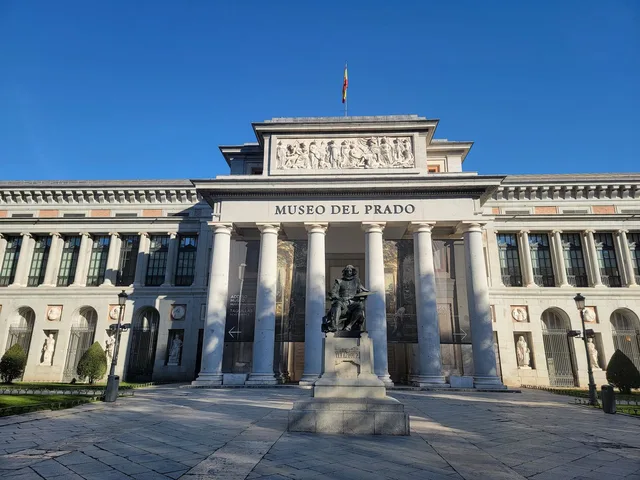
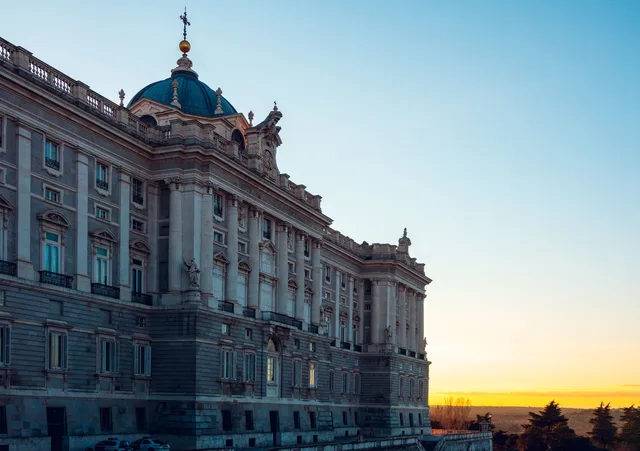
From El Retiro, you face the morning's most important decision: the Prado Museum or the Royal Palace of Madrid. The Prado Museum faces the park across the Paseo del Prado, so it's a natural continuation of your morning walk. You cannot do both properly in one morning. The Prado is one of the finest art museums on the planet, home to Velazquez's Las Meninas, Goya's black paintings, and the world's most complete collection of El Greco. In a city full of Spanish art, the Prado is where it reaches its absolute peak. Budget two to three hours. The Royal Palace is the largest royal palace in Western Europe by floor area (135,000 square metres of gilded rooms and state apartments fit for a king who apparently owned everything). The Almudena Cathedral sits directly next to it, and Madrid's main cathedral is worth a look at the facade even if you don't go inside. Budget two to three hours for whichever you choose. Pick the one that genuinely excites you; skip any guilt about the other one.
Local tip
The Prado offers free entry Monday to Saturday from 18:00 to 20:00, and on Sundays from 17:00 to 19:00. The catch: free tickets are only available at the Goya entrance box office, subject to capacity, and queues regularly stretch 45 to 90 minutes before the slot opens. If you plan to use the free evening hours, arrive by 17:00 at the latest. You'll be inside by 18:00, with a full two hours among Velazquez and Goya at zero cost.
Prefer to skip the queue and start your morning on your own schedule? Book a skip-the-line ticket online and arrive at 9:30am when the galleries are still calm and unhurried.
Afternoon: Lunch, History, and a Boulevard Worth Walking
By 13:00, your feet deserve a rest and your stomach deserves attention. Walk to Mercado de San Miguel, Madrid's last surviving iron market hall, a short walk from Plaza Mayor. This is not a supermarket visit. It's a cast-iron and glass temple to Spanish food, where you graze on croquetas, jamón ibérico, oysters, and cold glasses of vermouth while standing at marble countertops with a crowd of people who are also very happy about lunch. Budget 45 to 60 minutes and around €15 to €20 per person for a satisfying tasting session. Open daily from 10:00 (until midnight Sunday to Thursday, 01:00 on weekends).
After lunch, step into Plaza Mayor. Built between 1617 and 1619 under Philip III, this rectangular square has hosted royal celebrations, bullfights, markets, and at least three significant fires. The equestrian statue of Philip III at its centre, cast in 1616, has watched all of it from the same spot. Today it's mostly pigeons and tourists, but stand in it for ten minutes and the scale of the place does something to you. The archways that frame each entrance feel deliberately theatrical, like walking through a stage curtain into another century. Entry is free. Plaza Mayor sits at the heart of Madrid in every meaningful sense, the geographical and historical centre around which the rest of the city grew.
From Plaza Mayor, head north through the tapas bars and narrow streets of old Madrid toward Gran Via. Madrid's most theatrical boulevard took 19 years to build (1910 to 1929), requiring the demolition of 312 buildings and 14 medieval streets in the process. Walk it from east to west and you pass through three distinct architectural eras: Beaux-Arts at the Plaza de Cibeles end, Chicago-school in the middle, and Art Deco toward Plaza de España. The Metropolis Building at the eastern entrance, opened in 1911 with a dome covered in more than 30,000 pieces of 24-carat gold leaf, is worth stopping for properly. The whole walk takes 30 minutes at pace, or a leisurely 90 minutes with a coffee stop.
Evening: An Egyptian Temple and Very Good Churros
Most first-time visitors to Madrid skip the Temple of Debod. That is a mistake. This is not a replica. This is an actual 2,200-year-old Egyptian temple, built in the 2nd century BC, gifted to Spain in 1968 by the Egyptian government as thanks for Spanish engineers helping save Nubian monuments from the rising Nile waters during the construction of the Aswan Dam. The temple was disassembled stone by stone, shipped to Spain, and rebuilt in a city park between 1970 and 1972. It is the only Egyptian temple in Spain, and it sits in central Madrid surrounded by fountains and Spanish families eating ice cream. The viewing terrace around it has some of the best panoramic views of Madrid you'll find without paying for a rooftop bar.
Get there first
Arrive at the Temple of Debod 30 to 45 minutes before sunset, not at sunset itself. The sun sets directly behind the temple and reflects in the two pools that surround it, creating a silhouette that looks frankly impossible. By the time most tourists arrive thinking they've timed it perfectly, the best viewing spots are already taken by people who read tips like this one.
Metro to Plaza de España (Lines 3 and 10), then a 10-minute walk. The temple is free to visit Tuesday to Sunday, 10:00 to 20:00. The park and viewing area around it are open all day.
After the sunset, make your way back toward Puerta del Sol, Madrid's Kilometre Zero, the literal geographic centre of Spain, where all national road distances are measured from. Look for the brass plaque set into the pavement, and for the Bear and the Strawberry Tree statue nearby, the bronze city symbol of Madrid that has stood here since 1967. Then walk through the narrow alley of El Pasadizo de San Gines to Chocolateria San Gines, which has been serving churros con chocolate to Madrid since December 1894. It is open 24 hours a day, every day of the year, which tells you something about the city's relationship with fried dough and hot chocolate.
Timing matters
Churros are traditionally a breakfast food in Madrid, eaten between 7am and 10am, or a late-night ritual between 3am and 6am after a long evening out. Going at 4pm means joining a queue of tourists. Going at 7am or after 9pm means joining the Madrileños. For a day trip, the evening window after the Temple of Debod visit is your best bet: the afternoon rush has cleared, the chocolate is as thick as it ever was, and the experience actually feels like Madrid rather than a tourist attraction.
Is One Day in Madrid Enough?
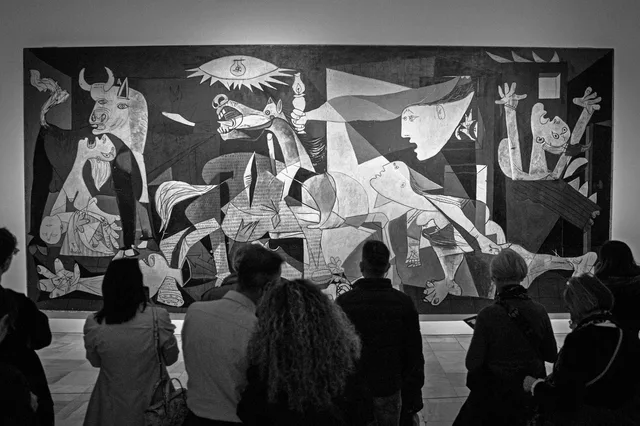
For a first visit: yes, if you're strategic. Visiting Madrid in a day is absolutely achievable, and this one day in Madrid itinerary covers the essential highlights: the things that will actually stay with you. You will not see the Reina Sofia (home to Picasso's Guernica), the Thyssen-Bornemisza Museum, or the neighbourhood bars of Malasaña and La Latina. But you will have a proper day in Madrid, not a panicked sprint between landmarks with no time to actually be anywhere.
If you have a second day to stay in Madrid, the natural additions are the Reina Sofia Museum (a short walk from the Prado along the Paseo del Arte), a slow morning in the antique-lined streets of La Latina, and dinner at a traditional taberna that hasn't updated its menu since 1975. Day trips around Madrid are also excellent: Toledo (about 35 minutes by high-speed train) and Segovia (30 minutes by high-speed rail) are both manageable as single-day excursions. Madrid rewards returning visitors generously, and most people leave wishing they had another day, which is about the best thing a city can do to you.
Frequently Asked Questions
What should I prioritise if I only have one day in Madrid?
Retiro Park in the morning (free, peaceful, sets the tone), then either the Prado Museum or the Royal Palace depending on whether you prefer art or architecture and history. Lunch at Mercado de San Miguel, a walk through Plaza Mayor and Gran Via in the afternoon, the Temple of Debod at sunset, and churros at San Gines to finish. That is a very good day in Madrid.
Can I visit the Prado Museum for free?
Yes. The Prado offers free entry Monday to Saturday from 18:00 to 20:00, and on Sundays from 17:00 to 19:00. Free tickets are only available at the Goya entrance box office and are subject to capacity. Expect to queue 45 to 90 minutes before the free slot opens, so arrive by 17:00 to be safe. Booking a skip-the-line ticket online is the faster alternative if you'd rather spend that time in the galleries.
How do I get to the Temple of Debod?
Take the metro to Plaza de España (Lines 3 and 10) or Ventura Rodriguez (Line 3), then walk about 10 minutes through Parque del Oeste. The temple is free to enter, open Tuesday to Sunday from 10:00 to 20:00. The surrounding park and viewing area are accessible at all hours.
What is the best time to visit Madrid?
The best time to visit Madrid for a day trip is spring (March to May) or autumn (September to November), when temperatures are comfortable for walking between sights all day. Summer is very hot from midday onward, which makes the early morning park visit and evening sunset stop particularly valuable, with the middle of the day best spent inside a museum or market hall. Winter days are short but mild by northern European standards and considerably less crowded.
Should I book the Royal Palace or the Prado in advance?
Yes, for both. The Royal Palace and the Prado both sell out skip-the-line slots, particularly in summer and on weekends. Booking in advance online guarantees your morning slot and means you spend your time in the galleries rather than in a queue on the pavement outside. The free Prado evening entry cannot be booked online: it is a box-office-only arrangement.
What is Kilometre Zero in Madrid?
Kilometre Zero (or Kilometro Cero) is a brass plaque set into the pavement at Puerta del Sol, marking the official geographic centre of Spain's national road network. All distances on Spanish national roads are measured from this point. It's a small thing, but standing on it while you're waiting for your churros to arrive has a satisfying finality to it.