Madrid doesn't ease you in gently. The Spanish capital hits you on arrival: the city buzzes until 3am, lunch starts at 2pm, and the Prado alone holds more Velázquez and Goya than any other museum on earth. Five days here is the sweet spot for any first trip to Madrid: long enough to discover Madrid's Golden Triangle of Art properly, squeeze in a day trip to Toledo or Segovia, and still have a lazy Sunday morning at El Rastro with a glass of vermouth in hand.
This is your day-by-day itinerary for 5 days in Madrid, built around how the city actually works rather than how tourist maps arrange it.
Day 1: The Golden Triangle of Art
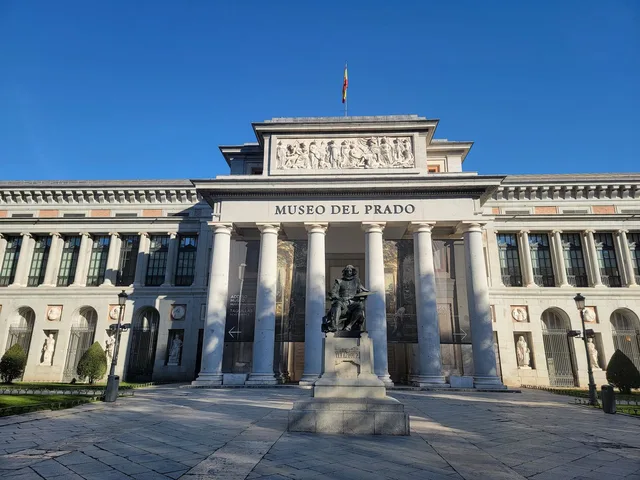
The Prado Museum, the Thyssen-Bornemisza Museum, and the Reina Sofía Museum sit within a ten-minute walk of each other along the Paseo del Prado, making this one of the great museum districts in Europe. On your first day in Madrid, start at the Prado and give it at least three hours.
The Prado holds over 7,000 paintings, but its heart is in three rooms. Go straight to Las Meninas by Velázquez, the riddle-wrapped masterpiece that Picasso reportedly visited dozens of times. Then find La fragua de Vulcano before heading downstairs to Goya's Black Paintings. Book your timed entry ticket in advance: queues form fast on any given morning.
After lunch at one of the cafés along Calle de Moratín, walk north along the Paseo del Prado past the imposing fountain of Plaza de Cibeles to the Thyssen-Bornemisza. Where the Prado focuses on Spanish masters, the Thyssen-Bornemisza is a survey of European art from the Middle Ages to the 20th century, once a private collection, now one of Europe's best surveys of painting from the medieval period to the 20th century. Allow two hours.
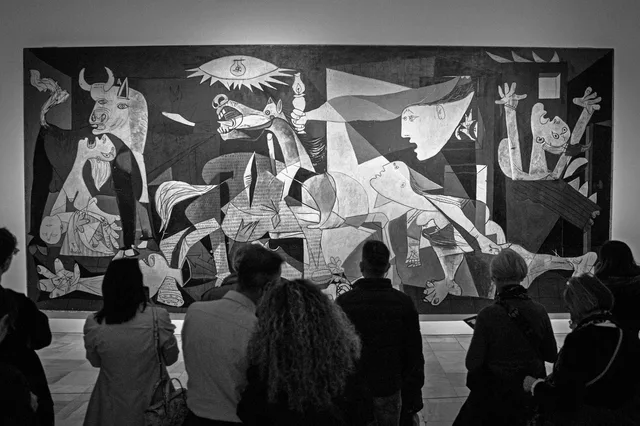
End the afternoon at the Reina Sofía Museum, where Picasso's Guernica stops everyone who walks in front of it. The raw scale of the painting is something no photograph prepares you for. The museum also holds an outstanding Dalí collection and a broad survey of 20th-century Spanish art.
Save on museum entry
All three Golden Triangle museums have free entry windows. The Prado is free Monday to Saturday from 18:00 to 20:00, and on Sundays from 17:00 to 19:00. The Reina Sofía is free all day on Sundays (10:00–14:30) and on Saturdays from 14:30 to 21:00. The Thyssen-Bornemisza is free on Mondays from 12:00 to 16:00.
Building your itinerary around these windows can save a family of four significantly on entry fees.
Day 2: The Heart of Habsburg Madrid
Start Day 2 with churros con chocolate at Chocolatería San Ginés, a Madrid institution that has been serving the same breakfast since 1894 and stays open 24 hours. It sits in a narrow alley off Calle Arenal, between the Royal Palace and Puerta del Sol, and is the right way to fuel the day.
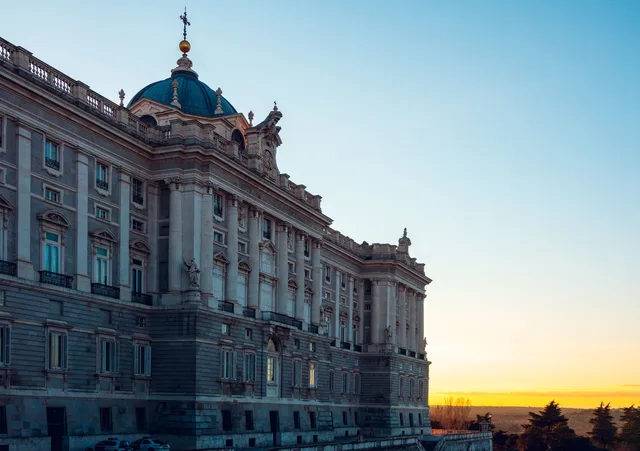
The Royal Palace of Madrid is your first stop. The official residence of the Spanish royal family is the largest palace in Western Europe, with 3,418 rooms and a grandeur that puts other European palaces to shame. The State Apartments are the highlight; don't miss the view from the terrace across the city toward the mountains. Allow two hours.
Cross the square to the Almudena Cathedral, a striking mix of Gothic, Romanesque, and neoclassical styles that took over a century to complete. The crypt below is free and worth ten minutes.
Walk east to Puerta del Sol, the heart of Madrid and the point from which all Spanish road distances are measured. The bronze statue of the bear eating from a strawberry tree, El Oso y el Madroño, is the city's symbol and the meeting point every madrileño falls back on.
Legend
The bear and the strawberry tree became Madrid's emblem after a medieval territorial dispute. When King Alfonso VIII resolved an argument between the city council and the Church in 1222, his solution was to give the Church rights over all the animals and give the city rights over the land and its trees. The two symbols were merged: a bear eating from a madroño tree. The bronze statue in Puerta del Sol was installed in 1967, but the image has appeared on the city's coat of arms for over 800 years.
From Puerta del Sol, walk south to Plaza Mayor, the vast 17th-century square surrounded by ochre arcaded facades. Order a bocadillo de calamares from one of the bars on the square, the calamari sandwich that madrileños argue about with the seriousness others reserve for football.
The Mercado de San Miguel, just outside the plaza's western arch, is a beautiful cast-iron market that opened in 1916. Stop for a quick bite and a glass of wine at one of the gourmet counters inside.
End the day in the Barrio de las Letras, the literary quarter southeast of the Prado. Look down as you walk along Calle de las Huertas: the cobblestones have quotes from Cervantes, Lope de Vega, and Quevedo pressed into the pavement. The tapas bars and cafés here are excellent and far less touristy than those around Plaza Mayor.
Day 3: Parks, Neighbourhoods, and the Best Sunset in Spain
Start at El Retiro Park in the morning: 350 acres of gardens and walking paths in the heart of central Madrid, with a rowing lake at its centre.
Inside the park, find the Crystal Palace (Palacio de Cristal). This glass and iron pavilion, built in 1887, now operates as a free outpost of the Reina Sofía Museum, rotating contemporary art installations through its extraordinary light-filled interior. Entry is free, it is open year-round, and most people walk right past it without knowing what it is.
Local tip
Near Plaza Mayor, a few minutes from the main tourist routes, the Convento del Corpus Christi (known locally as "Las Carboneras") sells freshly baked cookies through a revolving wooden hatch in the wall. The nuns who bake them are cloistered and never seen: you place your order through a wooden grate, leave your coins on the rotating tray, and the cookies come back through the other side. This ritual has been happening in the same building since the 17th century. It costs next to nothing and appears in almost no mainstream itinerary.
After lunch, choose between La Latina in the south or Malasaña in the north. La Latina is older and louder, famous for its tapas bars and terrace drinking. Calle Cava Baja is the main street for wine and tapas. Malasaña is the creative quarter: independent cafés, street art, vintage shops, and a younger crowd. Both neighbourhoods are genuinely walkable without a map.
End the day at the Temple of Debod. This ancient Egyptian temple was dismantled stone by stone and rebuilt in Madrid in 1968, a gift from Egypt to Spain. It sits in a park near Plaza de España, reflected in shallow pools. Arrive 30 to 45 minutes before sunset. In summer, that means around 21:00. The views of the city skyline and the temple silhouetted against the sky are the single best image you will take home from the city.
Day 4: A Day Trip to Toledo or Segovia
Both Toledo and Segovia deserve a full day from Madrid, and they are genuinely different: pick one based on what you want from the day.
Toledo is a UNESCO World Heritage city of tight medieval streets where Christian, Muslim, and Jewish cultures once overlapped. El Greco spent the last 37 years of his life here; the Cathedral is one of the great Gothic interiors in Spain; and the view from the Alcázar across the terracotta rooftops is one of the most recognisable in Spain. The train ride from Madrid Atocha to Toledo takes 33 minutes on the AVANT service.
Segovia is Roman and spectacular. The aqueduct is the first thing you see: 167 granite arches built around 98 AD with no mortar, held together solely by the precision of Roman engineering. At the far end of the old city, the Alcázar sits on a rocky promontory above two rivers and is said to have given Disney's designers ideas for Cinderella's Castle. The AVE from Chamartín reaches Segovia in 28 minutes.
| Toledo | Segovia | |
|---|---|---|
| Journey from Madrid | 33 min from Atocha | 28 min from Chamartín |
| Best for | Medieval history, El Greco | Roman monuments, families |
| UNESCO status | Yes (1986) | Yes (1985) |
| Don't miss | Toledo Cathedral | Roman Aqueduct |
Both cities are walkable once you arrive. One full day is enough to see the highlights and sit down for a proper lunch.
Day 5: El Rastro, Vermouth, and Gran Vía
If Day 5 falls on a Sunday, you are in excellent luck.
El Rastro is Madrid's legendary Sunday flea market, spreading across the streets of La Latina every Sunday from around 09:00 to 15:00. Over 3,000 stalls sell everything from antique furniture to vinyl records to leather bags. Arrive before 10:00 for the best selection and fewest crowds. Wear your bag crossbody and keep your phone in a front pocket.
By midday, the market winds down and La Latina's vermouth bars come fully alive. The traditional Sunday ritual is the post-Rastro vermú: a glass of vermouth with a tapa or two, standing at a bar on Calle Cava Baja or Calle Cava Alta, watching the neighbourhood fill with people who have nowhere better to be.
If Day 5 is a weekday, Gran Vía is the natural alternative. Madrid's main boulevard is lined with early 20th-century architecture and leads toward Chueca, the neighbourhood full of excellent restaurants, independent shops, and the Mercado de San Antón, a covered food market with a rooftop terrace restaurant above it. From Gran Vía you can also book a rooftop drink at the Círculo de Bellas Artes for one of the best views across the city.
Travel Tips for Your Madrid Itinerary
Getting around: Central Madrid is compact and walkable. The metro covers the rest. A T-Casual 10-trip card is much cheaper than buying individual tickets.
When to eat: Lunch runs 14:00 to 16:00 and is the main meal of the day. Dinner rarely starts before 21:00. Tapas bars begin filling from 13:00.
Book ahead: Prado Museum and Royal Palace timed slots fill quickly in peak season. Book both before your trip.
Day trips: Buy AVANT tickets to Toledo and AVE tickets to Segovia through the Renfe website. Trains are frequent; weekend seats on popular routes go fast.
Best time to visit Madrid: Spring (April and May) and autumn (September and October) offer the most comfortable temperatures and thinner crowds than the height of summer.
Frequently asked questions
How many days do you really need in Madrid?
Five days is the sweet spot for a first visit. Three days covers the main highlights; five days lets you do the art museums properly, take a day trip, explore at least two neighbourhoods, and have a full Sunday morning at El Rastro. A week or more is for people who plan to come back.
Would Toledo or Segovia be better for a day trip from Madrid?
Toledo for medieval history and the atmosphere of a city that feels genuinely old; Segovia for Roman engineering and an easier day with younger travellers. Both are under 35 minutes by train. If you can only choose one, Toledo tends to leave the stronger impression overall, though the Segovia aqueduct is the more astonishing single sight.
What is the best month to visit Madrid?
May and October are the two best months. April brings spring to Retiro Park; September keeps the warmth without the peak-season pressure. July and August are hot but the city stays fully open.
What should I eat during 5 days in Madrid?
Start with a bocadillo de calamares near Plaza Mayor, churros con chocolate at San Ginés, patatas bravas in La Latina, and a vermouth on Sunday after El Rastro. The food alone is worth the five days.