Madrid has a way of stretching time. You sit down for a late lunch at three, the waiter brings a second round of vermouth without asking, and suddenly the Prado is closing and the terraces on Plaza de Santa Ana are filling up for the night. So when people ask how many days in Madrid is enough, the answer is a little odd: fewer than you fear, more than you planned.
Here is the short version. Three full days in Madrid is the sweet spot for a first visit. Two days works if you are pairing the city with Barcelona or Seville. Four or five days lets you add a day trip to Toledo or Segovia without giving up a single tapa. Below you'll find how to split your time, what fits into each day, and the weekday quirks that decide whether day 2 feels relaxed or rushed.
How many days do you need in Madrid? A quick answer by traveller type
Not every visitor wants the same trip, so the right number depends on why you're coming.
| Your trip | Days in Madrid | What you get |
|---|---|---|
| City break or stopover | 1 to 2 days | Royal Palace, Plaza Mayor, one big museum, one great night out |
| First time in Spain, touring several cities | 2 to 3 days | The headline sights plus time to eat like a local |
| Art lover | 3 to 4 days | Prado, Reina Sofía and Thyssen on separate days, no museum fatigue |
| Slow traveller or foodie | 4 to 5 days | Neighbourhoods, markets, long lunches and one day trip |
| Base for exploring central Spain | 5 to 7 days | Madrid plus two or three day trips by fast train |
If you only remember one line from this guide: plan by nights, not days. A Friday evening arrival gives you a proper Madrid night before any sightseeing starts, because nobody here eats dinner before 9pm.
1 day in Madrid: the greatest hits
One day is tight but doable if you stay in the city centre and walk. Start your day at the Royal Palace of Madrid, the official residence of the Spanish royal family (they live elsewhere) and one of the largest palaces in Europe, with over 3,000 rooms. Book a morning slot, then walk five minutes to Plaza Mayor and grab a snack at Mercado de San Miguel, the iron market hall that opened in 1916.
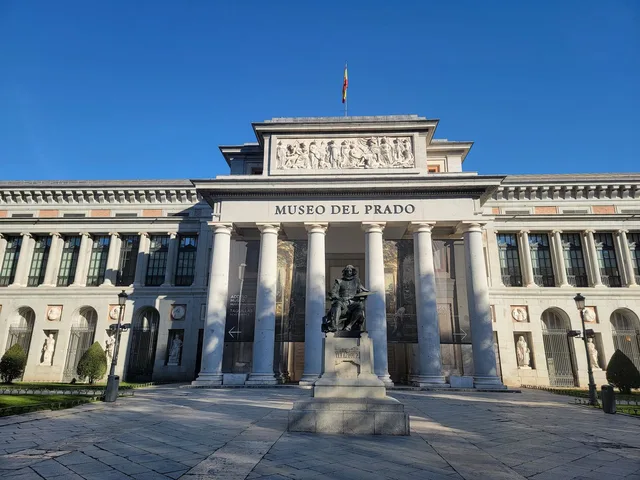
After lunch, cross Puerta del Sol (look for the Kilometre Zero plaque on the pavement, the point from which Spain's road distances are measured) and head down to the Prado Museum. Give it three hours for the highlights: Velázquez's Las Meninas, Goya's Black Paintings, Bosch's Garden of Earthly Delights. End with sunset at the Templo de Debod, a 2,000-year-old Egyptian temple gifted to Spain, then churros at Chocolatería San Ginés, frying since 1894.
Our full 1 day in Madrid plan has the timings.
2 days in Madrid: enough for a first taste
With 2 days in Madrid you can split the city in half: the royal and historic centre from the one-day plan above, then art and parks on day 2.
Day 2 starts in Retiro Park before the heat builds. Rent a rowing boat on the lake, then find the Palacio de Cristal, a glass pavilion built in 1887 that now hosts free contemporary art shows. In 2021 UNESCO listed Retiro and the Paseo del Prado together as a World Heritage Site called the Landscape of Light, so the walk between the park and the museums is a sight in itself.
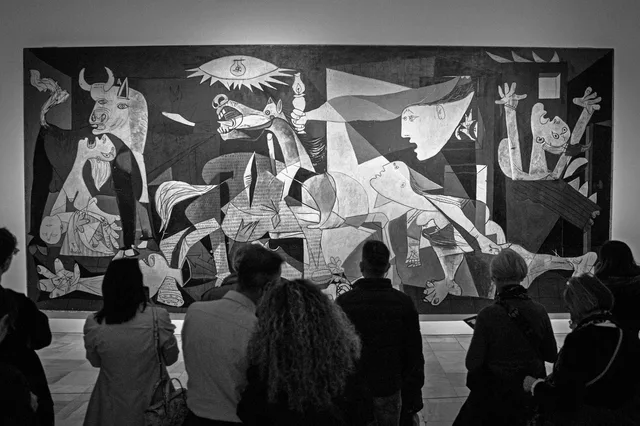
Spend the afternoon at the Reina Sofía for Picasso's Guernica, then walk into the Barrio de las Letras. Cervantes and Lope de Vega once lived on these streets, and quotes from Spanish writers are set in brass letters along Calle de las Huertas. Finish on Plaza de Santa Ana with a caña and a plate of patatas bravas.
Two days leaves you wanting more, which is not a bad way to leave a city. See our 2 days in Madrid itinerary for the full route.
3 days in Madrid: the sweet spot
Three days in Madrid is where the trip stops being a checklist. You cover the big sights on the first two days, and the third day is for the side of Madrid that doesn't appear on postcards.
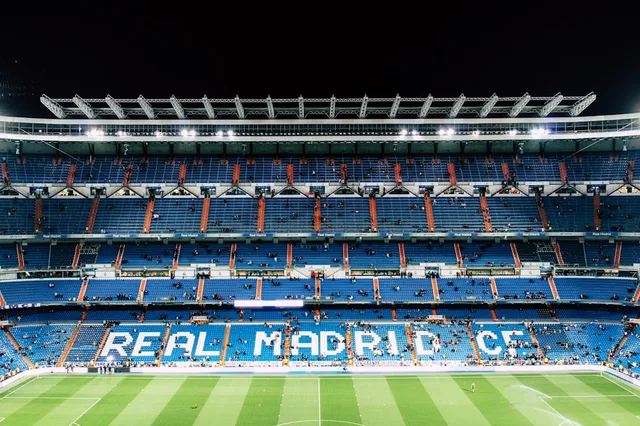
Day 3 is for neighbourhoods. Walk through Malasaña, stop for coffee on Plaza del Dos de Mayo, then drift into Chueca for lunch. In the afternoon, head to La Latina and the Cava Baja, a street lined with tapas bars that fill up from about 8pm. If football is your religion, swap the afternoon for a Santiago Bernabéu stadium tour: Real Madrid's home is a 20-minute metro ride from the centre.
The third day is also your safety net. Rain, a closed room at the Prado, a lunch that ran long: with 3 days in Madrid none of it ruins the trip.
The weekday trick most itineraries miss
The day you arrive matters as much as how many days you stay. The Reina Sofía is closed on Tuesdays and the Templo de Debod on Mondays. The Rastro flea market only runs on Sunday mornings, roughly 9am to 3pm, and it's the most fun morning Madrid offers.
So if you have 3 days in Madrid, try to include a Sunday: Rastro in the morning, vermouth in La Latina at noon, and a long lunch after. Then check your itinerary against those closing days before you book a single ticket.
Our 3 days in Madrid guide maps it out hour by hour.
4 or 5 days in Madrid: add a day trip
Here's where Madrid beats most cities in Spain. It sits at the centre of the country's high-speed rail network, so the best use of an extra day is usually a day trip from Madrid rather than a fourth museum.
- Toledo is about 33 minutes by fast train from Atocha. A walled hilltop city with El Greco paintings and a skyline that looks painted. Read our Toledo day trip from Madrid guide. - Segovia is under 30 minutes on the fastest trains from Chamartín. A Roman aqueduct, a fairy-tale Alcázar and roast suckling pig for lunch. Details in our Segovia day trip guide. - El Escorial is about an hour away by commuter train. Go for Philip II's vast monastery-palace in the hills.
With 5 days in Madrid you can take two day trips and still have three full days in the city. Our 5 days in Madrid itinerary and best day trip from Madrid comparison help you choose.
A week in Madrid: who actually needs it?
Seven days is more than most first visits need, but it suits two types of traveller. The first uses Madrid as a base, sleeping in one hotel and taking a train out every other day. The second wants to live the city for a while: long lunches, a flamenco night, afternoons in the parks, the Bernabéu, a free evening at the Prado. If that sounds like you, our week in Madrid guide covers it.
Madrid vs Barcelona and Seville: how to split your time
Most people visit Madrid as part of a bigger trip to Spain, so the real question is often how to share your days between cities.
If you're doing Madrid and Barcelona, give Barcelona slightly more time, as the beach and Gaudí buildings add a whole extra layer. For a week in Spain, three days in Madrid and four in Barcelona works well. The fast train takes about 2.5 to 3 hours.
For Madrid and Seville, two to three days in each is ideal. The train takes about 2 hours 40 minutes on the fastest services, so you lose barely half a day to travel. Could you split 3 days between Madrid and Seville? You could, but you'd spend most of it on trains and in queues.
Doing all three cities? Ten days is a comfortable minimum for all three, with three in Madrid, four in Barcelona and three in Seville for southern Spain.
Getting around the city centre
Most of central Madrid is walkable. Puerta del Sol to the Prado takes about 15 minutes on foot, and the Royal Palace to Plaza Mayor about five. For everything else, the metro is clean, cheap and easy to use, and it runs until about 1:30am.
Where you stay matters more than people think. A hotel around Sol, Huertas or the Barrio de las Letras puts you within walking distance of nearly everything on a 3-day itinerary. Our guide to where to stay in Madrid compares the areas.
Legend
Madrileños are nicknamed "gatos" (cats). The story goes that during the Christian capture of the city in 1085, a soldier climbed the Moorish walls with his bare hands, as nimbly as a cat, to plant a flag at the top. His comrades started calling him "the cat", and the name stuck to the whole city.
Best time to visit Madrid
The best months are April to June and September to October: warm days, cool evenings and terrace weather. July and August often go above 35°C, which changes the rhythm of your trip. In summer, plan museums for midday and walk in the morning and late evening like locals do. Our month-by-month guides, such as Madrid in September, help you plan around events and weather.
Frequently asked questions
Is 2 days in Madrid enough?
It's enough to see the headline sights if you stay central and plan ahead. You'll have to choose one or two museums rather than all three.
Is Madrid worth visiting if I've already seen Barcelona?
Yes. The two cities feel very different: Madrid is about art, royal history and late nights, Barcelona about Gaudí and the sea. See our guide on whether Madrid is worth visiting.
How many days do you need in Madrid with kids?
Plan one more day than you would as adults, and swap a museum for Retiro Park or the zoo. Our Madrid with kids guide has ideas.
Can you see the Prado and the Reina Sofía on the same day?
You can, since they are a 10-minute walk apart, but it's a lot of art for one day. Splitting them across two days makes both more enjoyable.
What is the best month to go to Madrid?
May and late September to October are ideal: warm, sunny and less crowded than peak summer.
So, how many days in Madrid?
Three, if you want the simplest answer. But the better answer is: enough to have at least one evening with nothing planned. Madrid is at its best after dark, when the plazas fill up and dinner starts at ten. Leave room for that. Some of the best Madrid memories happen on the nights you didn't plan.