Three days in Madrid is enough to fall genuinely in love with the city. Not quite enough to see everything, no, but more than enough to understand why people come for a weekend and start looking at flights back before they leave. If this is your first trip to Spain, Madrid is the perfect starting point: a capital that moves at an unhurried pace, even with 3.3 million people in it. The evenings stretch. The tapas keep coming. The Prado makes you feel like a more cultured version of yourself.
This itinerary is built for those who want to spend 3 days in Madrid properly: seeing the unmissable highlights without sprinting between monuments. Over 3 days, you will visit the Royal Palace, the Museo Nacional del Prado, the Reina Sofía, and Retiro Park. You will eat jamón ibérico in Mercado de San Miguel and churros at midnight at Chocolatería San Ginés. And on your last evening, you will watch the sun set over an Egyptian temple that has been standing in a Madrid park since 1972, and feel quietly amazed by the world. The historic centre is easy to navigate on foot.
Day 1 in Madrid: Royal Palace, Plaza Mayor, and Puerta del Sol
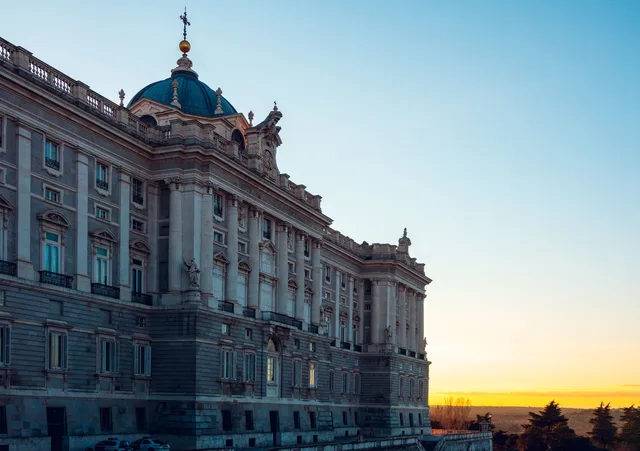
Start your first day in Madrid where the city’s history is most concentrated. The Royal Palace of Madrid (Palacio Real) is the official residence of the Spanish royal family, though no one actually lives there today. With 3,418 rooms it is the largest royal palace in Western Europe by floor area, and the staterooms are genuinely spectacular: frescoed ceilings by Tiepolo in the Throne Room, a collection of Stradivarius instruments, a pharmacy lined with 200 original ceramic jars. Allow two hours here. A guided tour is worth booking in advance for skip-the-line entry and context that the rooms alone don’t always give you. Book your Royal Palace fast track ticket in advance (from €22.00). Summer queues without one can be brutal.
Just opposite the palace, the Almudena Cathedral is free to enter and worth a quick stop. Consecrated in 1993 after over a century of construction, its interior is unexpectedly colourful, with vivid modern stained glass that catches the morning light in a way older cathedrals rarely do. Afterwards, walk ten minutes east to Plaza Mayor. The square was completed in 1619 under King Philip III, designed by architect Juan Gómez de Mora, and it is the most theatrical open space in Madrid. Over four centuries it has hosted royal coronations, bullfights, and public executions of the Spanish Inquisition. Today it hosts coffee, pigeons, and tourists. It is a bit touristy by mid-afternoon, but early morning, with the light coming low through the arcades, it is beautiful.
From Plaza Mayor, wander a few minutes north to Mercado de San Miguel. This wrought-iron market reopened in February 2026 after structural conservation work, and the restoration has kept everything that made it worth visiting in the first place. Dozens of stalls serve high-quality Spanish ingredients to eat standing up. Try the jamón ibérico de bellota, compare the croquetas between at least two stalls, and drink vermouth at La Hora del Vermut. Best visited on a weekday morning (11:00 to 13:00). Weekends between 13:00 and 16:00 are impossibly crowded. On your way back toward Sol, stop at La Mallorquina, the historic patisserie on Puerta del Sol, for a napolitana de chocolate.
In the afternoon, stroll to Puerta del Sol to see El Oso y el Madrono, the bear statue that is the symbol of Madrid. The area around Sol is lively, busy, and completely walkable. In the evening, head to La Latina for tapas: walk Cava Baja end to end, stopping wherever catches your eye. Cava Baja is Madrid's most famous tapas street, and it earns the reputation.
Day 2 in Madrid: Prado Museum, Retiro Park, and the Reina Sofía
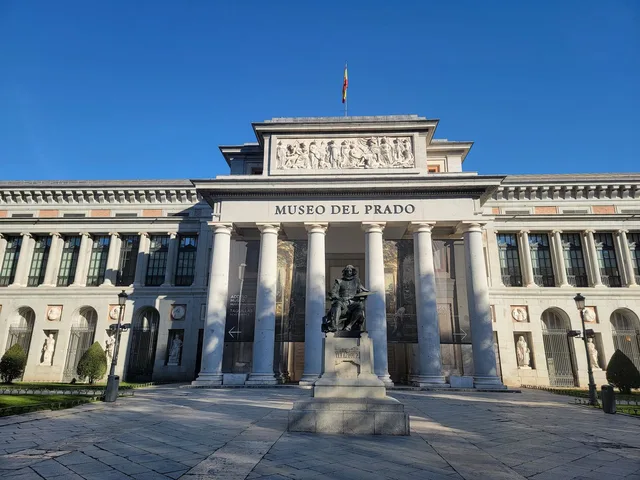
This is the day you will probably remember longest. Start at the Museo Nacional del Prado when it opens at 10:00. The Prado is one of the world’s great art museums, a treasure house of European art anchored by Diego Velázquez, Francisco de Goya, and Hieronymus Bosch. The collection is enormous. Give yourself a minimum of two hours, three if you are a serious museum visitor. Most people try to see everything and end up exhausted and remembering nothing. Pick three rooms and see them properly.
Local tip
Las Meninas by Velázquez (Room 12) is the centrepiece of the Prado, but most tourists view it too close. Stand at the far end of the room, roughly eight metres from the canvas, and the spatial illusion clicks into place exactly as Velázquez intended. The figures feel real; the room feels three-dimensional. Move within a metre and the faces dissolve into loose brushwork. Distance is everything with this painting.
Also look at Velázquez’s chest: the red cross of the Order of Santiago was added after the work was completed, by royal command. It is almost certainly not painted by Velázquez himself.
After the Prado, walk north along Paseo del Prado. Stop to admire the Cibeles Fountain, one of Madrid’s most iconic landmarks and the traditional gathering point for Real Madrid fans after a title win. Continue into El Retiro Park. This 350-acre park in the centre of the city is free, open daily, and one of the best places in Madrid to decompress. Walk to the Estanque Grande (the grand pond), rent a rowing boat if the mood takes you, or find a bench by the water and watch the city pass by.
From the Estanque, head to the park’s most surprising attraction: the Palacio de Cristal. The Crystal Palace was built in 1887 by architect Ricardo Velázquez Bosco for a colonial exhibition. It now functions as a free satellite gallery of the Centro de Arte Reina Sofía Museum, hosting rotating large-scale contemporary art installations. Past shows have included Anish Kapoor and Cristina Iglesias. The combination of Victorian ironwork, glass vaulting, and contemporary art works better than it has any right to. Check the Reina Sofía website for the current show. Entry is always free.
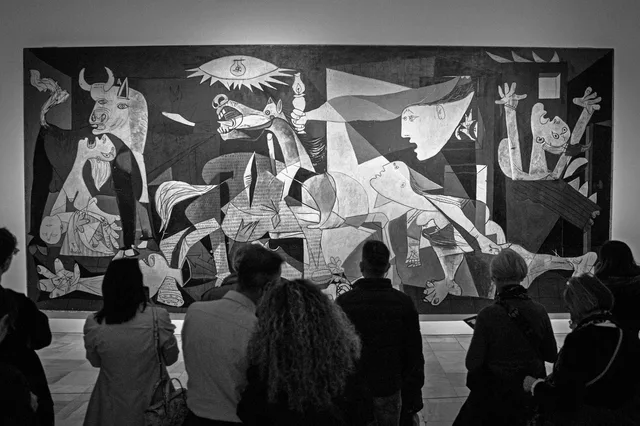
Spend the late afternoon at the Museo Nacional Centro de Arte Reina Sofía itself. Home to Picasso’s Guernica and major works by artists like Salvador Dalí and Joan Miró, the museum is considerably more engaging than its boxy exterior suggests. Guernica is on the second floor, and it is larger and more affecting than photographs suggest. Allow 90 minutes minimum. If you visit on a Saturday afternoon (from 14:30) or Sunday morning (before 14:30), entry is free.
Save money
The Prado is free every evening: Monday to Saturday 18:00 to 20:00, Sunday 17:00 to 19:00. The Reina Sofía is free Saturday afternoons (from 14:30) and Sunday mornings (10:00 to 14:30). A visitor who plans around this could see both world-class museums for nothing. The trade-off: the Prado free slot is popular and limits you to two hours, so queue 45 minutes before it opens and move with purpose.
For a relaxed visit with skip-the-line entry to all three major sites, the Prado + Reina Sofía + Royal Palace combo from €49.40 covers all three with no queuing.
Day 3 in Madrid: Malasaña, La Latina, and Templo de Debod at Sunset
Save your last day for neighbourhoods and a sunset. Start the morning in Malasaña, Madrid’s indie heartland. Once the epicentre of the 1980s countercultural movida, it is now full of craft coffee shops, record stores, and bars that don’t get going until midnight. It is also the least touristy major neighbourhood in the centre of Madrid, which makes it the best place to see how the city actually lives. Pick a café, order a coffee, and sit with it for longer than you normally would.
From Malasaña, walk south through the centre to La Latina for a late morning vermouth and a slow lunch. The area around Calle de la Cava Baja is Madrid’s most famous tapas street, and in the late morning it is calmer than the previous evening. Try a different bar from the ones you visited on Day 1 and see how the neighbourhood changes with the light. Continue east to Barrio de las Letras (the literary quarter around Calle de las Huertas), whose pavements are inlaid with quotes from Cervantes, Lope de Vega, and Quevedo.
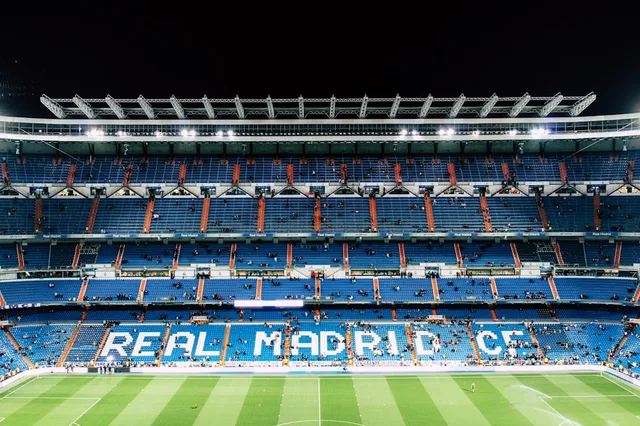
If football matters to you, the tour of Santiago Bernabéu Stadium (home of Real Madrid) runs daily and includes the pitch, the trophy room, and the players’ tunnel. Book ahead. The tour alone, without a match, takes about 90 minutes.
For your last evening in Madrid, go to Templo de Debod. This is a genuine ancient Egyptian temple, constructed in the 2nd century BC and dedicated to the goddess Isis and the god Amun of Thebes. Egypt gave it to Spain in 1968 as thanks for Spanish assistance in saving the Abu Simbel temples from rising Nile waters. It was dismantled stone by stone, shipped to Spain, and rebuilt in Cuartel de la Montaña park, near Plaza España, where it has stood since 1972. Entry is free. The walk up from the city centre takes about 15 minutes.
Local tip
Templo de Debod has the best sunset in Madrid. The sun drops behind the mountains of Casa de Campo to the west, casting warm orange light across the temple and reflecting in the pool at its base. Arrive 30 minutes before sunset to find your spot. The crowds thin quickly once the light fades, and the walk back through Parque del Oeste at dusk is genuinely lovely.
End the night as Madrileños have been ending nights for well over a century: at Chocolatería San Ginés, tucked into Pasadizo de San Ginés, a narrow passageway just west of Puerta del Sol. The chocolatería has been serving chocolate con churros since 1894, and it is open every day of the year, running around the clock Thursday through Saturday. Order the churros with a thick cup of drinking chocolate and sit with it for as long as you like. It is a very good ending to 3 days in Madrid.
Is 3 Days Enough to Visit Madrid?
Yes, and if you plan well, three days in Madrid feels generous. A well-paced 3-day Madrid itinerary covers the essential highlights of Spain’s capital: the Prado, the Royal Palace, the Reina Sofía, Retiro Park, Plaza Mayor, and time for tapas in at least two neighbourhoods. You will understand the city’s rhythm and eat extremely well. What you will not have time for: a day trip to Toledo or Segovia (each takes a full day), the Thyssen-Bornemisza Museum, a proper evening of flamenco, or El Rastro flea market on a Sunday morning. If any of those are genuine priorities, add a fourth day. Madrid is the perfect city for a first-timer, and one of those rare places where you leave wanting more rather than satisfied you have seen it all.
Madrid Highlights at a Glance
| Attraction | Opening hours | Entry |
|---|---|---|
| Royal Palace | Apr–Sep: Mon–Sat 10:00–19:00, Sun 10:00–16:00 Oct–Mar: Mon–Sat 10:00–18:00, Sun 10:00–16:00 |
From €22.00 (fast track) |
| Prado Museum | Mon–Sat 10:00–20:00, Sun 10:00–19:00 | Free Mon–Sat 18:00–20:00, Sun 17:00–19:00 |
| Reina Sofía | Mon, Wed–Sat 10:00–21:00, Sun 10:00–14:30. Closed Tue | Free Sat from 14:30, Sun 10:00–14:30 |
| Retiro Park | Daily, dawn to dusk | Free |
| Crystal Palace | Wed–Sun (check Reina Sofía website) | Free |
| Templo de Debod | Variable (check esmadrid.com) | Free |
| Plaza Mayor | Always open | Free |
Frequently Asked Questions
Is 3 days enough to see Madrid?
Yes. Three days gives you the Prado, the Royal Palace, the Reina Sofía, Retiro Park, Plaza Mayor, Puerta del Sol, and at least two great neighbourhoods for tapas. What you will miss: day trips, the Thyssen-Bornemisza, and flamenco. For a first visit to Spain’s capital, 3 days is a satisfying length.
What is the number one thing to do in Madrid?
The Prado Museum. Even visitors who do not consider themselves art lovers tend to find it extraordinary. The collection includes Las Meninas by Velázquez, Goya’s Black Paintings, and Bosch’s Garden of Earthly Delights. Give it two hours minimum. Go when it opens to avoid the worst of the crowds.
What is a good 3-day itinerary for Madrid?
Day 1: Royal Palace, Almudena Cathedral, Plaza Mayor, Mercado de San Miguel, Puerta del Sol, La Latina tapas in the evening. Day 2: Prado Museum, Retiro Park and the Crystal Palace, Reina Sofía, dinner in Barrio de las Letras. Day 3: Malasaña for morning coffee, La Latina for lunch, Templo de Debod at sunset, Chocolatería San Ginés at night.
Want to visit both the Prado and Reina Sofía in one morning?
It is possible but tiring. The two museums are a 15-minute walk apart along Paseo del Prado. If you arrive at the Prado at 10:00 and spend a focused two hours, you can reach the Reina Sofía by 12:30. The risk is museum fatigue: Guernica deserves proper attention, not a tired shuffle. Splitting them across two days, as this itinerary does, produces a better experience.
What are the must-try foods at Mercado de San Miguel?
Jamón ibérico de bellota (the highest grade, from acorn-fed free-range pigs), croquetas (try two different stalls and compare), and vermouth with olives. The oyster bar at Daniel Sorlut is excellent if you eat shellfish. Go on a weekday morning when the crowds are manageable, not on a weekend afternoon when it becomes very busy.
What is the best month to visit Madrid?
April, May, September, and October offer the best balance of good weather (18–25°C), manageable crowds, and a city that is fully alive. July and August are very hot (regularly 35–40°C) but Madrid does not shut down the way coastal cities do. December is cold but festive, and museum queues are considerably shorter than in summer.
Which is nicer, Barcelona or Madrid?
They are completely different cities. Barcelona has the sea, Gaudí, and a more visual, Mediterranean energy. Madrid has the Prado, a more local feel, and nightlife that genuinely does not start until midnight. Art and food-focused travellers tend to prefer Madrid. Beach-and-architecture visitors often lean toward Barcelona. Most people who spend real time in both agree that Madrid is underrated.