You've probably already decided to go to Barcelona. Or Seville. Or maybe you're doing the whole two-weeks-five-cities thing, and Madrid is the one you're not sure deserves a slot. Fair question. Madrid doesn't have a Sagrada Família or a beach, and it isn't going to pretend otherwise.
Here's the honest version: Madrid is worth visiting, but not for everyone, and not in the same way every other Spanish city is. It rewards people who like to eat slowly, walk through three centuries of architecture without a map, and spend an afternoon in a museum instead of a queue for a photo. If that doesn't sound like you, keep reading anyway, because the second half of this guide tells you exactly who should skip it.
Is Madrid worth visiting? Here's who it's for
Worth it if you like Spain slow: three or four days of museums, tapas crawls, and neighbourhoods that don't perform for tourists. Worth it if you've already done Barcelona or Seville and want the version of Spain that doesn't have one postcard shot doing all the work. Worth it if long lunches, late dinners, and a city built for walking rather than sprinting between five landmarks before noon sound like a holiday instead of a chore. Madrid is one of those cities that rewards patience over a checklist.
Skip it if beaches are the point of the trip. Madrid sits close to the geographic middle of the Iberian Peninsula, and the nearest coastline is two to three hours away by car or train; no itinerary trick changes that. Skip it too if this is a first trip to Spain with four or five days total and you're choosing one city: Barcelona packs Gothic Quarter streets, Gaudí architecture, and beach access into a compact, walkable city center, which suits a short trip better than Madrid's spread-out grid of grand boulevards does. Madrid isn't the worse city; it's the wrong fit for that specific trip.
And temper your expectations if you're chasing one unmissable photo. Madrid's architecture is largely Habsburg and Bourbon-era grand avenues rather than a dense medieval old town, so it doesn't hand you a single building that explains the whole trip in one image the way Paris or Barcelona does. What it hands you instead is three world-class art museums within walking distance of each other, and a city that looks better the longer you stay in it, which is a harder thing to sell in a five-second scroll than a tower with a queue outside it.
Madrid's Golden Triangle: the real headline act
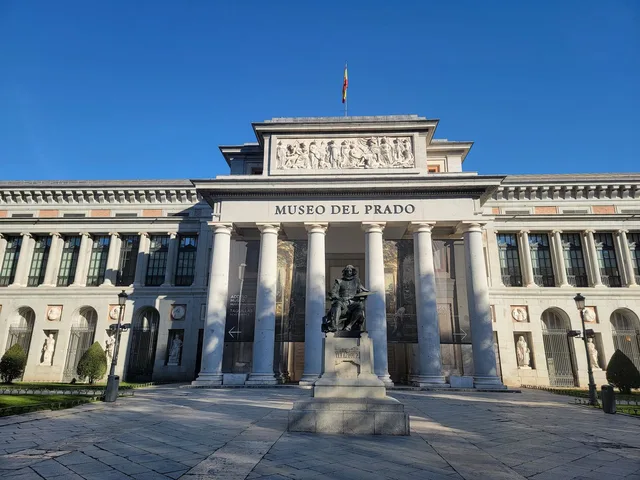
Ask anyone why Madrid is worth visiting and the Golden Triangle of Art comes up before anything else: three major art museums close enough to walk between in a single afternoon, a concentration few European capitals can match.
Prado Museum
Diego Velázquez, Francisco Goya, and centuries of Spanish royal collecting live here, and it's the kind of museum that needs half a day, not ninety minutes squeezed between other plans. Address: Calle de Ruiz de Alarcón, 23, 28014 Madrid.
Reina Sofía
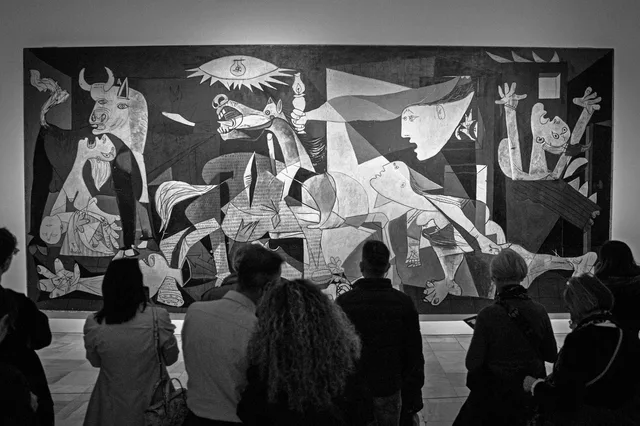
This is where Picasso's Guernica hangs, a single room most visitors stand in longer than they planned to. The rest of the collection covers Spanish modern and contemporary art through the 20th century. Address: Calle de Santa Isabel, 52, 28012 Madrid.
Thyssen-Bornemisza
Smaller and quieter than the other two, and easy to skip if you're short on time, but it fills real gaps the other collections leave: Old Masters, Impressionists, and 20th-century work neither the Prado nor the Reina Sofía covers. Address: Paseo del Prado, 8, 28014 Madrid.
Where to stay for a first visit
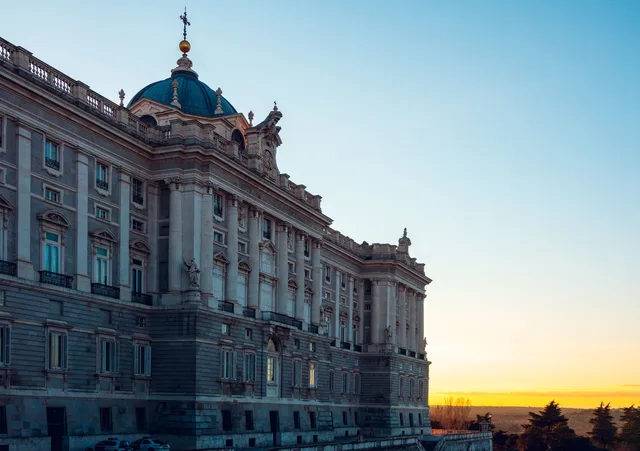
Sol and Gran Vía sit right in the city center and put almost everything within walking distance, at the cost of being the loudest, busiest streets in Madrid. Madrid de los Austrias, the old Habsburg quarter around Plaza Mayor, gives you the Royal Palace and the market crowds without straying far. La Latina is the tapas and nightlife base, a short walk from the historic core and busiest on Sunday afternoons once the El Rastro flea market packs up. Retiro puts you near the Golden Triangle museums and the park itself. Malasaña is quieter and more residential, better if a coffee shop and a five-minute walk to dinner matter more than being in the middle of everything.
Food in Madrid: tapas, markets, and 2am churros
Good to know
For an evening that isn't a sit-down restaurant, Gran Vía and Callao have Madrid's best rooftop bars, and a plate of churros con chocolate at San Ginés, open since 1894 and running some nights straight through until morning, is the closest thing the city has to a required ritual after a night out. Order a jarra of sangria at a terrace table if you want the tourist version of a Madrid evening; most locals reach for a caña of beer or a glass of vermouth instead.
Mercado San Miguel looks incredible in photos and is priced accordingly. For the same tapas culture with a local crowd instead of a tour group, go to Mercado de la Cebada in La Latina on a Saturday, especially around lunchtime, when the seafood counters are the neighbourhood's actual weekend plan rather than a tourist attraction.
What it actually costs
Most articles call Madrid affordable and leave it there. Here's what that means in real numbers: a tight daily budget runs roughly €70 to €100 per person, a comfortable mid-range trip lands around €130 to €200 a day, and anything above €300 buys genuine luxury. A menú del día, the fixed three-course lunch nearly every restaurant offers on weekdays, typically costs €12 to €17 and is the best-value meal in the city by a wide margin.
| Budget level | Daily cost (per person) | What it covers |
|---|---|---|
| Tight | €70-100 | Hostel, metro, market food, one paid attraction |
| Mid-range | €130-200 | Private room or hotel, restaurant meals, a couple of paid attractions |
| Luxury | €300+ | High-end hotel, fine dining, private tours |
Getting around without losing a day to it
Madrid's metro is one of the largest in Europe, third in size only to Moscow and London, and it's fast, air-conditioned, and easy to use even without Spanish. A single ticket costs roughly €1.50 to €2 depending on distance (the fare simplifies to a flat €1.50 from October 2026), and the Tourist Travel Pass covers unlimited metro, bus, and Cercanías rail travel within Zone A for €10.30 a day if you're moving around a lot.
Good to know
The 10-trip Metrobús card officially lists at €12.20, but a government subsidy currently brings it down to €7.30 through the end of 2026, roughly €0.73 a ride if you're staying more than a day or two.
The ghost station under Madrid
Most is-Madrid-worth-visiting guides send you to the same five places. Here's one they miss entirely.
Local tip
Chamberí station opened on Madrid's first metro line in 1919 and stayed in service until 1966, when it was sealed shut and abandoned: the platform sat on a curve, and newer, longer trains couldn't safely line up with it anymore. It sat frozen behind the walls of a working line for over forty years, trains still racing past every few minutes, until it reopened in 2008 as a free micro-museum called Andén 0. The original 1919 ceramic advertising panels are still on the walls, a free guided tour runs roughly every hour and takes about 40 minutes, and you can watch a real, still-running train blow past a station stuck in 1966. It's a five-minute walk from Iglesia or Bilbao metro stations, at Plaza de Chamberí, and it costs nothing.
The bear, the tree, and Madrid's least-explained photo
Every tourist photographs the bronze bear reaching into a strawberry tree at Puerta del Sol, Madrid's official symbol and the city's literal kilometre zero. Almost none of them know what they're looking at.
Legend
The bear traces back to 1212, when knights from Madrid are said to have carried standards showing a bear and the stars of Ursa Minor into battle against Moorish forces at Las Navas de Tolosa. The bear and the strawberry tree appear together for the first time on a royal seal from 1222. Local tradition ties the pairing to a medieval land dispute: the city's church and municipal government argued over who controlled the surrounding pastures and forests, and the eventual settlement split it: the Church took the grazing land, the city kept the oak and strawberry-tree woods, and to mark that claim, the bear on Madrid's coat of arms was redrawn standing on its hind legs, reaching for the tree it was now responsible for protecting. The bronze statue standing in Puerta del Sol today, cast by Antonio Navarro Santafé, only dates to 1967, a modern rendering of a symbol with eight centuries behind it.
Best time to visit, and how many days in Madrid is enough
Spring (April to June) and autumn (September to October) are the sweet spot: daytime highs around 18 to 28°C, terraces full, festival calendars busy. Summer regularly hits 32 to 40°C, uncomfortable for walking around at midday, and enough locals leave the city in August that some independent businesses close for the month. Winter is cold but sunny, and noticeably quieter and cheaper if a coat doesn't bother you.
Three full days is the number that keeps coming up: enough for the Royal Palace, the Golden Triangle, Retiro Park, and two or three neighbourhoods without rushing. Two days works if that's genuinely all you have. Five days is where a day trip out of the city starts to make sense.
Day trips that make Madrid worth staying longer for
| Destination | Travel time from Madrid | Best for |
|---|---|---|
| Toledo | About 30-60 minutes by train | Layered Roman, Moorish, Jewish, and Christian history in one walkable old town |
| Segovia | Under an hour | A Roman aqueduct and a fairy-tale castle, the most Spanish history packed into a single day |
| El Escorial | 50-60 minutes by Cercanías | The royal monastery-palace complex; best for repeat visitors or serious history fans |
Mistakes first-timers make
The Royal Palace, Prado, Reina Sofía, and Thyssen-Bornemisza all sell out same-day tickets on busy weekends, so book online before you land. Plaza Mayor is beautiful, and the food on it is overpriced and built for people who won't be back tomorrow. Showing up for dinner at 7pm gets you an empty restaurant and a confused waiter, locals eat around 9 or 10pm. Small, independent shops close for a couple of hours in the afternoon, roughly 2 to 5pm, so don't plan your only shopping window around siesta hours.
Before you go
US, UK, Canadian, and Australian travellers can currently enter Spain visa-free for up to 90 days in any 180-day period. ETIAS, a pre-travel online authorisation rather than a visa, is expected to become mandatory for visa-exempt travellers by late 2026, worth checking again close to your travel dates since the enforcement date has already shifted more than once. Keep your passport valid for at least three months beyond the date you leave the Schengen area.
The bottom line
Madrid isn't trying to win a beauty contest against Barcelona or hand you one perfect photo and call it a day. What it hands you instead is three days that feel unhurried: a long museum morning, a market lunch that runs late, a walk through a neighbourhood built for the people who live there, not for the people photographing it. If that sounds like your trip, book it. If it doesn't, Barcelona isn't going anywhere for your next trip.
Frequently asked questions
Is Madrid or Barcelona better?
Neither is objectively better, they're different trips. Barcelona is compact, beach-adjacent, and built around a handful of unmissable Gaudí landmarks, which suits a short first visit to Spain. Madrid is spread out, museum and food-focused, and rewards a longer stay without one single headline sight. Pick Barcelona for a fast, iconic trip and Madrid for a slower, deeper one.
Is Madrid safe for solo female travellers?
Yes, broadly. Madrid is considered one of the safer major European capitals for solo travel, day or night, in the central tourist areas. The real risk is petty theft rather than anything more serious: pickpocketing is concentrated around Puerta del Sol, Plaza Mayor, the metro, and the airport, so keep bags zipped and in front of you in crowds rather than avoiding those areas altogether.
Is Madrid or Seville better?
Seville leans harder into flamenco, Moorish architecture, and a warmer climate for most of the year, while Madrid has the stronger museum scene and a bigger, more varied city overall. If Andalusian architecture and warmer winters matter more to you than art museums, Seville edges ahead.
Do I need to speak Spanish to get by in Madrid?
No. English is common in hotels, major museums, and restaurants in tourist-heavy areas, though it thins out fast in neighbourhood bars and smaller family-run spots. Learning a handful of basic phrases goes a long way and tends to get noticeably friendlier service in return.