Two days is not a lot of time. Madrid is a lot of city. But here is the thing nobody tells you: the Spanish capital is so unusually compact that the Royal Palace, the Prado Museum, Retiro Park, and a proper tapas crawl through La Latina all sit within 2.5 kilometres of each other. You can do this without running, without a taxi, and with plenty of time left for a long lunch. This is how.
This 2-day Madrid itinerary is built around a first-timer's priorities: the highlights you should not miss, and the practical details that stop a weekend in Madrid feeling like a rushed checklist. Day 1 covers royal and Habsburg Madrid, ending at the most surprising sunset spot in the city. Day 2 takes in the world's greatest collection of Spanish painting, the best park in the center of Madrid, and an evening in a neighbourhood that belongs entirely to locals.
Day 1: Royal Palace, Plaza Mayor and the Templo de Debod Sunset
Morning: The Royal Palace of Madrid
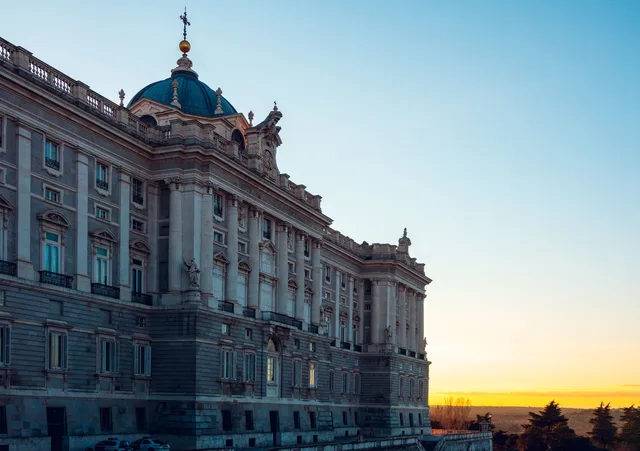
Start early at the Royal Palace of Madrid before the guided tour groups arrive. This is Western Europe's largest functioning royal palace, with 3,418 rooms (the Spanish royal family still uses it for official state functions, though they live elsewhere). You only access a fraction of those rooms, but the Throne Room, the Royal Armoury, and the ceiling frescoes by Giovanni Battista Tiepolo are worth an hour and a half of anyone's time. Book fast-track entry in advance; the standard queue in summer can eat 45 minutes you do not have.
Right next door, the Almudena Cathedral is free to enter and easy to walk past. Resist. The interior is unexpectedly modern, and the rooftop tour gives you the best close-up view of the palace exterior from above. Give it 30 minutes.
Local tip
EU citizens get free entry to the Royal Palace on weekday late afternoons: 18:00 to 20:00 in summer (April to September), 16:00 to 18:00 in winter. If morning works better for your schedule, just buy a ticket: the extra time inside is worth more than the saving.
Afternoon: Plaza Mayor, Mercado de San Miguel and La Latina Tapas
From the palace, stroll east into Habsburg Madrid. Plaza Mayor is the city's great ceremonial square, a grand arcaded rectangle where public spectacles played out across the centuries. Have a coffee at a terrace café if you like, but know the prices reflect the location. The square itself is the attraction, not the menu.
Two minutes east is Mercado de San Miguel, a beautiful iron-and-glass market hall from 1916. Pop in to admire the architecture, pick up an olive, and move on. It is lovely and expensive. Not where you want to eat. Walk south into La Latina and find your way to Cava Baja, the calle at the heart of the city's best tapas district. A caña and a tapa here costs a fraction of what the market charges, and the food is better.
On your stroll back toward the city centre, cut through Puerta del Sol to see the famous bear-and-strawberry-tree sculpture (Oso y el Madrono) and the Kilometre Zero plaque in the pavement, from which all of Spain's national road distances are measured.
If your first day is a Sunday
El Rastro, Spain's largest open-air flea market, takes over all of La Latina every Sunday from 09:00 to 15:00. If your first day in Madrid falls on a Sunday, start here instead of the Royal Palace and fold the palace into the afternoon. The neighbourhood on a Sunday morning is one of the most alive things in the city.
Evening: Templo de Debod and the Best Sunset in Madrid
Every 2-day Madrid itinerary sends you to Templo de Debod for sunset. Almost none of them explain what makes it extraordinary. This is not a replica or a monument inspired by Egypt. This is an actual 2,200-year-old Egyptian temple, built in the 2nd century BC, dismantled stone by stone in the 1960s, shipped to Spain, and rebuilt here in Parque del Oeste in 1972. It was Egypt's gift to Spain, in gratitude for Spain's contribution to saving the Abu Simbel temples from the rising waters of the Aswan High Dam.
Arrive 30 minutes before sunset. Entry to the temple grounds and the Egyptian temple itself is free. The light at golden hour, with the Royal Palace behind the ancient stones, is the best free spectacle in the city of Madrid. From Parque del Oeste it is an easy walk or metro ride back into La Latina or the city centre for dinner.
Day 2: The Prado Museum, Retiro Park and a Malasaña Evening
Morning: The Prado Museum
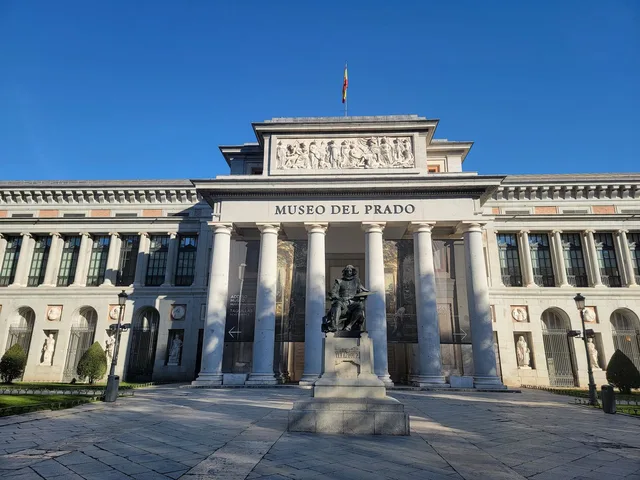
The Prado is one of the greatest art museums in the world. It opened in 1819 as the world's first public collection of Spanish painting, and what it holds is unmatched: Velázquez, Goya, El Greco, Bosch, with entire rooms devoted to each. With 128 rooms across three floors, two focused hours on the highlights collection beats four hours of aimless wandering every time.
The non-negotiables: Las Meninas by Velázquez in Room 12, Goya's Black Paintings downstairs, and if you can take it, Bosch's The Garden of Earthly Delights. The last one takes a few minutes to register fully: the triptych is larger than you expect and stranger than any description prepares you for.
A standard Prado Museum entry ticket starts from €18.00. If you plan to visit the Reina Sofía (home of Guernica and Salvador Dalí's works) and the Thyssen-Bornemisza on this trip as well, the Paseo del Arte Card covers all three from €40.00 and saves you money at the door of each museo.
Free entry slots
The Prado opens for free Monday to Saturday from 18:00 to 20:00, and Sunday from 17:00 to 19:00. The first Saturday of every month is free from 20:30 to 23:30. If you plan to use the free slot, arrive by 17:30: capacity is capped and the queue forms fast, especially in summer.
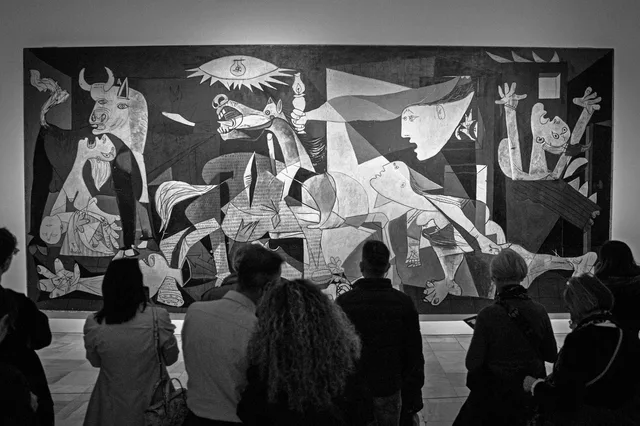
The Reina Sofía (Guernica) is free all day Sunday until 14:30 and on Saturdays from 14:30. But Guernica during free hours is the most crowded room in Madrid. If you want to stand in front of it properly, pay the €12.00 on a weekday.
Afternoon: El Retiro Park and the Barrio de las Letras
A ten-minute walk south from the Prado brings you to El Retiro, the green lung of central Madrid and a UNESCO World Heritage Site since 2021. The park was originally a royal retreat and opened to the public only in 1868. Entry is free; it is open from 06:00 to midnight in summer.
Hire a rowboat on the lake (El Estanque), stroll through the Rose Garden (Rosaleda del Retiro), and walk south toward the Palacio de Cristal, a spectacular Victorian iron-and-glass palace currently closed for renovation until 2027. Worth seeing from outside. The park itself is the reason you came.
After the park, walk west into the Barrio de las Letras, the Literary Quarter also known as Calle de las Huertas. The paving stones are embedded with verses from Cervantes, Lope de Vega, and Quevedo, who all lived and wrote here during Madrid's 17th-century golden age. Ten minutes on foot and worth every minute.
If you want a view of the city that most tourists miss, the rooftop terrace of the Círculo de Bellas Artes, just off Gran Vía, costs around €5 and gives you a panorama most guidebooks do not mention. Better views, smaller crowds, and no minimum spend.
Evening: Gran Vía Stroll and Malasaña Tapas Bars
Madrid's evenings start late: dinner before 21:00 identifies you as a tourist as clearly as a selfie stick. Do a late-afternoon stroll down Gran Vía, the grand boulevard built in stages between 1910 and 1932 and lined with Art Nouveau and Art Deco facades. Then head north into Malasaña, Madrid's bohemian, creative neighbourhood, for dinner at one of the proper tapas bars: no photos of food in the window, no menu in six languages outside, and a caña under €3. That is the shortcut to finding the right place.
If you have time for a third day in Madrid, consider a morning at El Escorial (a UNESCO World Heritage royal monastery, just under an hour from the city centre by train from Principe Pio station), proper time at the Reina Sofía, or a wander through Lavápiés, Madrid's most multicultural and affordable neighbourhood, where a full sit-down lunch rarely exceeds €12.
2-Day Madrid Itinerary: Quick Planning Table
| Attraction | Best timing | Book ahead? | Cost |
|---|---|---|---|
| Royal Palace of Madrid | Morning (arrive by 10:00) | Yes | From €22.00 |
| Almudena Cathedral | After the palace | No | Free |
| La Latina tapas (Cava Baja) | 13:00 or after 20:00 | No | €10–20 per person |
| Templo de Debod | 30 min before sunset | No | Free |
| Prado Museum (Museo del Prado) | Morning or free evening slot | Recommended | From €18.00 |
| El Retiro Park | Afternoon | No | Free |
| Barrio de las Letras | After Retiro | No | Free |
| Malasaña dinner | After 21:00 | Recommended in summer | €20–35 per person |
Frequently Asked Questions: 2 Days in Madrid
Is 2 full days in Madrid enough?
Yes, for a first visit. Two full days is enough for the Royal Palace, Almudena Cathedral, Plaza Mayor, and the Prado, with time left to wander and actually feel the city rather than just tick it off. You will not cover everything (the Reina Sofía, the Thyssen, and Madrid's outlying sights need more time), but two full days give you a real city, not a highlight reel.
What should I do in a 2-day itinerary in Madrid?
Day 1: Royal Palace of Madrid, Almudena Cathedral, Plaza Mayor, La Latina tapas on Cava Baja, and Templo de Debod at sunset. Day 2: Prado Museum (two hours, focus on Las Meninas and Goya's Black Paintings), El Retiro park in the afternoon, a stroll through Barrio de las Letras, and dinner in Malasaña after 21:00.
What are the top 3 things to do in Madrid?
The Royal Palace of Madrid, the Prado Museum, and Templo de Debod at sunset. Between them: royal Madrid's grandeur, the world's deepest collection of Spanish painting, and the city's most unexpectedly moving sight. Everything else can wait.
What makes the Prado so special compared to other museums in Madrid?
The Prado's collection of Spanish painting from the Middle Ages to the 19th century is unmatched anywhere in the world. Velázquez, Goya, El Greco: represented here in extraordinary depth, entire rooms showing the arc of each career. The Reina Sofía and Thyssen are outstanding museums. The Prado is in a different category.
What are the must-try foods at Mercado de San Miguel?
The market is worth a brief wander for the 1916 iron-and-glass architecture. Cured meats and olive stalls are reliably good. That said, prices are tourist-level: budget €15 to 25 per person for a light meal. For better food at half the price, go to Cava Baja in La Latina, ten minutes' walk away.
Is Seville or Madrid better for a short trip?
Different cities for different reasons. Madrid is the better choice if you want world-class art museums, a walkable centre with everything concentrated, and great food at all price levels. Seville wins on visual drama (the cathedral, the Alcázar) and the emotional pull of its flamenco culture and old barrios. Two days in Madrid gives you more variety; two days in Seville gives you a more unified emotional experience.
How much time should I plan for Plaza de Cibeles?
Plaza de Cibeles is a pass-through rather than a destination: ten to fifteen minutes is plenty. The fountain and the ornate city hall building are impressive, and the square connects Paseo del Prado with Calle de Alcálá near the Puerta de Alcálá (the triumphal arch, a five-minute walk east). In a 2-day Madrid itinerary, fit it as a pause on your way between sights rather than a dedicated visit.